Scar Revision Surgery in Tokyo: Options, Techniques, and Cost
A visible scar can affect your confidence long after the wound has healed. Whether the scar is from an injury, a previous operation, acne, or a burn, the prospect of revision surgery raises a lot of questions: which technique is right for my type of scar, what is a realistic outcome, how long will recovery take, and what does it cost in Tokyo? This guide answers each of those questions with information drawn from current clinical evidence.
What you will learn in this article:
- The main types of scars and which respond to surgical revision
- Surgical techniques — excision, Z-plasty, W-plasty — and how they differ
- How adjunct treatments (steroid injections, laser resurfacing) are combined with surgery
- Realistic cost expectations and what drives pricing in Tokyo
- Who is a good candidate, who should wait, and common misconceptions to avoid
Have a question about this treatment?
Message us on LINE or WhatsApp — our English-speaking team usually replies the same day.
What Is Scar Revision Surgery?
Scar revision encompasses a range of surgical and non-surgical procedures designed to improve the appearance, texture, or function of an unwanted scar. The goal is meaningful, lasting improvement — not the complete removal of every visible trace. Every scar revision produces a new scar; the objective is to make that new scar far less noticeable than the original.
Scars form because wound healing replaces lost tissue with collagen fibres laid down rapidly under stress. When a wound heals under excessive tension, at an angle to the skin’s natural lines, or in a setting complicated by infection or poor circulation, the result is often raised, widened, contracted, or discoloured tissue. Revision surgery corrects those variables once the original scar has fully matured.
Scar Types and What Can Be Done
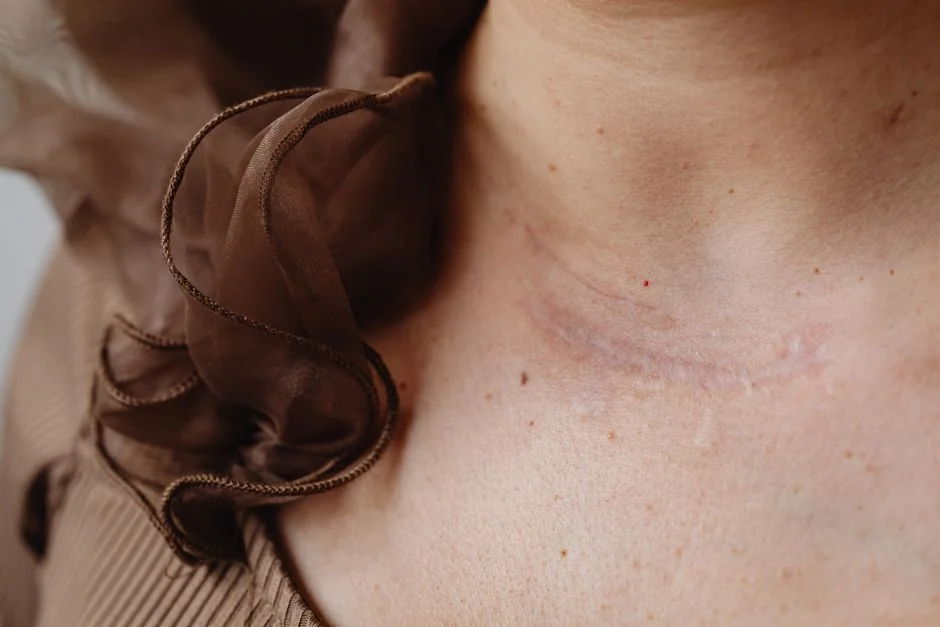
Not every scar is revised in the same way. The first step at consultation is identifying which type of scar you have, because both the surgical technique and the risk of recurrence differ substantially.
| Scar type | Appearance | Preferred approach | Key consideration |
|---|---|---|---|
| Hypertrophic | Raised, red, firm; stays within wound borders | Steroid injections, silicone, excision if persistent | Often improves with conservative management over 12–18 months |
| Keloid | Raised, extends beyond original wound margins | Multi-modal: surgery + steroid injection + pressure or radiation | Surgery alone carries 70–100% recurrence risk; combination therapy essential |
| Atrophic / depressed | Sunken below skin surface (typical of acne scars) | CO2 fractional laser, subcision, filler, or excision for isolated scars | Device treatments often preferred before committing to surgery |
| Contracture | Tight, restricts movement across a joint or surface | Z-plasty, skin graft, or flap reconstruction | Functional impairment may qualify for insurance coverage in Japan |
| Widened / flat | Pale, flat, but noticeably broad | Elliptical excision with tension-free closure | Results depend heavily on wound closure technique and tension management |
Surgical Techniques in Detail
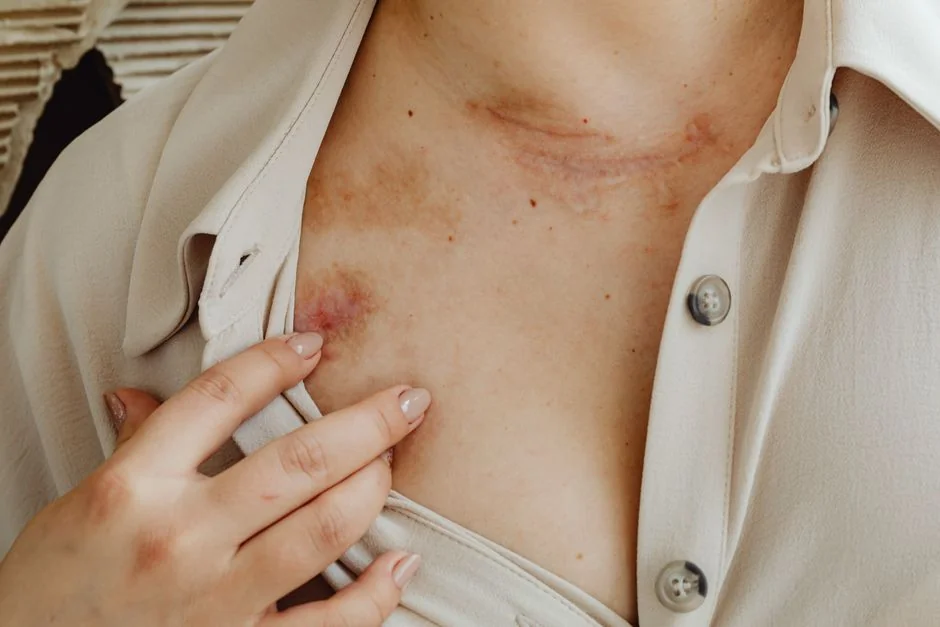
Elliptical excision and direct closure
The scar is removed with a fusiform (lens-shaped) incision and the skin edges are brought together under minimal tension. Surgeons follow a 3:1 length-to-width ratio when designing the excision to prevent dog-ear puckering at the wound ends. This approach is best suited to narrow, linear scars in areas of low skin tension.
Z-plasty
Z-plasty creates two triangular flaps of adjacent skin that are transposed to lengthen the scar and redirect it to align with the skin’s natural tension lines. A standard 60-degree Z-plasty achieves a 75% gain in tissue length and a 90-degree change in scar direction — a decisive advantage when a scar crosses a joint or runs perpendicular to facial expression lines. It is the technique of choice for contracture release and for scars that are functionally limiting.
W-plasty
Used predominantly on the face, W-plasty breaks the scar into a series of interlocking small triangles. Unlike Z-plasty, it does not lengthen tissue; instead, the irregular edge scatters light rather than reflecting it as a single line, making the result far less detectable at conversational distance. It is well suited to long facial scars that follow an unfavourable orientation.
Adjunct treatments that work alongside surgery
Surgery is rarely effective in isolation. Intralesional triamcinolone acetonide (Kenalog) injections at the time of wound closure are standard practice to suppress excess collagen production in patients with hypertrophic or keloid history. Post-operative silicone sheeting, worn 12 to 24 hours a day for several months, is recommended for virtually all surgical scar revisions. A systematic review published in Frontiers in Medicine (2026), analysing 162 studies and 9,510 patients, confirmed that combination approaches integrating multiple modalities consistently outperform any single treatment in reducing recurrence and improving long-term scar quality.
For scars with a surface texture component, CO2 fractional laser resurfacing may be added after surgical healing is complete. This device creates microscopic columns of ablation that stimulate dermal collagen remodelling without removing the full skin surface. At BIOTOPE CLINIC in Shirokanedai, patients working with Dr. Karibe’s team on scar improvement frequently incorporate a course of CO2 fractional laser or Morpheus8 RF microneedling as a second-stage treatment once the surgical wound has settled — a step that can significantly refine texture and colouration alongside the structural work done surgically.
What to Expect: Before, During, and After
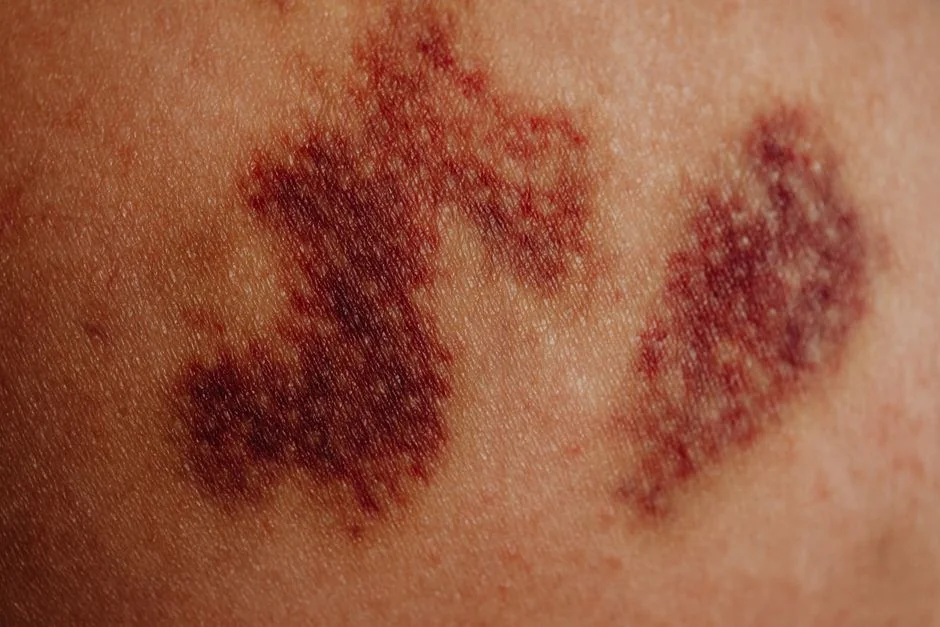
Before surgery
Clinical guidance consistently places the minimum wait before scar revision at 12 to 18 months post-injury, because scars continue to remodel during this period and many hypertrophic scars soften substantially on their own. Operating on an immature scar typically produces a poor secondary result. During the consultation, the surgeon assesses scar maturity, surrounding skin laxity, the direction of tension lines, and any functional restriction. Patients are usually asked to suspend aspirin, NSAIDs, and anticoagulant supplements for two weeks before the procedure.
During the procedure
Most scar revisions are performed under local anaesthesia as a day procedure, with the patient returning home the same day. Complex revisions involving skin flaps, grafts, or general tissue rearrangement may require sedation. Operating time ranges from under an hour for simple elliptical excisions to two or more hours for Z-plasty or flap procedures.
After surgery and recovery
Sutures are typically removed within 5 to 7 days for facial wounds and 10 to 14 days for body wounds. The new scar will appear red, firm, and potentially more conspicuous in the first weeks before gradually softening. Visible improvement develops over 3 to 6 months, and the final result is not apparent for at least 12 months. Most patients return to desk-based work within a few days, while strenuous exercise and sun exposure to the treated area should be avoided for at least several weeks.
Cost of Scar Revision Surgery in Tokyo
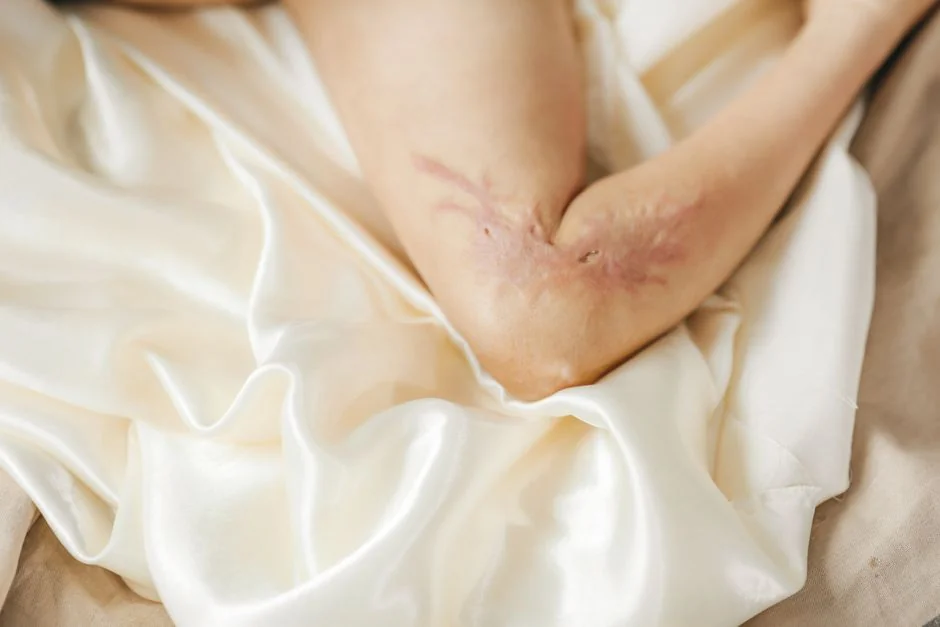
Pricing for scar revision in Tokyo varies considerably based on scar size, location, complexity, whether the procedure is performed under Japan’s national health insurance (NHI), and the specific techniques involved. Scars resulting from injury or causing functional restriction may qualify for partial NHI coverage; purely cosmetic revisions are self-pay.
At Kojimachi Dermatology & Plastic Surgery Clinic, scar revision is priced individually following a surgical consultation, rather than listed as a fixed-menu item, because each case differs substantially in operative time and materials. Post-operative Kenalog injections, silicone wound care, and any secondary laser sessions are priced separately. Please see the clinic’s official price page or contact us directly for a current quote.
For an accurate quote, please book a consultation.
Have a question about this treatment?
Message us on LINE or WhatsApp — our English-speaking team usually replies the same day.
Who Is a Good Candidate for Scar Revision?
Scar revision tends to produce the best outcomes in patients who:
- Have a fully mature scar — at minimum 12 months, preferably 18 months, post-injury or post-surgery
- Experience meaningful cosmetic distress or a functional restriction such as limited joint movement
- Are in good general health, with no active skin infection in or near the treatment area
- Understand that revision improves rather than eliminates a scar, and have realistic expectations accordingly
- Are non-smokers or willing to stop smoking for the healing period, as smoking significantly impairs wound healing
Revision may need to be deferred or approached differently for patients who:
- Have a personal or family history of keloid formation — excision alone carries a very high recurrence risk, and a structured multi-modal plan is required
- Take anticoagulant medications that cannot be safely suspended
- Have uncontrolled diabetes or other conditions that impair wound healing
- Have a scar that is still actively changing, red, or raised (not yet mature)
Common Misconceptions About Scar Revision
Misconception: “Revision surgery will make my scar disappear.”
Scar revision replaces an unfavourable scar with a less visible one — it does not eliminate scarring. No surgical technique can recreate the original, unscarred skin architecture. The realistic benchmark is a scar that is narrower, flatter, better oriented, and far less prominent, not one that is invisible.
Misconception: “I should operate as soon as possible for the best result.”
The evidence points in the opposite direction. Scars remain biologically active for up to 18 months, and many hypertrophic scars flatten and fade considerably during this window without any intervention. Operating before a scar has matured interrupts natural remodelling, increases wound tension at the revision site, and frequently produces no better — and sometimes a worse — outcome than simply waiting. The 12-to-18-month guideline is not a bureaucratic formality; it is grounded in clinical outcomes data.
Where to Get Scar Revision Surgery in Tokyo
Within this clinic group, both BIOTOPE CLINIC (Shirokanedai, Minato-ku) and Kojimachi Dermatology & Plastic Surgery Clinic (Ichigaya, Chiyoda-ku) offer English-language consultation with Dr. Jun Karibe’s team. Scar revision surgery is handled at Kojimachi Dermatology & Plastic Surgery Clinic, the group’s main office for general and aesthetic plastic surgery procedures, which also accepts insurance-covered cases where eligibility applies. Adjunct device treatments for scar improvement — including CO2 fractional laser and Morpheus8 RF microneedling — are available at BIOTOPE CLINIC in Shirokanedai. Bookings and enquiries in English: LINE or WhatsApp.
Frequently Asked Questions
- Q. How do I know whether my scar is mature enough for revision?
- A scar that is still red, firm, or continuing to change is not yet mature. The general clinical guideline is a minimum of 12 months from the original injury or surgery, with 18 months preferred for hypertrophic scars. At a consultation, the surgeon will assess maturity directly and advise whether to proceed or to continue conservative management with silicone and pressure in the interim.
- Q. Can scar revision be covered by health insurance in Japan?
- Scars resulting from trauma, burns, or complications of a medical procedure, or those causing a functional restriction such as a joint contracture, may meet the criteria for national health insurance (NHI) coverage in Japan. Purely cosmetic revisions — where the only concern is appearance — are treated as self-pay. A formal assessment at Kojimachi Dermatology & Plastic Surgery Clinic is required to determine whether your specific case qualifies.
- Q. I have a keloid. Is surgery worth attempting?
- Keloid surgery can be successful, but it must be approached as part of a combination plan. A systematic review of 9,510 patients confirmed that surgical excision alone carries a 70–100% recurrence rate for keloids; outcomes improve substantially when surgery is combined with post-operative steroid injection, pressure therapy, or radiation. Dr. Karibe’s team will design a structured multi-modal plan tailored to your scar’s size, location, and history at consultation.
- Q. Is scar revision surgery painful?
- The procedure itself is performed under local anaesthesia and should be comfortable throughout. Post-operatively, patients typically experience soreness and tightness around the wound for several days, which is managed with standard oral analgesics. Discomfort is generally mild and resolves within the first one to two weeks.
Have a question about this treatment?
Message us on LINE or WhatsApp — our English-speaking team usually replies the same day.
Summary
Scar revision is an established area of plastic surgery that can produce meaningful improvements in the appearance, texture, and function of unwanted scars — provided the scar is mature, the patient is well selected, and the technique is matched to the scar type. Surgical approaches such as elliptical excision, Z-plasty, and W-plasty are most effective when paired with adjunct treatments including steroid injections, silicone wound care, and — where appropriate — subsequent laser or RF microneedling. Keloids in particular demand a combination approach; current clinical evidence shows that surgery alone is insufficient to prevent recurrence in the majority of keloid patients.
If you have questions about scar revision, both BIOTOPE CLINIC (Shirokanedai, Minato-ku) and Kojimachi Dermatology & Plastic Surgery Clinic (Ichigaya, Chiyoda-ku) offer English-language consultation with Dr. Karibe and his team. Scar revision surgery is primarily handled at Kojimachi Dermatology & Plastic Surgery Clinic, the group’s main office for general and aesthetic plastic surgery. English enquiries: LINE or WhatsApp.
24/7 Consultation & Booking
Book a Consultation or Treatment
Our English-speaking team responds via LINE or WhatsApp — usually the same day.
References
- Cleveland Clinic. Scar Revision: What It Is, Who Is a Candidate and Treatment Options. Cleveland Clinic Health Library. 2023.
- Shen Y, Yang L, et al. Therapeutic methods and effect on keloid and hypertrophic scars: a systematic review. Frontiers in Medicine (Lausanne). 2026.
- Raslan A, Bakhamees A, Howsawi A, et al. The Efficacy of Botulinum Toxin Type A in the Treatment of Hypertrophic Scars and Keloids: A Systematic Review and Meta-Analysis of Randomized Controlled Trials. Cureus. October 2024.
- Davies E, et al. A scoping review of the treatment of hypertrophic scars and keloids. Dermatological Reviews. 2024.
- Miri H, et al. Comparative Efficacy and Recurrence Risk of Intralesional Therapies for Hypertrophic Scars and Keloids: A Network Meta-Analysis. Aesthetic Surgery Journal. 2025.
Related Articles
You may also find these articles useful.
- Scar Revision Surgery in Tokyo: Your Options and Cost
- Scar Revision Surgery in Tokyo: Options and Cost Guide
- Scar Revision Surgery Tokyo: Options and Cost
- Scar Revision Surgery Tokyo: Options, Cost & Recovery
- Acne Scar Laser Treatment Tokyo: Cost and Real Results
SUPERVISED BY
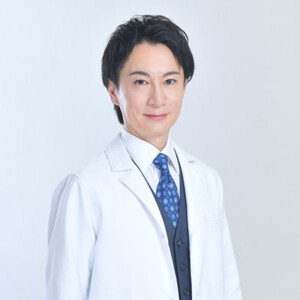
Dr. Jun Karibe
MD
Director
Education & Career
Certifications
Awards
MEDICAL REVIEW