Female Hair Thinning Treatment in Tokyo: A Complete Guide for International Patients
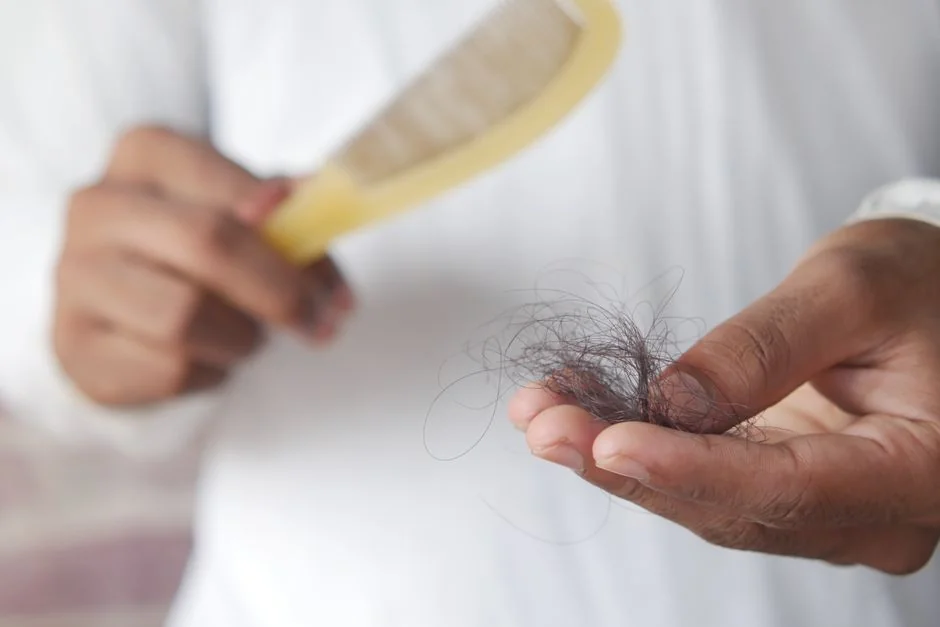
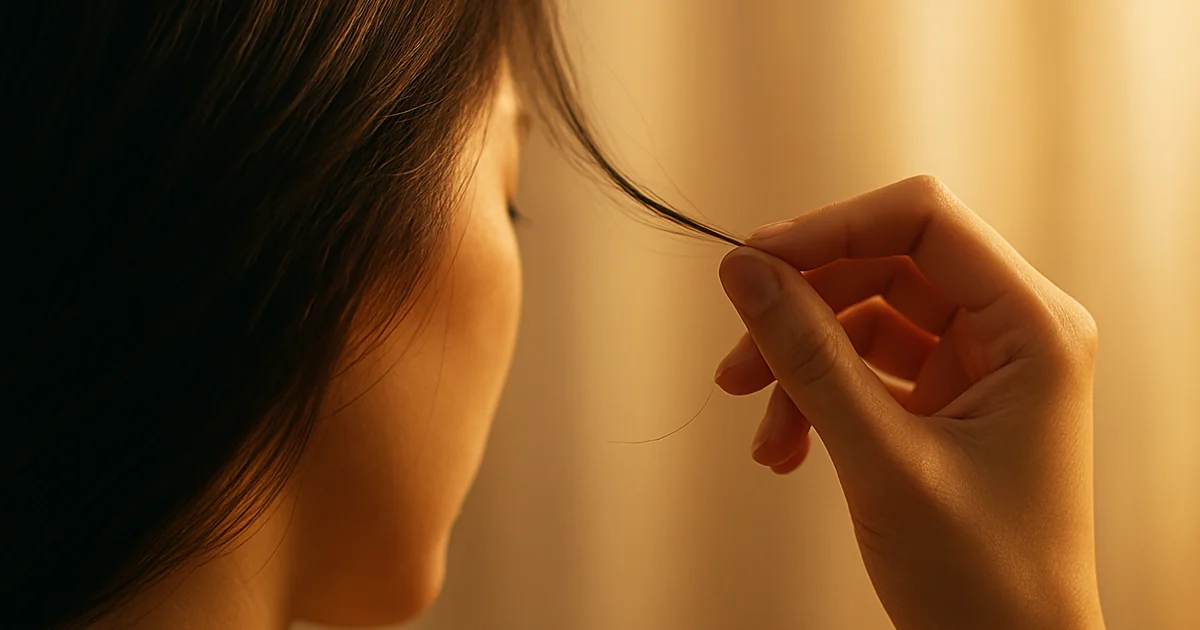
Noticing more hair on your pillow, in the shower drain, or at your parting line can be deeply unsettling — and for many women, it also carries a sense of isolation, as hair loss is far less openly discussed than it is among men.
If you are living in or visiting Tokyo and looking for reliable, evidence-based treatment options, this guide covers everything you need to know: the causes of female hair thinning, the treatments available, realistic expectations, and what a consultation in Japan typically involves.
What you’ll learn in this article:
- The most common causes of hair thinning in women and how they are diagnosed
- Non-surgical and medical treatment options available in Tokyo
- How treatments such as nutritional therapy and scalp-focused approaches work
- Realistic cost ranges and what to expect at a Tokyo dermatology clinic
- Who is — and who is not — a good candidate for each approach
Have a question about this treatment?
Message us on LINE or WhatsApp — our English-speaking team usually replies the same day.
Understanding Female Hair Thinning: Causes and Diagnosis
Female hair thinning, often referred to medically as female pattern hair loss (FPHL) or androgenetic alopecia in women, is distinct from the more dramatic receding hairline seen in men.
Women typically experience a diffuse thinning across the crown and a widening of the central parting, while the frontal hairline often remains intact.
However, hair thinning in women is rarely caused by a single factor. Common contributing causes include:
- Androgenetic alopecia — a hereditary sensitivity of hair follicles to dihydrotestosterone (DHT), a hormone derived from testosterone
- Telogen effluvium — sudden, diffuse shedding triggered by physical or emotional stress, rapid weight loss, childbirth, or major illness
- Nutritional deficiencies — particularly iron (ferritin), zinc, vitamin D, and biotin
- Thyroid dysfunction — both hypothyroidism and hyperthyroidism can cause shedding
- Alopecia areata — an autoimmune condition causing patchy hair loss
- Scalp conditions — seborrhoeic dermatitis, fungal infection, or scarring alopecia
Because causes can overlap, a thorough diagnostic assessment is essential before beginning any treatment. At our BIOTOPE CLINIC or Dermatology clinic, this typically involves a detailed medical history, blood work (checking thyroid hormones, ferritin, haemoglobin, and hormonal panels), and often a trichoscopy — a magnified visual examination of the scalp and hair follicles that requires no incision or discomfort.
Treatment Options for Female Hair Thinning in Tokyo
Once a diagnosis is established, treatment is tailored to the underlying cause. In Tokyo, patients have access to a combination of evidence-based medical treatments, nutritional support, and advanced aesthetic approaches. The most clinically validated options are outlined below.
Topical and Oral Medications
Minoxidil is the only topical treatment approved internationally for female hair loss and remains a cornerstone of FPHL management. It works by prolonging the anagen (active growth) phase of the hair cycle and increasing blood flow to the follicle.
Studies suggest that topical minoxidil 2% applied twice daily produces visible density improvement in approximately 60% of women after 16–32 weeks of consistent use, based on data from randomised controlled trials.
In Japan, minoxidil for women is available in specific formulations and concentrations through dermatology clinics. Oral low-dose minoxidil is an emerging option that clinical reports indicate may offer comparable or superior efficacy for some patients, though it carries a slightly different side-effect profile and requires medical supervision.
For cases involving confirmed hormonal imbalance or autoimmune alopecia, additional prescription medications — including antiandrogens or immunosuppressants — may be considered under specialist guidance.
Nutritional and Intravenous (IV) Therapy
Nutritional deficiency is a highly underappreciated contributor to female hair thinning. Even subclinical iron deficiency — where ferritin is low but not yet anaemic — can markedly impair hair growth. A published review in the Journal of the American Academy of Dermatology noted that serum ferritin below 30 ng/mL is commonly associated with telogen effluvium in women, and that correction of ferritin levels can support hair regrowth even in the absence of other treatment.
For women whose hair thinning has a nutritional component, IV drip therapy (including high-dose vitamin C, glutathione, and targeted micronutrient infusions) can help restore circulating nutrient levels more rapidly than oral supplementation alone.
Similarly, orthomolecular (nutritional) therapy — which involves a detailed assessment of micronutrient status and personalised supplementation — can address underlying deficiencies systematically.
These approaches are available at BIOTOPE CLINIC or Kojimachi Dermatology & Plastic Surgery Clinic in Tokyo. Feel free to ask about them during a consultation.
Scalp and Follicle-Stimulating Treatments
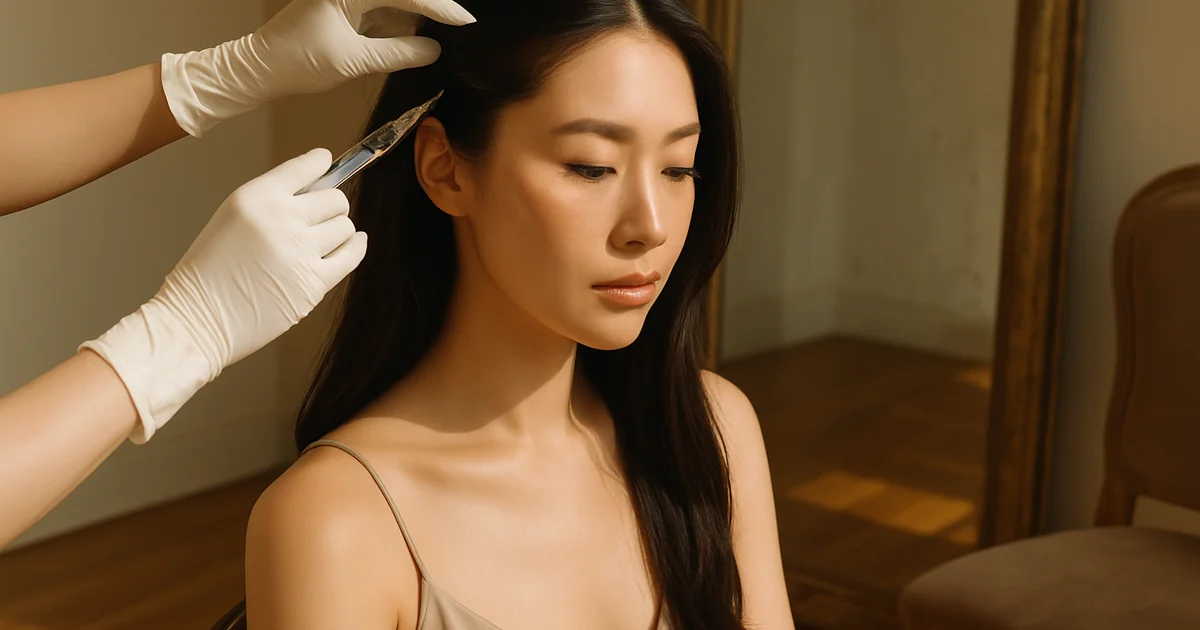
Platelet-Rich Plasma (PRP) therapy involves drawing a small amount of the patient’s own blood, concentrating the platelet-rich fraction, and injecting it into the scalp. Platelets contain growth factors — including PDGF and VEGF — that are thought to stimulate dormant follicles and increase follicle diameter. Clinical reports indicate that PRP may produce statistically significant improvements in hair density and thickness in women with early-to-moderate FPHL, though response varies by individual and optimal injection protocols are still being refined.
Microneedling of the scalp is another adjunct treatment that creates controlled micro-injuries to stimulate local growth factor release and may enhance the penetration of topical treatments such as minoxidil. Devices such as the Dermapen, which is available at our BIOTOPE CLINIC, are used in a scalp-focused protocol — feel free to ask about this option during a consultation.
Lifestyle and Preventive Medicine Support
In our clinical experience at BIOTOPE CLINIC or Kojimachi Dermatology & Plastic Surgery Clinic, we frequently see international patients who have already tried over-the-counter supplements without success, often because the formulations are not matched to their specific deficiencies.
A structured approach — including gut microbiome analysis (since gut health affects nutrient absorption) and genetic testing to identify predisposing factors — can provide a more personalised and effective foundation for treatment.
Comparison of Key Female Hair Thinning Treatments
| Treatment | Mechanism | Evidence Level | Typical Timeline for Results | Downtime |
|---|---|---|---|---|
| Topical Minoxidil | Prolongs hair growth phase; increases follicle blood flow | Strong (RCT evidence) | 4–8 months | None |
| IV Nutritional Therapy | Rapidly corrects micronutrient deficiencies | Moderate (supportive studies) | 2–4 months (combined with other treatments) | None (30–60 min session) |
| PRP Scalp Injections | Growth factors stimulate dormant follicles | Moderate (growing evidence base) | 3–6 months | Minimal (1–2 days scalp sensitivity) |
| Scalp Microneedling (Dermapen) | Micro-injury triggers growth factors; enhances topical absorption | Emerging | 3–6 months | Minimal (24–48 hours redness) |
| Orthomolecular / Nutritional Therapy | Corrects systemic deficiencies; supports follicle health | Moderate | 3–6 months | None |
Cost of Female Hair Thinning Treatment in Tokyo
Treatment costs vary depending on the approach chosen, the number of sessions required, and whether prescription medications are involved. Below are relevant cost ranges at Kojimachi Dermatology & Plastic Surgery Clinic:
- Initial consultation: ¥3,300
- IV drip therapy (vitamin C, glutathione, and nutritional infusions): Price varies by infusion type — enquire at consultation
- Dermapen (scalp microneedling): ¥9,800–¥220,000 depending on area and session package
- Orthomolecular nutritional therapy and genetic testing: Pricing provided at consultation based on individual protocol
- NMN supplementation and gut microbiome analysis: Pricing provided at consultation
Prescription medications such as minoxidil may be covered under Japan’s national health insurance system in some cases, or provided as a self-pay item depending on the formulation. Blood work, which is often necessary before commencing treatment, is an additional cost to factor in.
For an accurate quote, we recommend booking a consultation.
Have a question about this treatment?
Message us on LINE or WhatsApp — our English-speaking team usually replies the same day.
What to Expect: Before, During, and After Treatment
Before Your First Appointment
It is helpful to bring a record of any supplements or medications you are currently taking, as well as recent blood test results if available. Photographs of your hairline and parting taken in good lighting over the preceding months can also help the physician assess the rate of progression.
During Treatment
Most non-surgical hair thinning treatments are outpatient procedures completed within 30–90 minutes. Scalp injections (such as PRP) involve fine needles and mild discomfort; topical anaesthetic cream can be applied in advance if requested. IV drip sessions are performed while the patient is comfortably seated and typically take 30–60 minutes.
After Treatment and Recovery
Non-invasive treatments such as IV therapy and topical medications require no downtime. Scalp microneedling and PRP injections may cause mild redness or sensitivity for 24–48 hours; vigorous exercise, swimming, and direct scalp sun exposure are generally advised against for 1–2 days post-procedure. Consistency is critical — most treatments require multiple sessions and several months before meaningful improvement becomes visible.
Dr. Karibe’s Note
Many of our international patients are surprised to learn that hair thinning in women is frequently a multi-factorial issue — and that addressing only one cause while overlooking others is why many patients feel their previous treatments “did not work.”
A common question I receive is whether minoxidil alone is sufficient. The honest answer is: it depends. For women whose thinning is driven primarily by nutritional deficiency, stress, or hormonal fluctuation rather than pure androgenetic alopecia, minoxidil alone may produce limited results. A thorough assessment before starting any treatment is genuinely worthwhile.
Who Is a Good Candidate for Female Hair Thinning Treatment?
Well-Suited Candidates
- Women in the early-to-moderate stages of hair thinning, where a proportion of follicles are still active
- Women whose thinning is related to nutritional deficiency, telogen effluvium, or stress — conditions that are often reversible
- Women who have already ruled out systemic illness (thyroid disease, anaemia) and are seeking targeted follicle support
- Women who are committed to a consistent treatment protocol over several months
Those Who Should Approach Treatment with Caution
- Women who are pregnant or breastfeeding — several treatment options are contraindicated during this period
- Women with active scalp infections or untreated scarring alopecia — the underlying condition should be addressed first
- Women with advanced hair loss where follicles may be permanently miniaturised — in these cases, realistic expectations must be set carefully
- Women taking anticoagulant medications — certain procedures such as PRP may require a temporary pause, subject to physician approval
Common Misconceptions About Female Hair Loss Treatment
Misconception 1: Hair thinning in women is always hormonal and always permanent. While androgenetic alopecia does involve a hereditary hormonal sensitivity, a significant proportion of female hair thinning cases are temporary and directly linked to correctable factors such as iron deficiency, crash dieting, or post-partum hormone shifts. Assuming permanence without a proper diagnosis can lead women to skip treatments that would have meaningfully helped.
Misconception 2: Expensive hair supplements sold online are equivalent to medical nutritional therapy. Over-the-counter hair supplements are formulated for general use and often contain standardised, low doses of a broad range of nutrients. They do not account for individual deficiency patterns and cannot replicate the targeted correction achieved through blood-test-guided nutritional therapy or IV infusions. At our clinic in Ichigaya, Tokyo, we frequently see patients who have spent considerable amounts on supplements without improvement, and whose blood work reveals specific deficiencies that were not addressed by the products they were taking.
Frequently Asked Questions
- Q. How long will it take to see results from hair thinning treatment?
- Hair has a slow biological cycle, so most treatments — whether topical, injectable, or nutritional — require a minimum of three to six months before meaningful improvement is visible. Patience and consistency are essential; stopping treatment prematurely is one of the most common reasons for disappointing outcomes.
- Q. Can I receive treatment in English at a Tokyo dermatology clinic?
- Yes. Kojimachi Dermatology & Plastic Surgery Clinic in Ichigaya offers consultations in English, making it accessible for expatriates, medical tourists, and international visitors. The clinical team is experienced in working with non-Japanese-speaking patients and can explain diagnoses and treatment plans clearly.
- Q. Is female hair thinning treatment covered by Japanese national health insurance?
- Some diagnostic elements — such as blood tests and certain prescription medications for medically recognised conditions — may be eligible for partial insurance coverage. However, cosmetic or elective components of treatment, including scalp microneedling and IV nutritional therapy, are typically self-pay. The clinic can advise on coverage at the time of consultation.
- Q. How many sessions of scalp microneedling or PRP are typically needed?
- Most protocols suggest an initial course of three to six sessions spaced four to six weeks apart, followed by maintenance sessions every three to four months depending on response. Individual needs vary, and the treating physician will recommend a schedule based on the severity of thinning and the patient’s response to initial treatment.
- Q. Will stopping treatment cause the hair loss to return?
- For androgenetic alopecia, the underlying genetic predisposition does not disappear, so hair maintained through medical treatment — particularly minoxidil — may gradually thin again if treatment is discontinued. For telogen effluvium and nutritional deficiency, once the root cause is resolved, hair loss often does not recur unless the triggering factor returns.
Have a question about this treatment?
Message us on LINE or WhatsApp — our English-speaking team usually replies the same day.
Summary
Female hair thinning is a common but nuanced condition that responds well to treatment when approached with an accurate diagnosis and an individualised plan. The most effective strategies combine a thorough understanding of the underlying cause — whether hormonal, nutritional, inflammatory, or structural — with targeted medical and supportive therapies. In Tokyo, a full range of evidence-based treatments is available, from topical and oral medications to nutritional IV therapy, scalp microneedling, and preventive medicine protocols.
Realistic expectations, consistency, and regular follow-up with a qualified dermatologist or plastic surgeon are the cornerstones of a successful outcome. Treatment is not a single event but a considered, ongoing process — and starting with the right diagnosis makes all the difference.
If you have questions about female hair thinning treatment in Tokyo, our team at Kojimachi Dermatology & Plastic Surgery Clinic in Ichigaya, Tokyo would be happy to help. We offer consultations in English.
24/7 Consultation & Booking
Book a Consultation or Treatment
Our English-speaking team responds via LINE or WhatsApp — usually the same day.
References
- Olsen EA, Messenger AG, Shapiro J, et al. Evaluation and treatment of male and female pattern hair loss. Journal of the American Academy of Dermatology. 2005;52(2):301–311.
- Trost LB, Bergfeld WF, Calogeras E. The diagnosis and treatment of iron deficiency and its potential relationship to hair loss. Journal of the American Academy of Dermatology. 2006;54(5):824–844.
- Gupta AK, Mays RR, Dotzert MS, et al. Efficacy of non-surgical treatments for androgenetic alopecia: a systematic review and network meta-analysis. Journal of the European Academy of Dermatology and Venereology. 2018;32(12):2112–2125.
- Hausauer AK, Jones DH. Evaluating the efficacy of different platelet-rich plasma regimens for management of androgenetic alopecia: a single-centre, blinded, randomised clinical trial. Dermatologic Surgery. 2018;44(9):1191–1200.
- Almohanna HM, Ahmed AA, Tsatalis JP, Tosti A. The role of vitamins and minerals in hair loss: a review. Dermatology and Therapy. 2019;9(1):51–70.
Related Articles
You may also find these articles useful.
- Hair Loss Treatment Tokyo: AGA Options for Expats
- English Speaking Dermatologist Tokyo: Complete Guide
- English Speaking Plastic Surgeon Tokyo: Full Guide
SUPERVISED BY
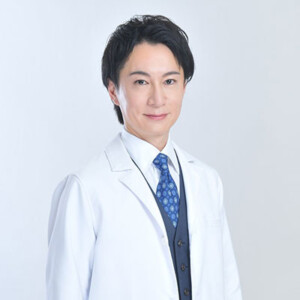
Dr. Jun Karibe
MD
Director
Education & Career
Certifications
Awards
MEDICAL REVIEW