Sensitive Skin Care in Tokyo: How to See a Dermatologist in Japan as an English Speaker
Navigating healthcare in a foreign country is stressful at the best of times — and when your skin is reacting, flaring, or simply behaving differently since arriving in Japan, that stress compounds quickly.
Whether you are an expatriate living in Tokyo, a long-term visitor, or a medical tourist, finding a dermatologist who can understand your concerns in English is a very reasonable expectation, not a luxury.
This guide explains what to expect when seeking dermatological care for sensitive skin in Tokyo, how Japanese clinics approach diagnosis and treatment, what cosmetic options are available alongside medical care, and how to access English-language consultations through our clinic group.
- Why skin often becomes more reactive after relocating to Japan — and what causes it
- How Japanese dermatology clinics work, including insurance-covered versus cosmetic care
- Which medical and cosmetic treatments are available for sensitive or reactive skin
- Realistic costs for dermatology consultations and common skin treatments in Tokyo
- Where to access English-speaking dermatological care in Tokyo
Have a question about this treatment?
Message us on LINE or WhatsApp — our English-speaking team usually replies the same day.
Why Sensitive Skin Is Common Among People New to Japan
Japan’s climate varies considerably by region and season, and for many people arriving from Europe, North America, Australia, or Southeast Asia, the shift in humidity, air quality, water hardness, and even diet can trigger noticeable skin changes within weeks.
Tokyo tap water is soft and generally well-treated, but the seasonal extremes — intensely humid summers and dry, cold winters — are a significant trigger for conditions such as eczema (atopic dermatitis), contact dermatitis, perioral dermatitis, and rosacea.
Airborne allergens, including cedar pollen (sugi) in spring, are among the highest-concentration urban pollens in the world and can contribute to facial flushing and reactivity.
Beyond environmental factors, many patients find that switching to Japanese skincare products — which often contain multiple active ingredients and fragrance compounds — inadvertently worsens a pre-existing sensitivity.
Understanding the underlying cause is the first step toward appropriate treatment, which is precisely why a formal consultation with a qualified dermatologist is valuable rather than attempting trial-and-error at the pharmacy counter.
How Dermatology Clinics Work in Japan: What to Expect
Insurance-Covered Dermatology
Japan has a universal health insurance system, and many common dermatological conditions — atopic dermatitis, urticaria (hives), fungal infections, viral skin conditions, psoriasis, and contact dermatitis — can be treated under the national health insurance scheme at significantly reduced cost.
Typical out-of-pocket costs for insured patients are 30% of the standard fee, making covered consultations and prescriptions relatively affordable.
Treatments available under insurance include topical corticosteroids (steroid creams), oral antihistamines, antiviral medications, antifungal agents, oral antibiotics, immunosuppressants, and narrowband UVB phototherapy for certain chronic inflammatory conditions. Most insurance-covered clinics in Japan conduct consultations in Japanese, so language access is a practical consideration for international patients.
Cosmetic and Private Dermatology
Cosmetic dermatology — including laser treatments, energy-based devices, injectable treatments, and prescription skincare — falls outside the insurance system and is self-funded. These clinics tend to offer a broader range of technology-driven treatments and, in some cases, multilingual consultation services.
For sensitive-skin patients, the two areas of care are not mutually exclusive. A patient might require insurance-covered medical management of eczema alongside a cosmetic approach to address post-inflammatory pigmentation (dark marks left after inflammation resolves) or dilated pores caused by chronic congestion.
Dr. Karibe’s Note
Many of our international patients arrive at BIOTOPE CLINIC having already tried several over-the-counter products without resolution — and often having self-diagnosed based on online research.
A common finding during initial consultations is that what the patient believes to be “sensitive skin” is actually a diagnosable condition such as rosacea or seborrheic dermatitis, both of which respond well to targeted treatment but worsen with many popular skincare approaches.
Getting a formal diagnosis before committing to a skincare or treatment regime almost always saves time, money, and skin-barrier integrity.
Diagnosing Sensitive Skin: What a Dermatologist Will Look For
True sensitive skin is a descriptive term rather than a medical diagnosis. Clinically, a dermatologist will attempt to identify whether a patient’s reactivity stems from one of several underlying mechanisms: impaired skin-barrier function (as in atopic dermatitis), an inflammatory vascular condition (as in rosacea), an allergic or irritant contact reaction, or a hormonal or dietary trigger.
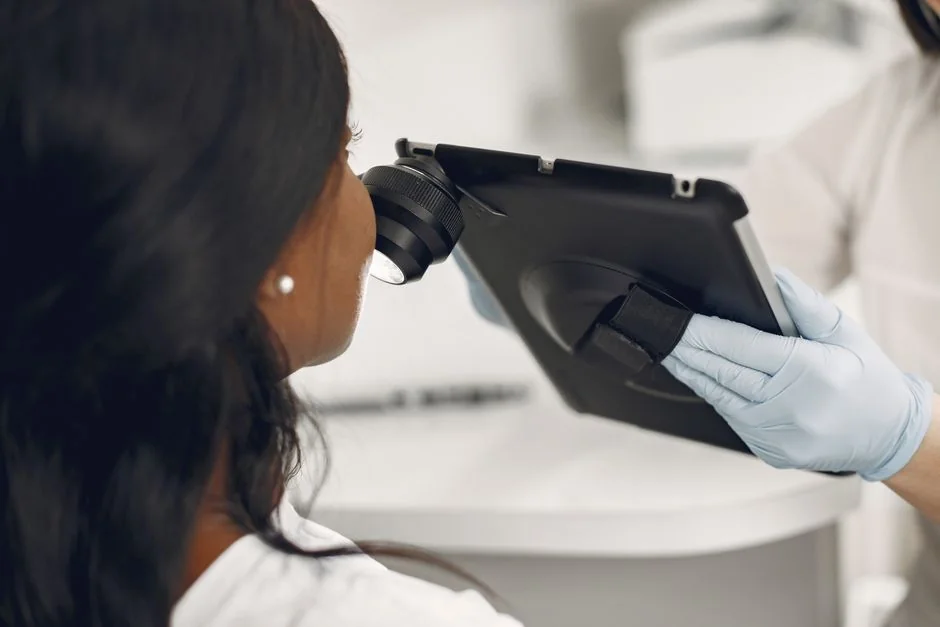
Diagnosis typically involves a thorough history — including skincare products in current use, dietary patterns, stress levels, sleep quality, and previous dermatological history — followed by a physical examination. In some cases, patch testing to identify specific contact allergens may be recommended.
This systematic approach is considerably more reliable than attempting to identify triggers through product elimination alone.
Studies suggest that approximately 50% of individuals self-reporting “sensitive skin” have an identifiable underlying dermatological condition when examined clinically (Misery et al., Journal of the European Academy of Dermatology and Venereology, 2021). That figure underscores why professional assessment matters.
Treatment Options for Sensitive and Reactive Skin in Tokyo
Medical (Insurance-Covered) Treatments
For inflammatory conditions — eczema, urticaria, contact dermatitis — first-line management typically involves prescription topical corticosteroids to reduce active inflammation, followed by a maintenance phase using barrier-repair emollients. Oral antihistamines are frequently prescribed for itch and urticaria. For chronic or more severe cases, immunosuppressant therapy or narrowband UVB phototherapy may be appropriate.
Cosmetic and Supportive Treatments for Sensitive Skin
Once active inflammation is controlled, many patients wish to address residual concerns — uneven texture, redness, post-inflammatory marks, or enlarged pores. Several options exist, though treatment selection for sensitive-skin patients requires particular care around downtime, barrier disruption, and the risk of triggering a flare.
| Treatment | Best Suited For | Sensitivity Consideration | Approximate Cost at BIOTOPE CLINIC |
|---|---|---|---|
| PicoWay Laser | Post-inflammatory pigmentation, uneven tone | Low thermal impact; generally tolerated by reactive skin when skin barrier is stable | ¥11,000–¥98,000 |
| CO2 Fractional Laser | Acne scars, enlarged pores, texture irregularity | Requires intact barrier; not suitable during active flares; downtime 5–7 days | ¥11,000–¥66,000 |
| Dermapen (microneedling) | Texture improvement, superficial scarring, collagen stimulation | Should be avoided in active rosacea or eczema; patch test recommended | ¥9,800–¥220,000 |
| HIFU (skin lifting) | Laxity and lifting rather than surface sensitivity | No surface disruption; generally tolerated; not a primary sensitivity treatment | ¥25,000–¥110,000 |
| Zo Skin Health (medical-grade skincare) | Barrier reinforcement, pigmentation management, maintenance | Prescribed and supervised; formulated to minimise irritation in sensitive skin | Consultation-dependent |
For many sensitive-skin patients, a medically supervised skincare protocol using prescription-strength or professional-grade products — such as Zo Skin Health, available at BIOTOPE CLINIC — is an important foundation before any device-based treatment is considered. Dr. Karibe can advise on the appropriate sequencing during a consultation at BIOTOPE CLINIC in Shirokanedai.
Consultation and Treatment Costs in Tokyo
For English-speaking patients seeking care at BIOTOPE CLINIC, the initial consultation fee is ¥3,300. A dedicated surgical consultation with Dr. Karibe is ¥2,200.
For the most commonly requested treatments relevant to sensitive-skin care:
- PicoWay laser (pigmentation, tone): ¥11,000–¥98,000 depending on area and number of passes
- CO2 fractional laser (texture, pores, scars): ¥11,000–¥66,000
- Dermapen microneedling: ¥9,800–¥220,000 depending on area and combination protocols
- Photofacial (Stella M22, for redness/vascular concerns): ¥28,000–¥126,000
- HIFU: ¥25,000–¥110,000
Insurance-covered dermatology consultations and prescriptions at the group’s sister clinic, Kojimachi Dermatology & Plastic Surgery Clinic in Ichigaya, operate under the national health insurance system and are conducted in Japanese. For English-speaking patients requiring private cosmetic or dermatological consultations, BIOTOPE CLINIC in Shirokanedai is the appropriate point of contact.
For an accurate quote tailored to your skin condition and treatment goals, we recommend booking a consultation.
Have a question about this treatment?
Message us on LINE or WhatsApp — our English-speaking team usually replies the same day.
What People Often Get Wrong About Sensitive Skin Treatment
Misconception 1: Fragrance-Free and “Natural” Products Are Always Safe for Sensitive Skin
The terms “fragrance-free,” “hypoallergenic,” and “natural” carry no standardised regulatory definition in Japan or in most markets. Many products marketed with these labels contain botanical extracts — essential oils, plant-derived actives — that are among the most common causes of contact sensitisation. Clinical reports indicate that natural fragrance compounds derived from lavender, tea tree oil, and citrus extracts are frequently implicated in allergic contact dermatitis (de Groot & Schmidt, Dermatitis, 2016).
A dermatologist can help identify which specific ingredients are triggering a patient’s reaction rather than relying on marketing claims.
Misconception 2: Sensitive Skin Means You Cannot Have Laser or Device Treatments
Many patients with sensitive or reactive skin assume that all cosmetic technology — lasers, radiofrequency, microneedling — is categorically off-limits. This is not accurate. The key variable is the state of the skin barrier at the time of treatment and the correct selection of treatment modality.
At BIOTOPE CLINIC in Shirokanedai, Dr. Karibe frequently sees patients with a history of sensitivity who respond well to low-fluence picosecond laser for pigmentation or to medically supervised microneedling, once their inflammatory condition is controlled and the skin barrier is intact. Blanket avoidance of all aesthetic treatments is not the only path forward.
Where to Get Sensitive Skin Care in Tokyo as an English Speaker
Within our clinic group, English-speaking consultations are handled at BIOTOPE CLINIC in Shirokanedai (Minato-ku, Tokyo) by Dr. Jun Karibe, a board-certified plastic and reconstructive surgeon with extensive experience in both medical dermatology referrals and cosmetic skin treatments. Our sister clinic, Kojimachi Dermatology & Plastic Surgery Clinic in Ichigaya (Chiyoda-ku), operates as the group’s main office and handles Japanese-language, insurance-covered dermatology. Bookings and enquiries in English: LINE or WhatsApp.
Whether your concern is an undiagnosed reactive skin condition, a cosmetic issue arising from a previous inflammatory episode, or simply establishing a skincare protocol suited to life in Tokyo, an initial consultation with Dr. Karibe at BIOTOPE CLINIC is a practical starting point.
Frequently Asked Questions
- Q. Can I use my Japanese health insurance at BIOTOPE CLINIC?
- BIOTOPE CLINIC operates as a private cosmetic and plastic surgery clinic, and its consultations and treatments are self-funded. Insurance-covered dermatology services are available at the group’s sister clinic, Kojimachi Dermatology & Plastic Surgery Clinic in Ichigaya, which operates in Japanese. If you require an insurance-covered medical dermatology consultation and hold Japanese national health insurance or a company-sponsored plan, your GP or an insurance-covered clinic would be the appropriate route.
- Q. My skin has changed significantly since moving to Japan — is this normal?
- Yes, this is a common observation among expatriates and long-term visitors. Changes in climate, humidity, diet, water quality, and even stress associated with relocation can all affect the skin barrier and trigger new or previously dormant conditions. A formal consultation helps determine whether the change is environmental adaptation, a diagnosable skin condition, or a reaction to a product introduced in Japan.
- Q. I have rosacea — what treatments are available in Tokyo?
- Rosacea is managed through a combination of prescription topicals (metronidazole gel, azelaic acid, ivermectin cream), oral medications in more moderate cases, and, once the inflammatory component is stable, vascular laser or IPL (intense pulsed light) therapy to address persistent redness. At BIOTOPE CLINIC, photofacial treatment using the Stella M22 platform is available for vascular concerns and costs ¥28,000–¥126,000 depending on the area treated. Dr. Karibe can advise whether this is appropriate for your specific rosacea subtype.
- Q. How many treatments will I need to see improvement?
- The number of sessions depends entirely on the underlying condition and the treatment modality selected. Medical conditions such as contact dermatitis may resolve with a single prescription course; pigmentation treated with picosecond laser typically requires three to six sessions spaced four to six weeks apart. Dr. Karibe will outline a realistic treatment plan during your initial consultation, with no obligation to proceed.
- Q. Is it possible to have a consultation in English with a doctor — not just a coordinator?
- Yes. At BIOTOPE CLINIC in Shirokanedai, Dr. Karibe conducts consultations directly and is able to communicate in English with international patients. English-language enquiries and appointment bookings are handled by the BIOTOPE-based team via LINE or WhatsApp.
Have a question about this treatment?
Message us on LINE or WhatsApp — our English-speaking team usually replies the same day.
Summary
Sensitive skin is one of the most common concerns among people living or travelling in Tokyo, and it is also one of the most frequently mismanaged — both by patients self-treating and by generic skincare advice not tailored to individual skin physiology. A proper clinical assessment distinguishes true sensitive skin from diagnosable conditions such as rosacea, atopic dermatitis, or contact allergy, and allows treatment to be targeted rather than speculative.
Tokyo offers access to both insurance-covered dermatological medicine and a wide range of cosmetic skin treatments. For English-speaking patients, the practical barrier has historically been finding a clinic where the treating physician — not merely a front-desk coordinator — can conduct the consultation in English.
If you have questions about sensitive skin care or dermatology in Tokyo, English-speaking consultations are handled at BIOTOPE CLINIC in Shirokanedai (Minato-ku, Tokyo) by Dr. Karibe. Our sister clinic, Kojimachi Dermatology & Plastic Surgery Clinic in Ichigaya (Chiyoda-ku), handles Japanese-language insurance dermatology. English enquiries: LINE or WhatsApp.
24/7 Consultation & Booking
Book a Consultation or Treatment
Our English-speaking team responds via LINE or WhatsApp — usually the same day.
References
- Misery L, Ständer S, Szepietowski JC, et al. Definition of sensitive skin: an expert position paper from the special interest group on sensitive skin of the International Forum for the Study of Itch. Acta Dermato-Venereologica. 2017.
- Misery L, Dubas F, Talagas M, et al. Sensitive skin in the general population: a cross-sectional study. Journal of the European Academy of Dermatology and Venereology. 2021.
- de Groot AC, Schmidt E. Essential oils, part I: introduction. Dermatitis. 2016.
- Farage MA, Miller KW, Maibach HI. Sensitive skin: overview of a complex condition. Clinics in Dermatology. 2016.
- Berardesca E, Farage M, Maibach HI. Sensitive skin: an overview. International Journal of Cosmetic Science. 2013.
Related Articles
You may also find these articles useful.
- Sensitive Skin Care Tokyo: Seeing a Dermatologist in Japan
- Eczema Treatment Tokyo: Options for Foreigners
- English-Speaking Dermatologist Tokyo: Acne Treatment Options
- English-Speaking Dermatologist Tokyo for Eczema
- English Speaking Dermatologist Tokyo: Complete Guide
SUPERVISED BY
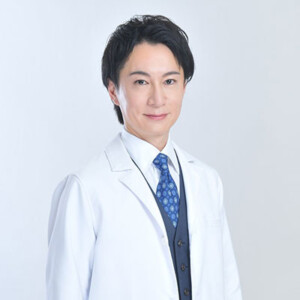
Dr. Jun Karibe
MD
Director
Education & Career
Certifications
Awards
MEDICAL REVIEW