What Is Embrace RF(Facetie), HIFU, and a Deep Plane Facelift?
All three treatments aim to reduce sagging in the lower face and neck, but they differ enormously in how invasive they are, what tissue layer they act on, and how long the correction lasts.
Embrace RF(Facetite)
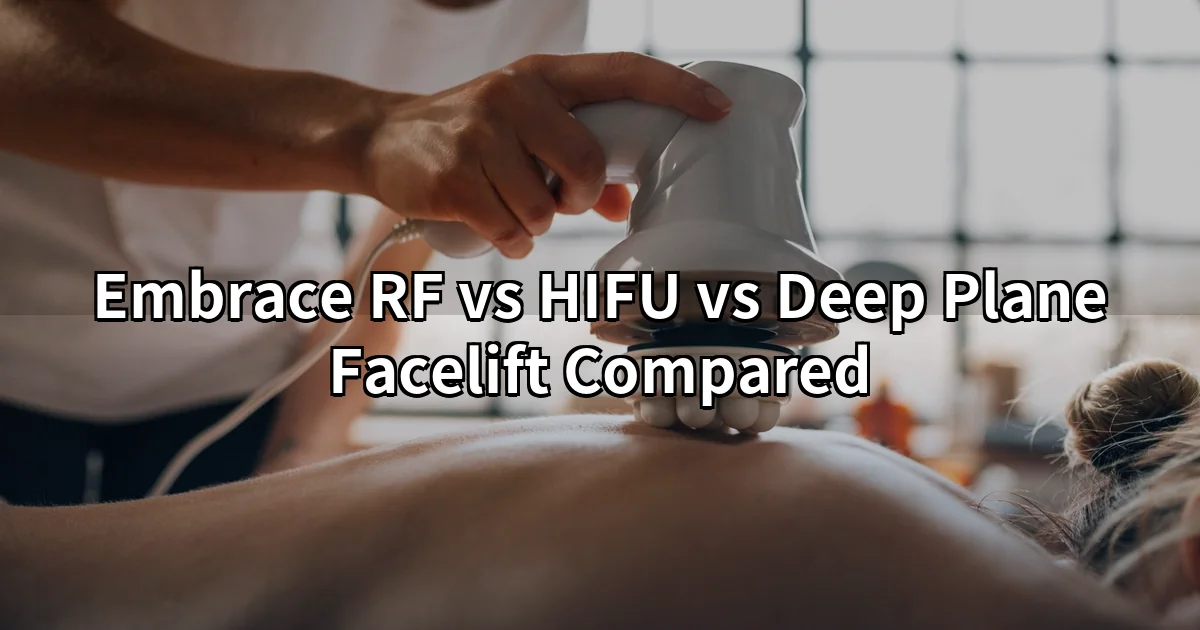
Embrace RF (Facetite) is a protocol that combines two radiofrequency (RF) technologies made by InMode:
FaceTite, a minimally invasive bipolar RF device inserted just under the skin through a tiny entry point, and Morpheus8, a fractional RF microneedling device applied to the skin surface. Together they are marketed as a “hybrid” between a non-surgical facial and a surgical facelift, because FaceTite delivers controlled subdermal heating that contracts tissue while Morpheus8 remodels the skin’s surface layers. It is important to note that FaceTite and Morpheus8 have received clearance from the US FDA, but — like most RF and ultrasound skin-tightening devices used in Japanese aesthetic clinics — they are not approved through Japan’s national medical device approval system (PMDA/MHLW). In Japanese clinics, these devices are typically used under a physician’s personal-import responsibility, which means treatment is self-pay and is not covered by Japanese health insurance.
HIFU (High-Intensity Focused Ultrasound)
HIFU focuses ultrasound energy at a precise depth beneath the skin — often at the same fibromuscular layer (the SMAS) that surgeons tighten during a facelift — without cutting the skin. The focused energy creates small points of thermal coagulation that stimulate new collagen production over the following weeks.
According to a 2023 notice from Japan’s Ministry of Health, Labour and Welfare, no HIFU device for aesthetic/cosmetic use is currently approved in Japan, and treatment may legally only be performed by a licensed physician — not by estheticians in a salon setting. This regulatory detail matters for safety as much as for legal compliance, since improperly calibrated HIFU can cause nerve injury or burns.
Deep Plane Facelift
A deep plane facelift is a surgical procedure performed under anaesthesia. Rather than only tightening skin, the surgeon repositions the SMAS and the deeper facial ligaments as a single connected unit, restoring volume position rather than simply pulling skin backward.
Because it addresses the structural cause of sagging rather than only the surface, it is generally considered the most durable option of the three, though it also carries surgical risk, a general anaesthetic, and a longer recovery. Deep plane facelift surgery is not part of the treatment menu at either BIOTOPE CLINIC or Kojimachi Dermatology & Plastic Surgery Clinic; it is discussed in this guide as the surgical benchmark against which non-surgical options are often compared.
Quick Comparison: Embrace RF vs HIFU vs Deep Plane Facelift
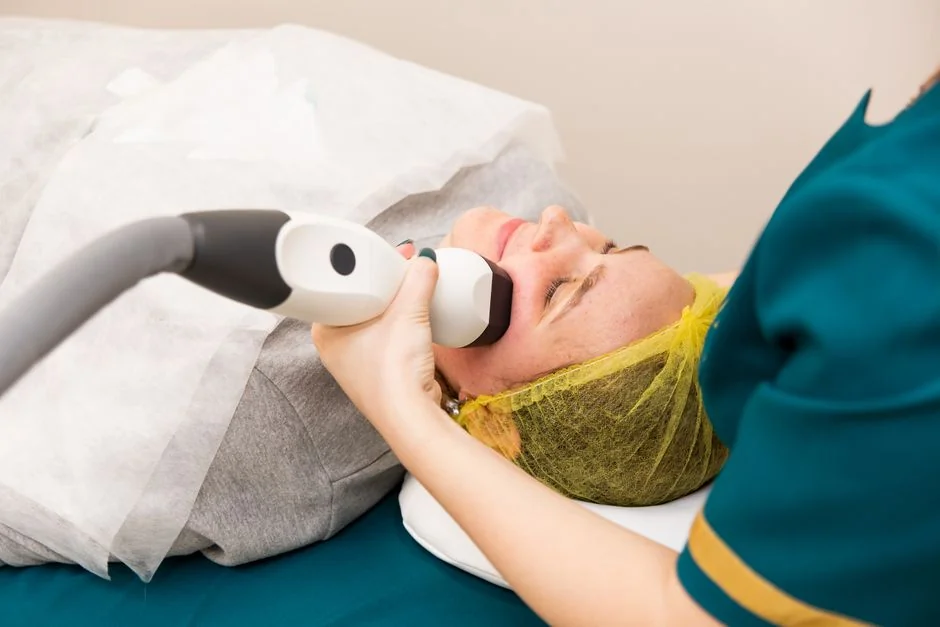
The table below summarises the practical differences reported in published literature and manufacturer/regulatory documentation, not clinic-specific marketing claims.
| Factor | Embrace RF | HIFU | Deep Plane Facelift |
|---|---|---|---|
| Invasiveness | Minimally invasive (small entry points, local anaesthesia) | Non-invasive (no incision) | Surgical (general or deep sedation) |
| Tissue layer treated | Subdermal fat and dermis | Dermis and SMAS layer | SMAS and deep ligaments, repositioned |
| Typical downtime | Several days to about two weeks of swelling/bruising | Minimal; mild swelling or redness for a few days | Two to three weeks before returning to normal activity; residual swelling can persist longer |
| Reported duration of results | Often described as 1–3 years depending on skin quality | Typically several months to around a year per treatment cycle | Studies suggest a mean of roughly a decade or more before patients seek a secondary lift |
| Japan regulatory status | Component devices FDA-cleared in the US; not approved under Japan’s national device system; used via physician personal import | Not approved for aesthetic use in Japan as of the most recent MHLW notice; physician-only | Performed by a licensed surgeon; a recognised surgical technique, not a “device” subject to the same approval pathway |
| Anaesthesia | Local/tumescent anaesthesia | Topical numbing, sometimes with oral sedation | General anaesthesia or deep IV sedation |
How Each Treatment Works
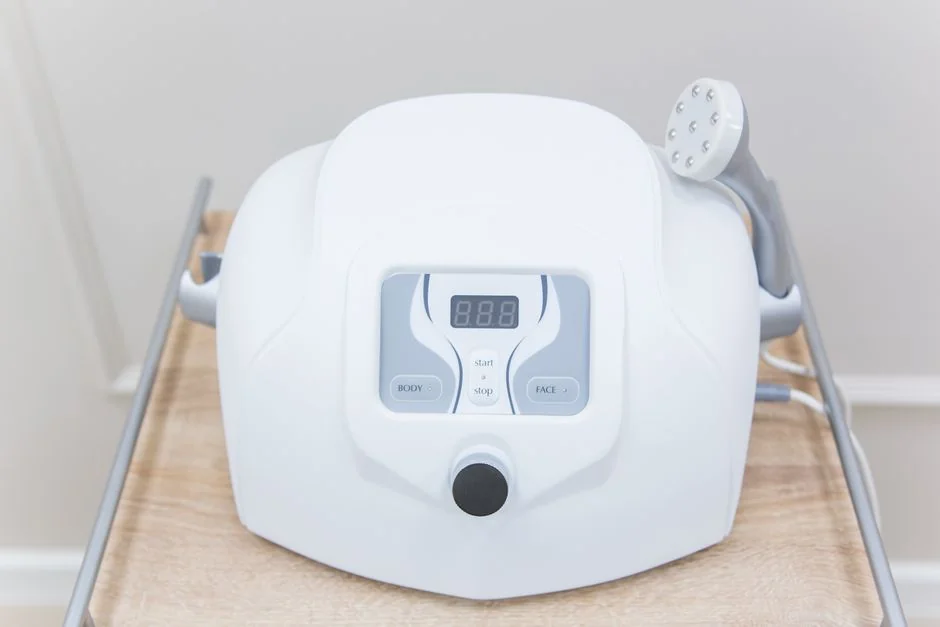
Radiofrequency and Ultrasound Energy (Non-Surgical Options)
Embrace RF(Facetite) and HIFU both rely on controlled heat to trigger the body’s own wound-healing response, which produces new collagen and, to a lesser extent, elastin over the following weeks to months.
FaceTite delivers bipolar RF energy directly beneath the skin via a small probe, which allows for more precise, higher-intensity heating than a purely external device.
Morpheus8 adds fractional RF microneedling, creating a grid of micro-injuries at variable depths to remodel the more superficial skin layers. Histological studies of RF microneedling report measurable increases in dermal collagen and elastin density after a course of treatment, alongside reduced signs of elastin fragmentation — the microscopic marker most closely tied to visible skin laxity.
HIFU works differently: it does not touch the skin surface at all. Instead, an ultrasound transducer focuses acoustic energy at a specific millimetre depth, creating tiny thermal coagulation points at that plane — often at or near the SMAS — while leaving the skin surface undamaged. This is why HIFU can be performed with essentially no downtime, though the trade-off is a less dramatic effect than a device that also treats the surface layers, or one that physically repositions tissue.
Surgical Repositioning of the SMAS
A deep plane facelift does not rely on heat-induced tissue contraction at all. Instead, the surgeon dissects beneath the SMAS and the deeper facial ligaments, releases the tissue from its fixed points, and repositions the entire composite unit — skin, SMAS, and fat compartments — as one layer, typically along a more vertical vector than older “SMAS plication” techniques.
Because the ageing process itself is largely a matter of tissue descending and volume shifting downward rather than skin simply stretching, structurally repositioning that tissue is what allows the surgical result to persist for years rather than months.
Expected Results: What the Evidence Shows
Clinical reports on the Embrace RF (Facetite) protocol are still relatively limited compared with decades of facelift literature, but a multicentre retrospective review of 247 patients treated with combined bipolar and fractional RF (the technologies used in Embrace RF) found an average 1.4-point improvement on the Baker Face/Neck Classification scale, with 93% of patients reporting they were satisfied with their results and would repeat the procedure.
Reported complications in that series were described as minimal, though as with any energy-based device, outcomes depend heavily on operator experience and appropriate patient selection.
For HIFU, a 2025 systematic review covering 45 clinical trials and cohort studies published between 2010 and 2024 reported improvements in skin laxity in the range of roughly 18% to 30%, concentrated in the lower face, neck, and periorbital area, with fewer than 5% of patients experiencing more than transient redness, swelling, or mild discomfort. Studies suggest that HIFU’s effect is generally more modest and gradual than either Embrace RF or surgery, which is consistent with its non-invasive design.
Deep plane facelift outcomes are the most extensively studied of the three. A 2026 systematic review and meta-analysis pooling 45 studies and 10,784 patients reported an overall complication rate of 6.6%, with no cases of permanent facial nerve injury recorded across the pooled data; temporary facial nerve dysfunction, the most frequently cited complication, occurred in roughly one in a hundred patients.
A separate long-term outcomes study following patients over three decades found that the average interval before a patient sought a secondary (“revision”) facelift was approximately 10.9 years, and patients who had their first facelift at age 53 or younger tended to wait even longer — around 12.4 years — before considering a revision. These figures describe averages across large patient populations and should not be read as a guarantee for any individual outcome, which depends on skin quality, age, genetics, and lifestyle factors such as sun exposure and smoking.
Cost in Tokyo
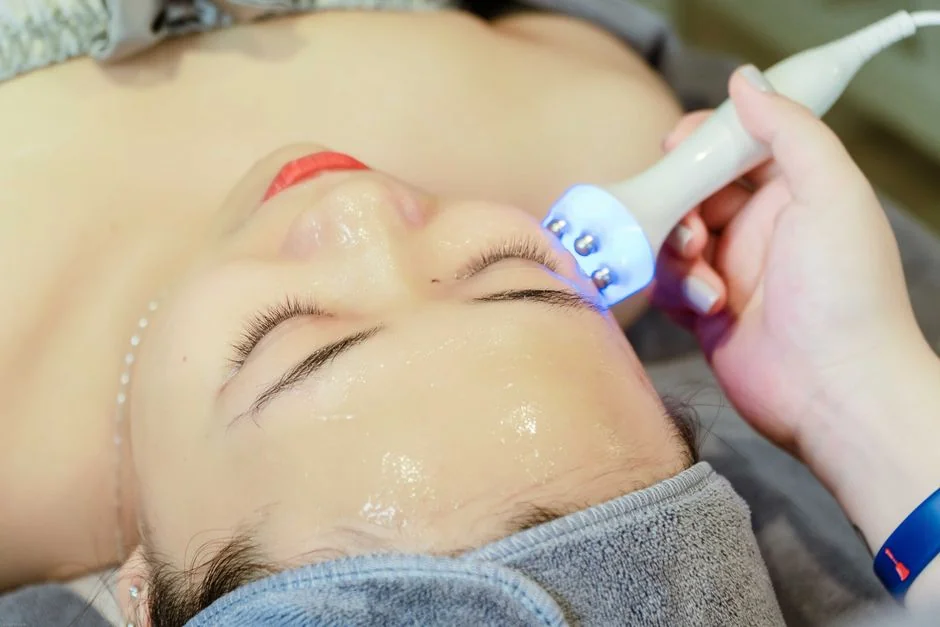
Pricing for Embrace RF, HIFU, and deep plane facelift surgery in Tokyo varies by clinic, the number of sessions or the specific surgical technique required, and whether combination treatments are recommended. As a general pattern, non-surgical options such as HIFU are typically priced per session or per treatment area, Embrace RF is usually priced as a package given its more involved, minimally invasive nature, and a deep plane facelift is quoted as a single surgical fee that reflects operating time, anaesthesia, and aftercare. Please see the clinic’s official price page or contact us for a current quote, as figures are subject to change and are best confirmed at the time of consultation. For an accurate quote, please book a consultation.
Have a question about this treatment?
Message us on LINE or WhatsApp — our English-speaking team usually replies the same day.
What to Expect: Before, During and After
Recovery After Non-Surgical Treatments
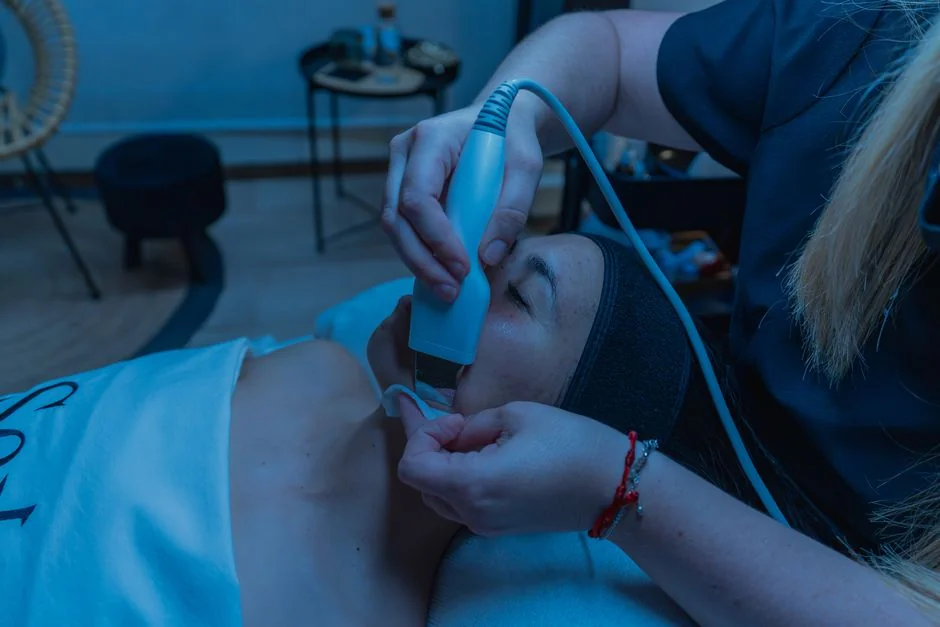
Before either Embrace RF or HIFU, patients typically attend a consultation to assess skin laxity, medical history, and suitability, since active skin infections, certain implanted devices, or pregnancy are contraindications for most energy-based treatments. During HIFU, most patients describe brief, intermittent discomfort as the ultrasound pulses are delivered, with the full session lasting roughly 30 to 90 minutes depending on the area treated; no anaesthesia beyond topical numbing is usually needed.
Embrace RF involves local or tumescent anaesthesia because FaceTite’s subdermal probe is inserted through small entry points, and the combined FaceTite-plus-Morpheus8 protocol has been reported to take under an hour of active treatment time in published series.
Afterward, HIFU downtime is minimal — most people return to normal activities the same day, with occasional mild redness or swelling. Embrace RF carries more noticeable downtime, generally several days to around two weeks of swelling and bruising, with final results continuing to develop over two to three months as new collagen forms. At BIOTOPE CLINIC in Shirokanedai, we frequently see patients who want visible tightening without the recovery time associated with surgery, which is exactly the gap Embrace RF and HIFU are designed to fill — though patients should understand that neither replicates a surgical result on more advanced sagging.
Recovery After Deep Plane Facelift Surgery
Deep plane facelift surgery requires a formal pre-operative work-up, blood tests, and a discussion of anaesthesia risk, since the procedure is performed under general anaesthesia or deep sedation and typically takes several hours in an operating theatre. Patients usually need one to two weeks away from work, with visible bruising and swelling that can take several weeks to fully settle, and strenuous exercise is generally restricted for around four to six weeks. Sutures and drains, if used, are typically removed within the first one to two weeks, and final results continue to refine over several months as swelling resolves completely.
Who Is a Good Candidate for Each Option?
Embrace RF tends to suit patients with mild to moderate skin laxity and some remaining skin elasticity who want a more noticeable result than HIFU alone but are not ready for surgery. HIFU is often a reasonable starting point for patients in their late 30s to 40s with early laxity, or as a maintenance treatment between other procedures, since studies suggest its effect is real but comparatively modest. A deep plane facelift is generally more appropriate for patients with moderate to advanced jowling, neck laxity, and midface descent — commonly, though not exclusively, patients in their 50s and older — where the volume of tissue that needs to be repositioned is beyond what heat-based collagen stimulation can meaningfully address.
None of the three is a universally correct choice. Patients with significant skin excess, very thin or fragile skin, active smoking (which impairs healing and RF/ultrasound response alike), certain autoimmune conditions, or unrealistic expectations about how closely a non-surgical treatment can mimic surgery should discuss alternatives with a physician before proceeding. This is a treatment available at BIOTOPE CLINIC in Shirokanedai — feel free to ask about it during a consultation with Dr. Karibe — where candidacy for Embrace RF versus HIFU versus a referral for surgical consultation can be assessed in person.
Common Misconceptions About Facelift Alternatives
One widespread misconception is that HIFU and RF devices such as Embrace RF are simply “non-surgical facelifts” that produce a comparable result to surgery without the recovery time. Published comparative data does not support this equivalence: the skin-laxity improvements reported for HIFU (roughly 18–30% in the cited 2025 systematic review) and the Baker classification improvement reported for combined RF protocols (1.4 points in the cited 247-patient series) are meaningful but modest compared with the structural repositioning achieved surgically, and neither is a substitute for surgery in patients with significant tissue descent.
A second common misunderstanding is that any HIFU or RF device offered in Japan must be government-approved simply because it is legal to use in a licensed clinic. As the MHLW’s own 2023 notice makes clear, no HIFU device for aesthetic use currently holds Japanese regulatory approval, and similar RF-based devices are generally used in Japan under a physician’s personal-import responsibility rather than through the national approval pathway. This does not mean the treatment is unsafe when performed by a qualified physician, but it does mean patients should ask their clinic directly about a device’s regulatory status rather than assuming approval.
Where to Get These Treatments in Tokyo
Within our clinic group, both BIOTOPE CLINIC (Shirokanedai, Minato-ku) and Kojimachi Dermatology & Plastic Surgery Clinic (Ichigaya, Chiyoda-ku) offer English-language consultation with Dr. Jun Karibe’s team. The non-surgical options covered in this guide — Embrace RF and HIFU — are handled at BIOTOPE CLINIC (Shirokanedai, Minato-ku), where Dr. Karibe personally consults on cosmetic dermatology and device-based treatments. Deep plane facelift surgery is not currently part of either clinic’s treatment menu; patients specifically interested in surgical correction are encouraged to raise this during a BIOTOPE consultation so that candidacy and realistic alternatives can be discussed honestly before deciding on a direction. Bookings and enquiries in English: LINE or WhatsApp.
Frequently Asked Questions
- Q. Can Embrace RF or HIFU replace a facelift entirely?
- For patients with mild to moderate laxity, these treatments can meaningfully improve skin tightness and jawline definition, but clinical reports indicate their effect is more modest than surgical repositioning of the SMAS. For significant sagging or excess skin, a facelift generally produces a more durable, comprehensive result.
- Q. Is HIFU approved as a medical device in Japan?
- According to a 2023 Ministry of Health, Labour and Welfare notice, no HIFU device for aesthetic/cosmetic use is currently approved in Japan, and the procedure may legally only be performed by a physician. Patients should confirm a clinic’s specific device and protocol directly during consultation.
- Q. How many sessions of Embrace RF or HIFU are typically needed?
- This varies by individual skin laxity and treatment goals, and is best determined during an in-person consultation rather than assumed from general figures. Please see the clinic’s official price page or contact us for a current quote and session recommendation.
- Q. How long do results from a deep plane facelift last?
- A long-term outcomes study following patients over thirty years found the average interval before a secondary lift was considered was approximately 10.9 years, with younger patients at the time of first surgery tending to wait even longer. Individual results vary considerably based on skin quality, genetics, and lifestyle.
Have a question about this treatment?
Message us on LINE or WhatsApp — our English-speaking team usually replies the same day.
Summary
Embrace RF(Facetite), HIFU, and a deep plane facelift address the same underlying concern — sagging in the lower face and neck — from three very different starting points: fractional and subdermal RF energy, focused ultrasound, and direct surgical repositioning of the SMAS.
Published data suggests each has a genuine, evidence-supported role, but the degree and durability of improvement scales roughly with how invasive the approach is. Choosing between them depends less on which is “better” in the abstract and more on the degree of laxity present, how much downtime is acceptable, and what result the patient realistically expects.
If you have questions about Embrace RF, HIFU, or facelift alternatives, both BIOTOPE CLINIC (Shirokanedai, Minato-ku) and Kojimachi Dermatology & Plastic Surgery Clinic (Ichigaya, Chiyoda-ku) offer English-language consultation with Dr. Karibe and his team. Embrace RF and HIFU are primarily handled at BIOTOPE CLINIC (Shirokanedai, Minato-ku). English enquiries: LINE or WhatsApp.
24/7 Consultation & Booking
Book a Consultation or Treatment
Our English-speaking team responds via LINE or WhatsApp — usually the same day.
References
- Haykal D, Sattler S, Verner I, Madhumita M, Cartier H. A Systematic Review of High-Intensity Focused Ultrasound in Skin Tightening and Body Contouring. Aesthetic Surgery Journal. 2025.
- Koroma P, Reji N, Burridge I, et al. Deep Plane Facelifts: A Systematic Review and Meta-Analysis of Outcomes. Aesthetic Plastic Surgery. 2026.
- Levin M, Frankel A. Thirty Years of Deep Plane Facelifts: Characterizing Outcomes and Longevity. Facial Plastic Surgery & Aesthetic Medicine. 2026.
- Dayan E, et al. Multimodal Radiofrequency Application for Lower Face and Neck Laxity. Plastic and Reconstructive Surgery Global Open. 2020.
- Ministry of Health, Labour and Welfare (Japan). Notice on Thorough Supervision and Guidance Regarding HIFU (High-Intensity Focused Ultrasound) Devices. 2023.
Related Articles
You may also find these articles useful.
- Embrace RF vs HIFU vs Deep Plane Facelift Tokyo
- Embrace RF Tokyo: FaceTite Plus Morpheus8 Explained
- FaceTite vs Surgical Facelift in Tokyo: Which to Choose
- HIFU in Tokyo: Non-Surgical Skin Tightening Explained
- Non-Surgical Facelift Tokyo: Embrace RF for 40s & 50s
SUPERVISED BY
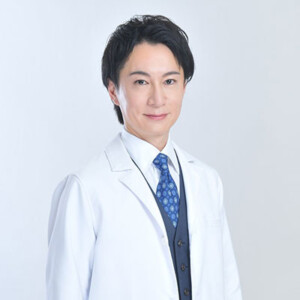
Dr. Jun Karibe
MD
Director
Education & Career
Certifications
Awards
MEDICAL REVIEW