What Is Exosome Therapy?
Exosomes are tiny, naturally occurring vesicles — roughly 30 to 150 nanometres across — that cells release to communicate with one another. They carry proteins, growth factors, and genetic material such as microRNA, which can influence the behaviour of neighbouring cells, including skin fibroblasts.
In aesthetic medicine, exosomes are typically derived from cultured stem cells and are administered without any living cells present. The treatment is marketed for skin texture, tone, and firmness, and is often positioned as a complement to procedures such as microneedling, HIFU, or laser resurfacing rather than a replacement for them.
It is worth stating clearly: exosome therapy is not the same as stem cell therapy. Exosomes are cell-derived particles, not living cells, and this distinction matters for both how the treatment works and how it is currently regulated in Japan, which we cover below.
How Exosome Therapy Works for Skin Rejuvenation
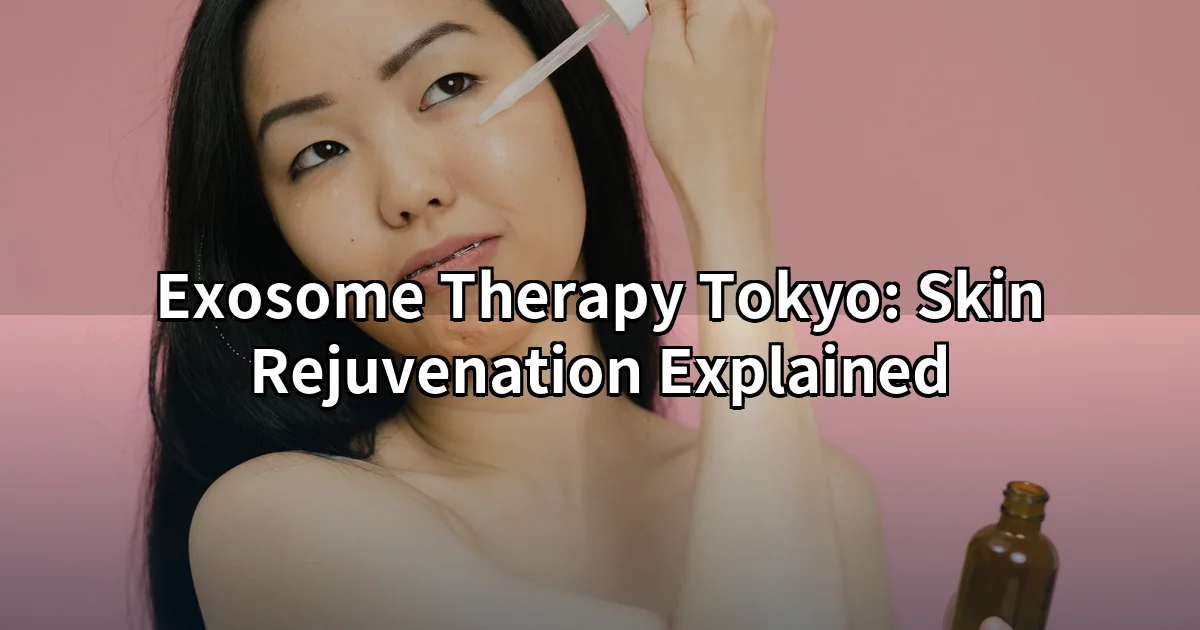
Once introduced into the skin — by injection, microneedling, or topical application after a device-assisted procedure — exosomes are thought to deliver growth factors and signalling molecules to fibroblasts, the cells responsible for producing collagen and elastin.
Research reviewed in the Journal of Cosmetic Dermatology suggests this signalling can reduce the activity of enzymes (matrix metalloproteinases) that break down collagen, while supporting new collagen and elastin synthesis.
Other proposed mechanisms include modulating melanin production, which is why exosomes are also studied for pigmentation, and supporting wound-healing pathways relevant to scarring. At BIOTOPE CLINIC in Shirokanedai, we frequently see patients who are combining exosome therapy with an existing HIFU or Morpheus8 RF microneedling programme, using exosomes as a supportive step rather than a stand-alone transformation.
Expected Results
Clinical reports indicate measurable but modest improvements. A 2026 systematic review and meta-analysis in Aesthetic Surgery Journal, which pooled data from 39 human clinical trials, found an average facial wrinkle reduction of 20.2% (95% CI, 15.3%–25.2%; P < .001), alongside improvements of 14.7% to 23.4% in pigmentation, elasticity, texture, and redness across the studies reviewed.
These figures describe group averages across a mixed evidence base, not a guaranteed individual outcome.
A separate 2025 review in the International Journal of Molecular Sciences cautions that many of the underlying studies lack standardised production methods and long-term follow-up, so results can vary between products, clinics, and patients.
| Approach | How It Works | Typical Downtime | Best Suited For |
|---|---|---|---|
| Exosome therapy | Delivers growth factors/signalling molecules to support collagen production | Minimal to none (mild redness possible) | Dullness, fine lines, uneven texture; often paired with other treatments |
| PRP (platelet-rich plasma) | Concentrates the patient’s own platelets and growth factors | 1–3 days of mild swelling/bruising | Patients preferring an autologous (self-derived) approach |
| HIFU / Morpheus8 RF microneedling | Uses focused ultrasound or radiofrequency to stimulate deeper collagen remodelling | A few days of redness or mild swelling | Skin laxity and contouring, often combined with exosomes |
Cost of Exosome Therapy in Tokyo
Exosome therapy in Japan is a self-pay (自由診療) treatment; it is not covered by Japanese national health insurance, since it is classified as cosmetic and regenerative medicine rather than treatment for a diagnosed disease. Pricing depends on the delivery method, the number of sessions, and the exosome product used.
At BIOTOPE CLINIC, exosome treatment is currently listed at ¥660,000 for an intravenous infusion, or ¥660,000 per site for local (targeted) injection. Please see the clinic’s official price page or contact us for a current quote, as pricing structures can change. For an accurate quote, please book a consultation.
Have a question about this treatment?
Message us on LINE or WhatsApp — our English-speaking team usually replies the same day.
What to Expect: Before, During and After Treatment

Before
Your consultation will cover your skin concerns, medical history, and whether exosome therapy suits your goals — or whether another treatment, or a combination, would serve you better. Dr. Karibe’s team will also explain the product’s source and handling, since quality control varies between suppliers.
During
Depending on the delivery method, the session may involve an IV infusion lasting roughly 30–60 minutes, or a series of fine injections into the treatment area, sometimes paired with microneedling to improve penetration. Most sessions do not require anaesthesia beyond a topical numbing cream.
After
Downtime is typically minimal — mild redness or small injection marks that resolve within a day or two are common. Visible changes in skin quality tend to build gradually over several weeks as collagen remodelling occurs, rather than appearing immediately.
Who Is a Good Candidate?
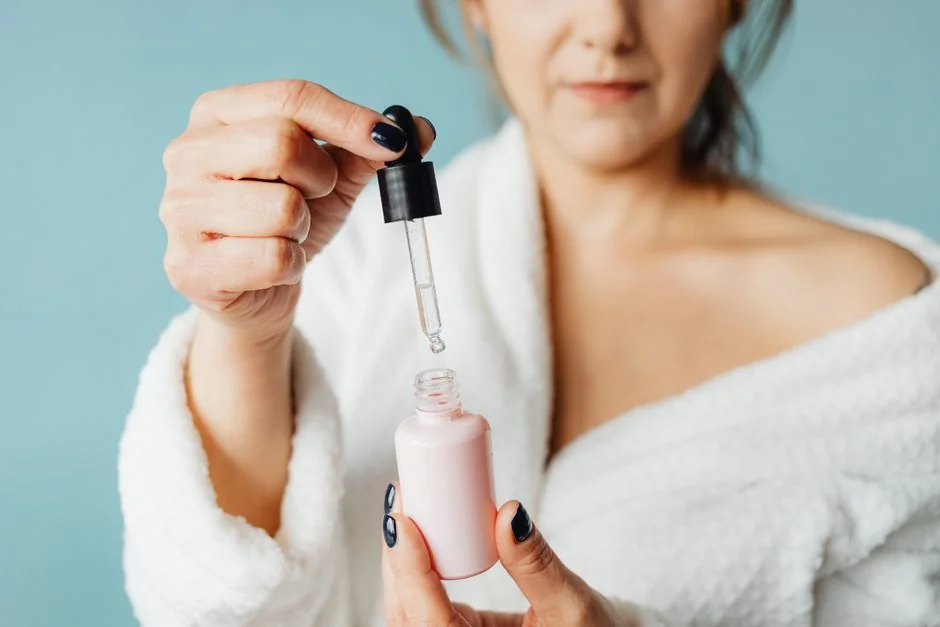
Exosome therapy tends to suit adults with early-to-moderate signs of ageing — fine lines, dullness, or uneven texture — who want a low-downtime option, potentially alongside device-based treatments. It may also appeal to patients who prefer to avoid the autologous blood draw required for PRP.
It is not appropriate for everyone. Pregnant or breastfeeding patients, and those with active skin infections in the treatment area, are generally advised against injectable regenerative treatments as a matter of standard clinical caution.
Patients with a personal history of cancer should discuss exosome therapy with their physician beforehand, given that its proposed mechanism involves stimulating cell growth signalling — an area regulators have specifically flagged as needing scrutiny.
Common Misconceptions About Exosome Therapy
“Exosome therapy is government-approved.”
No exosome-based product has received pharmaceutical marketing approval from Japan’s regulators, or from the U.S. FDA, for any medical or cosmetic indication. In Japan, exosome and cell-culture-supernatant treatments currently fall outside the scope of the Act on the Safety of
Regenerative Medicine specifically because they do not contain living cells — though a Ministry of Health, Labour and Welfare working group recommended in 2025 that this gap be closed, and the ministry’s regenerative medicine evaluation committee opened formal discussion on new rules in July 2026. In practice, this means the treatment is offered as self-pay medicine under general clinical safety guidance, not under a dedicated approval framework — a distinction worth understanding before booking.
“Exosomes and stem cells are the same thing.”
They are not. Exosomes are acellular vesicles secreted by cells; they do not divide, replicate, or persist in the body as living cells do. This is precisely why they are often marketed as an “easier” option than stem cell therapy, but it does not mean the evidence base or safety profile is equivalent to an approved drug — the FDA has separately warned that some clinics make unsubstantiated claims about what exosome products can treat or cure.
Where to Get Exosome Therapy in Tokyo
Within our clinic group, both BIOTOPE CLINIC (Shirokanedai, Minato-ku) and Kojimachi Dermatology & Plastic Surgery Clinic (Ichigaya, Chiyoda-ku) offer English-language consultation with Dr. Jun Karibe’s team. Exosome therapy, along with related regenerative and cosmetic dermatology treatments, is handled at BIOTOPE CLINIC in Shirokanedai. Kojimachi Dermatology & Plastic Surgery Clinic remains the group’s main office for insurance-covered general dermatology and general/aesthetic plastic surgery. Bookings and enquiries in English: LINE or WhatsApp.
Frequently Asked Questions
- Q. Is exosome therapy the same as PRP?
- No. PRP uses concentrated platelets and growth factors from your own blood, while exosome therapy uses vesicles typically derived from cultured stem cells, administered without any living cells. Both aim to support collagen production, but the source material and regulatory considerations differ.
- Q. How many sessions are usually needed?
- This varies by individual goals and the delivery method used. Your consultation with Dr. Karibe’s team will outline a plan based on your skin assessment — for an accurate recommendation, please book a consultation.
- Q. Is exosome therapy covered by insurance in Japan?
- No. It is offered as self-pay (自由診療) cosmetic and regenerative medicine, not as insurance-covered treatment for a diagnosed medical condition.
- Q. Are there risks I should know about?
- Reviewed studies report a favourable short-term safety profile with no significant adverse reactions to date, but the overall evidence base remains limited, with small sample sizes and inconsistent product standardisation across the industry. Discuss your medical history, including any cancer history, with your doctor beforehand.
Have a question about this treatment?
Message us on LINE or WhatsApp — our English-speaking team usually replies the same day.
Summary
Exosome therapy is a low-downtime regenerative treatment with growing but still-developing clinical evidence behind it — studies suggest measurable, moderate improvements in wrinkles, texture, and tone, though results vary and the field lacks standardisation.
In Japan, it is offered as self-pay medicine, sits outside the current scope of the Act on the Safety of Regenerative Medicine, and is the subject of an active 2026 regulatory review. If you have questions about exosome therapy, both BIOTOPE CLINIC (Shirokanedai, Minato-ku) and Kojimachi Dermatology & Plastic Surgery Clinic (Ichigaya, Chiyoda-ku) offer English-language consultation with Dr. Karibe and his team. Exosome therapy is primarily handled at BIOTOPE CLINIC. English enquiries: LINE or WhatsApp.
24/7 Consultation & Booking
Book a Consultation or Treatment
Our English-speaking team responds via LINE or WhatsApp — usually the same day.
References
- Stack ER, Spongberg C, Braud SC, Stanton WN, Elway M. Clinical Advances in Exosome-Based Therapies for Aesthetic Medicine: A Systematic Review and Meta-analysis of Human Clinical Trials. Aesthetic Surgery Journal. 2026;46(Supplement_1):S13-S25.
- Shah H, et al. Exosomes for Aesthetic Dermatology: A Comprehensive Literature Review and Update. Journal of Cosmetic Dermatology. 2025;24(1):e16766.
- Domaszewska-Szostek A, Krzyżanowska M, Polak A, Puzianowska-Kuźnicka M. Effectiveness of Extracellular Vesicle Application in Skin Aging Treatment and Regeneration: Do We Have Enough Evidence from Clinical Trials? International Journal of Molecular Sciences. 2025;26(5):2354.
- U.S. Food and Drug Administration. Public Safety Alert Due to Marketing of Unapproved Stem Cell and Exosome Products. 2024.
- Ministry of Health, Labour and Welfare (Japan). Administrative notice on the safe implementation of medical technologies using exosomes. July 2024; and related regenerative medicine evaluation committee discussions, 2025–2026.
Related Articles
You may also find these articles useful.
- Stem Cells vs Exosomes vs Supernatant in Tokyo
- Autologous Stem Cell Therapy Tokyo: Skin Rejuvenation
- Autologous Cultured Stem Cell Therapy Tokyo
- Anti-Aging Treatments Tokyo: Complete Guide for Expats
- NMN Drip Therapy Tokyo: Anti-Aging IV Treatment Guide
SUPERVISED BY
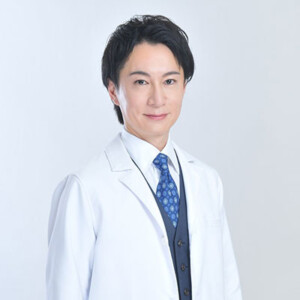
Dr. Jun Karibe
MD
Director
Education & Career
Certifications
Awards
MEDICAL REVIEW