What People Often Get Wrong About FaceTite
Misconception 1: FaceTite is a non-surgical treatment. This is a common mischaracterisation in consumer media. FaceTite is minimally invasive, but it is not non-surgical. It requires tumescent local anaesthesia (a dilute anaesthetic solution injected into the treatment area), one or more small incisions through which the internal probe is introduced, and carries the same general infection and bruising risks associated with any procedure that breaches the skin. Patients should approach it with the same diligence they would apply to any minor surgical procedure — including a full consultation, medical history review, and post-procedure care commitment.
Misconception 2: Results appear immediately and are permanent. The immediate visible change after FaceTite largely reflects the mechanical action of fat removal and early collagen contraction. The full remodelling benefit takes three to six months to manifest. Additionally, FaceTite does not halt the natural ageing process. The neocollagenesis it stimulates is a long-lasting improvement, but patients who continue to gain weight, experience significant hormonal changes, or age considerably over time will still experience progressive facial change. Maintenance treatments — or adjunct procedures — may be appropriate years down the line.
FaceTite vs. Comparable Facial Contouring Treatments: A Comparison
Understanding how FaceTite relates to other available modalities helps patients and their physicians select the most appropriate approach. The table below compares FaceTite with three treatments relevant to facial contouring in Tokyo, including options available at Kojimachi Dermatology and Plastic Surgery Clinic.
| Treatment | Invasiveness | Primary Mechanism | Fat Reduction | Skin Tightening | Downtime | Approximate Cost (Tokyo) |
|---|---|---|---|---|---|---|
| FaceTite (RFAL) | Minimally invasive (small incisions, local anaesthesia) | RF-assisted lipolysis + collagen remodelling | Yes — direct subcutaneous | Significant | 7–14 days social, up to 4 weeks full | Varies by clinic; typically ¥300,000–¥700,000 in Japan |
| HIFU (e.g., Ultherapy) | Non-invasive | Focused ultrasound heating of SMAS layer | Minimal | Moderate | Minimal (redness 1–2 days) | ¥25,000–¥110,000 (clinic pricing) |
| Morpheus8 / RF Microneedling | Minimally invasive (microneedles) | Fractional RF into dermis and subdermal fat | Mild superficial | Moderate to good | 3–7 days (redness, pin-point marks) | Varies; typically ¥50,000–¥180,000 per session |
| Surgical liposuction (cheek/jawline) | Surgical (cannula, local or general anaesthesia) | Mechanical fat aspiration | Yes — substantial | Limited (no energy component) | 10–21 days typical | ¥280,000 per area (clinic pricing) |
| Thread lift (Tesslift) | Minimally invasive (needles) | Mechanical repositioning of soft tissue | None | Moderate repositioning | 3–7 days | ¥48,000 per thread (clinic pricing) |
For patients who want meaningful fat reduction alongside skin tightening but are not yet ready for open surgery, FaceTite offers a clinically distinct option. For those with milder concerns about skin quality and texture but minimal fat excess, non-invasive options such as HIFU or RF microneedling may be sufficient and more proportionate to the concern. Both HIFU and Morpheus8 RF microneedling are available at BIOTOPE CLINIC and Kojimachi Dermatology & Plastic Surgery Clinic — feel free to ask about these options during a consultation.
Cost of FaceTite in Tokyo
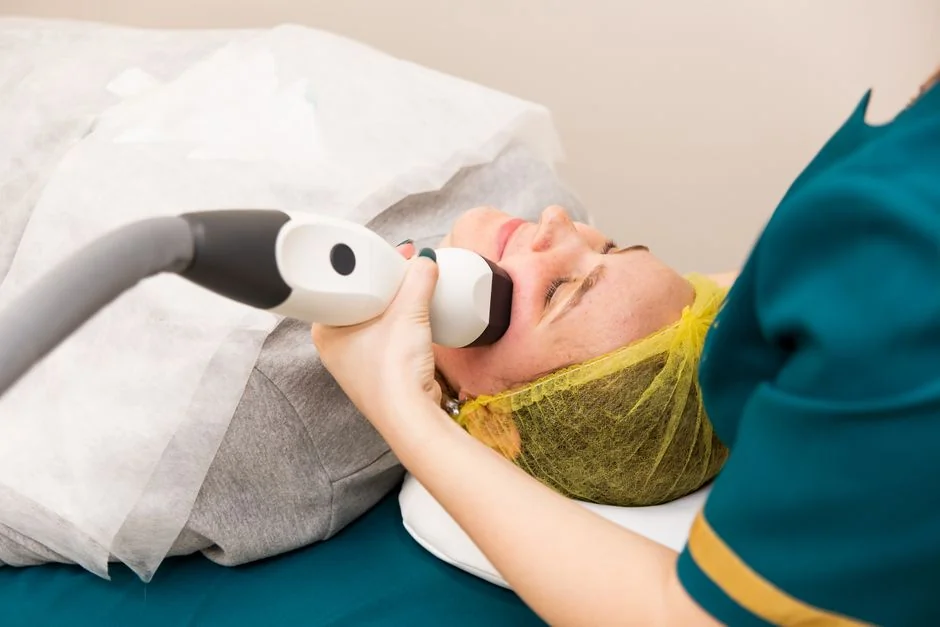
FaceTite pricing in Japan varies considerably depending on the extent of the treatment area, the clinical setting, the experience of the physician, and whether the procedure is combined with complementary treatments on the same day. As a general reference, patients enquiring at Tokyo clinics should anticipate fees in the region of ¥300,000 to ¥700,000 for a standard facial contouring session covering the jowls, jawline, and submentum. Broader treatment areas or combination sessions with complementary modalities will increase the total.
Anaesthesia fees should also be factored into the total. For context, at Kojimachi Dermatology and Plastic Surgery Clinic, anaesthesia costs for surgical and minimally invasive procedures range from ¥2,200 to ¥77,000 depending on the type and duration. Pre-operative blood work, required for safety clearance, is priced at ¥11,000. These ancillary fees are standard across responsible clinical settings in Tokyo and should always be included when comparing quotations.
It is worth noting that some clinics offer related fat-reduction treatments — such as surgical cheek and jawline liposuction — at ¥280,000 per area, and thread lift procedures at ¥48,000 per thread. For patients whose primary concern is contouring without significant skin laxity, these may represent a more cost-efficient pathway worth discussing with the treating physician.
For an accurate quote, we recommend booking a consultation.
Have a question about this treatment?
Message us on LINE or WhatsApp — our English-speaking team usually replies the same day.
What to Expect: Before, During, and After FaceTite
Before the Procedure
A thorough consultation is the essential first step. The physician will review the patient’s medical history, assess skin quality and fat distribution in the target area, and discuss whether FaceTite is the most appropriate tool — or whether an alternative, such as surgical liposuction, a thread lift, or a non-invasive energy treatment, might serve the patient better. Pre-operative blood work is standard and required for patient safety.
Patients are typically advised to avoid blood-thinning medications and supplements (aspirin, ibuprofen, high-dose vitamin E, and fish oil) for a period specified by their physician — commonly one to two weeks before the procedure. Smokers are strongly encouraged to cease or significantly reduce smoking for at least two to four weeks prior to treatment, as nicotine impairs microcirculation and wound healing.
During the Procedure
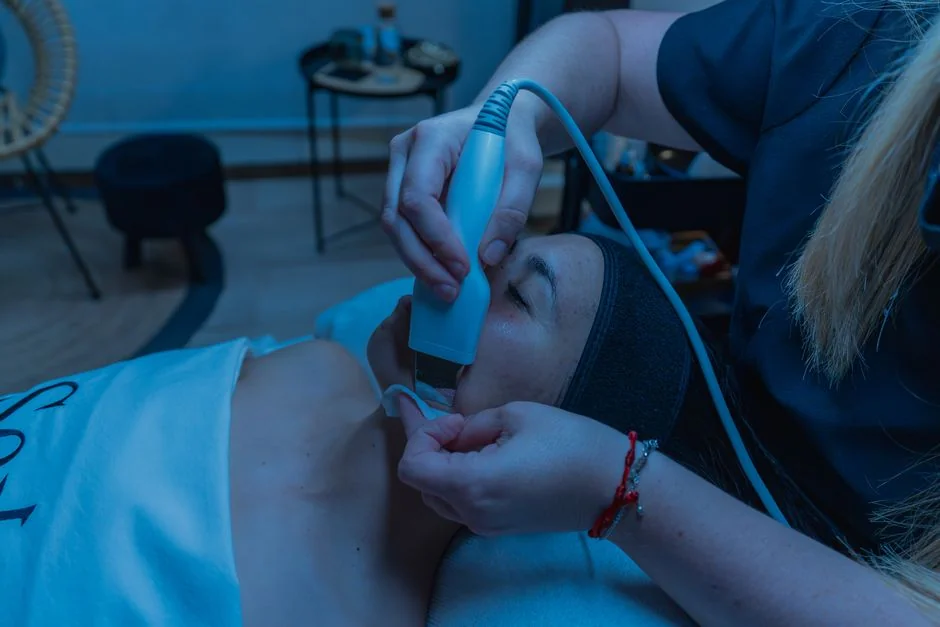
Tumescent local anaesthesia is infiltrated into the treatment area before the RF probe is introduced through a small incision, typically 2–3mm in length, positioned in a discreet location such as beneath the chin or in the natural crease behind the earlobe. The physician then guides the internal electrode through the subcutaneous tissue while monitoring the device’s real-time temperature readout. Patients are awake throughout and may feel warmth and mild pressure, but should not experience significant pain.
A single session addressing the jawline, jowls, and submentum typically takes between 60 and 90 minutes. If additional areas are included, the duration extends accordingly.
After the Procedure: Recovery Timeline
Swelling and bruising are the most common post-procedure findings and are expected. A compression garment is typically worn around the lower face and neck for a minimum of one week — often two to three weeks — to support even contraction of the treated tissue.
In our clinical experience at BIOTOPE CLINIC and Kojimachi Dermatology & Plastic Surgery Clinic, international patients planning a visit to Tokyo for a procedure of this nature should budget a minimum of ten to fourteen days before flying, both to allow the most dramatic early swelling to resolve and to attend a post-operative review with the treating physician. Full resolution of deeper swelling and the emergence of the final remodelling result typically takes three to six months.
- Days 1–5: Peak swelling and bruising. Rest advised. Compression garment worn continuously.
- Days 5–14: Visible improvement in swelling. Many patients can return to desk-based work after the first week, provided they are comfortable with some residual bruising or are able to cover it with makeup (if approved by the physician).
- Weeks 3–6: Majority of swelling resolved. Early contouring results visible.
- Months 3–6: Final collagen remodelling result becomes apparent.
Who Is a Good Candidate for FaceTite?
The ideal FaceTite candidate is generally an adult in good overall health who has mild-to-moderate subcutaneous fat deposits in the lower face and neck, alongside some degree of skin laxity that would benefit from the tightening stimulus the technology provides. The procedure tends to produce the most visibly proportionate outcomes in patients who are at or close to a stable, healthy body weight — not as a weight-loss tool, but as a contouring procedure for localised fat that has not responded to lifestyle measures.
Patients who tend to achieve the best outcomes are typically aged approximately 35 to 65, with good baseline skin elasticity (some residual collagen reserve), early jowling, submental fullness, or early neck laxity. Skin that is too significantly sun-damaged, or that has already lost the majority of its elastic tissue, may not respond as robustly to the collagen-stimulating component of the treatment.
Who Should Consider an Alternative Approach?
Patients with severe skin laxity — where redundant skin would remain even after fat removal and maximal collagen contraction — are typically better served by surgical intervention, such as a lower face and neck lift with skin excision. FaceTite cannot remove excess skin; it can only encourage existing skin to contract around a reduced volume of subcutaneous tissue. Patients with unrealistic expectations about the degree of change achievable, or those whose skin elasticity is severely compromised, will often be directed toward a different treatment pathway.
Individuals with certain medical conditions — including active skin infections in the treatment area, implantable electronic devices such as pacemakers (which can be affected by RF fields), blood coagulation disorders, or uncontrolled diabetes — are typically not suitable candidates. A full medical history review during the consultation will identify any such contraindications.
Frequently Asked Questions
- Q. Is FaceTite painful?
- The procedure is performed under tumescent local anaesthesia, so the treatment itself should not be significantly painful. Patients typically report feeling warmth and pressure during the session. Post-procedure discomfort in the first few days is generally manageable with over-the-counter analgesics such as paracetamol, and most patients describe it as mild to moderate soreness rather than acute pain.
- Q. How many FaceTite sessions are needed?
- In the majority of cases, a single FaceTite session produces the intended result, as the fat removal component is not repeated and the collagen remodelling follows from that single intervention. However, depending on individual response and the extent of the area treated, some patients may benefit from a complementary non-invasive treatment — such as HIFU or RF microneedling — to extend and enhance results over time. This would be discussed at a follow-up consultation.
- Q. How long do FaceTite results last?
- The fat cells removed during FaceTite do not regenerate in that location, meaning the structural reduction in volume is long-lasting. The collagen induced by the procedure typically provides a meaningful improvement for two to five years, depending on the individual’s rate of ageing, weight stability, and lifestyle factors. The procedure does not halt ongoing facial ageing, and patients should expect to age naturally beyond the point of their treatment.
- Q. Is FaceTite suitable for Asian skin types?
- RF-based treatments in general carry a lower risk of post-inflammatory hyperpigmentation (darkening of the skin after trauma or heat) compared with certain laser modalities, making them a clinically appropriate option for a broad range of Fitzpatrick skin types, including types III through V commonly seen among patients of East Asian, Southeast Asian, and South Asian heritage. Individual assessment is always required, as skin type is only one of several factors the physician considers. This is a topic worth raising directly during the consultation.
- Q. Can FaceTite be combined with other treatments?
- Yes, combination approaches are common and can be planned strategically. FaceTite addresses subdermal fat and deeper collagen; it is frequently combined with treatments targeting the superficial dermis (such as RF microneedling with Morpheus8), injectables (hyaluronic acid filler for volume restoration or Botox for dynamic lines), or structural repositioning (such as thread lifting). A staged approach — allowing the primary procedure to heal fully before adding complementary treatments — is generally preferred over performing everything simultaneously, unless specifically planned by an experienced physician.
- Q. Is FaceTite available in English at Tokyo clinics?
- Access to English-language consultations varies between clinics. At BIOTOPE CLINIC or Kojimachi Dermatology and Plastic Surgery Clinic in Tokyo, the team offers consultations in English, which is particularly relevant for expatriates and medical tourists who want to communicate their concerns clearly and understand the proposed treatment plan fully before making a decision.
Have a question about this treatment?
Message us on LINE or WhatsApp — our English-speaking team usually replies the same day.
Summary
FaceTite represents a well-established, minimally invasive option for patients seeking meaningful facial contouring — particularly in the lower face and neck — without committing to open surgical intervention. By delivering bipolar radiofrequency energy simultaneously from within and above the tissue, the procedure achieves both subcutaneous fat reduction and collagen remodelling in a single session. Studies suggest that appropriately selected patients can achieve visible, measurable improvement in tissue contraction and contour definition that is maintained over a clinically meaningful period.
The technology is not a substitute for a surgical facelift in patients with significant skin excess, nor is it a replacement for non-invasive treatments in those with only mild concerns. The consultation process — with a physician who can assess skin quality, fat distribution, and patient expectations honestly — remains the most important step in the journey.
Patients considering FaceTite should factor in the total cost (including anaesthesia and pre-operative testing), a realistic recovery window of at least ten to fourteen days before resuming social activities or flying, and the understanding that final results emerge gradually over three to six months.
For patients whose concerns are milder, or who prefer to begin with a non-invasive pathway, HIFU and Morpheus8 RF microneedling are treatments available at BIOTOPE CLINIC and Kojimachi Dermatology & Plastic Surgery Clinic in Tokyo — feel free to ask about these during a consultation.
If you have questions about FaceTite and RF-assisted lipolysis for facial contouring, our team at BIOTOPE CLINIC and Kojimachi Dermatology & Plastic Surgery Clinic in Ichigaya, Tokyo would be happy to help. We offer consultations in English.
24/7 Consultation & Booking
Book a Consultation or Treatment
Our English-speaking team responds via LINE or WhatsApp — usually the same day.
References
- Mulholland RS, Paul MD, Chalfoun C. Noninvasive body contouring with radiofrequency, ultrasound, cryolipolysis, and low-level laser therapy. Clinics in Plastic Surgery. 2011;38(3):503–520.
- Theodorou SJ, Paresi RJ, Chia CT. Radiofrequency-assisted liposuction device for body contouring: 97 patients under local anaesthesia. Aesthetic Plastic Surgery. 2012;36(4):767–779.
- Blugerman G, Schavelzon D, Paul MD. A safety and feasibility study of a novel radiofrequency-assisted liposuction technique. Plastic and Reconstructive Surgery. 2010;125(3):998–1006.
- Duncan DI. Nonexcisional tissue tightening: creating skin surface area reduction during abdominal liposuction by adding radiofrequency heating. Aesthetic Surgery Journal. 2013;33(8):1154–1166.
- Paul M, Mulholland RS. A new approach for adipose tissue treatment and body contouring using radiofrequency-assisted liposuction. Aesthetic Plastic Surgery. 2009;33(5):687–694.
Related Articles
You may also find these articles useful.
- FaceTite vs Surgical Facelift Tokyo: Minimally Invasive Alternative
- FaceTite for Jawline and Neck in Tokyo
- Volnewmer Tokyo: Monopolar RF Skin Tightening 2026
SUPERVISED BY
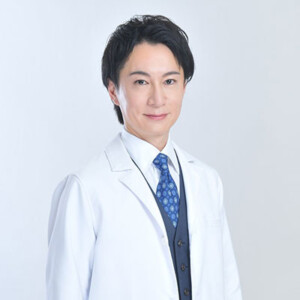
Dr. Jun Karibe
MD
Director
Education & Career
Certifications
Awards
MEDICAL REVIEW
2