Understanding Female Pattern Hair Loss (FAGA): A Tokyo Guide to Regenerative Treatment Options
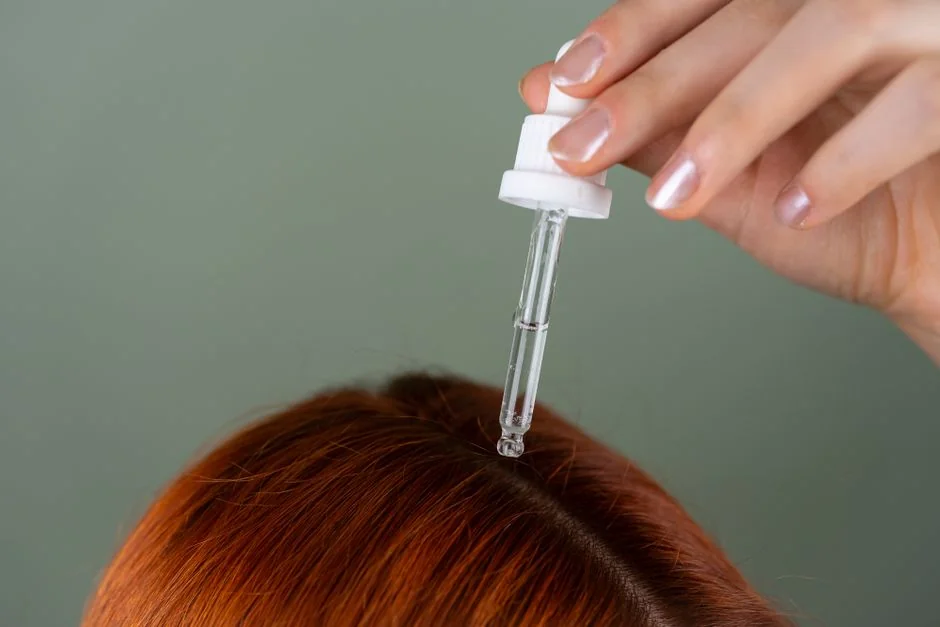
Noticing your centre parting gradually widen, your ponytail grow thinner, or your scalp become more visible under bright light is unsettling — and you may have found that clear information is harder to come by than for male hair loss. This guide explains what female androgenetic alopecia (FAGA) is, what regenerative treatments are available in Tokyo, and what the clinical evidence actually says about each option.
What you will learn in this article:
- How FAGA differs from male pattern hair loss and why this matters for treatment selection
- What regenerative options — including PRP and exosome therapy — are currently offered in Tokyo, and what the evidence says
- Who responds best to these treatments and what realistic expectations look like
- Why FAGA treatment in Japan is entirely self-pay and what that means practically
- How to access English-language specialist consultation in Tokyo
Have a question about this treatment?
Message us on LINE or WhatsApp — our English-speaking team usually replies the same day.
What Is FAGA and How Does It Differ from Male AGA?
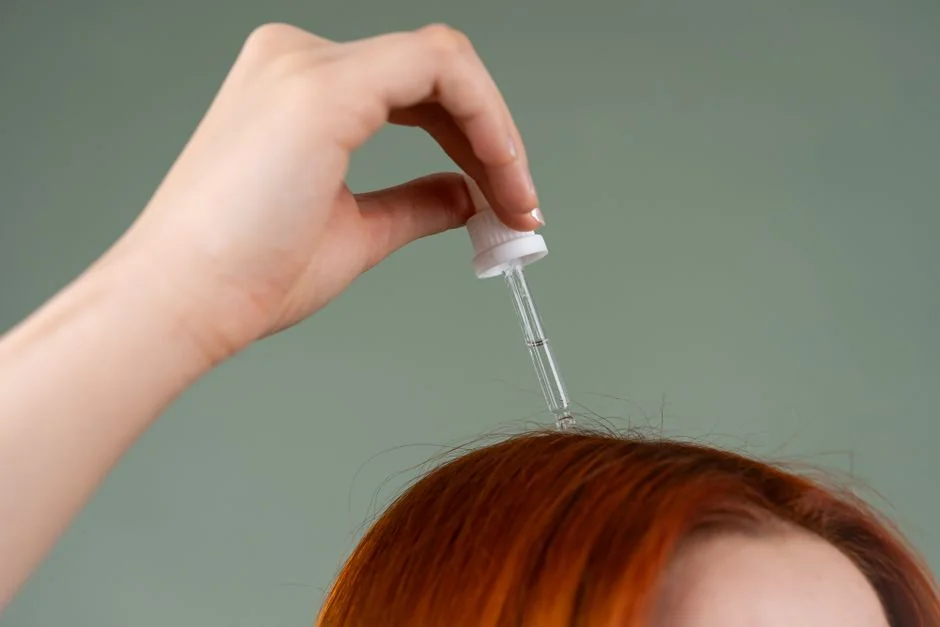
Female androgenetic alopecia (FAGA), also called female pattern hair loss (FPHL), is the most common cause of diffuse, progressive thinning in women. Unlike male androgenetic alopecia — which typically presents as a receding frontal hairline and vertex bald patch — FAGA usually manifests as widening of the centre parting with overall reduction in hair volume across the crown, while the frontal hairline remains largely intact. The skin surface is unaffected and the follicles are not destroyed; they undergo a process of miniaturisation, gradually producing finer, shorter fibres with each growth cycle.
Published data suggest that up to 50% of women may experience some degree of androgenetic hair thinning by the age of 70, with prevalence increasing substantially after menopause. The psychological burden is well documented — research consistently links FAGA with reduced self-esteem, social anxiety, and lower overall quality of life — making effective treatment both a cosmetic and a well-being priority.
The Biology Behind FAGA
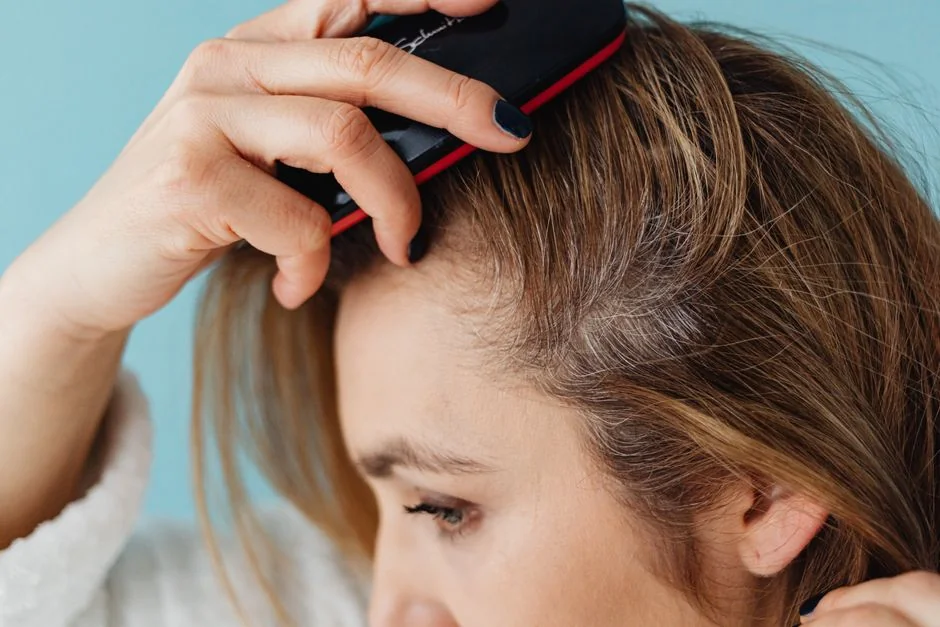
FAGA is driven by follicular sensitivity to dihydrotestosterone (DHT), a testosterone derivative produced in small quantities in all women. DHT progressively shortens the anagen (active growth) phase, causing each successive hair shaft to grow finer and shorter until the follicle enters prolonged dormancy. Oestrogen provides a degree of natural counterbalance to this process, which explains why hair thinning often accelerates noticeably during the peri- and post-menopausal years.
Genetic predisposition is the primary determinant, but the process can be significantly amplified by nutritional deficiencies — particularly low ferritin, vitamin D, or zinc — thyroid dysfunction, chronic psychological stress, and certain medications. A thorough evaluation to identify and address these modifiable factors is an essential part of any treatment plan.
Why Conventional Treatments Sometimes Fall Short
The established medical treatments for FAGA — topical minoxidil, oral minoxidil, and spironolactone — remain the evidence base against which all newer therapies are measured. In Japan, topical minoxidil at 1% concentration is available over the counter at pharmacies; higher-concentration formulations require a prescription. These medications can meaningfully slow progression and produce modest regrowth in a considerable proportion of patients.
Their principal drawback is that treatment must continue indefinitely: stopping typically reverses gains within months. Additionally, not every patient achieves satisfactory improvement in density, and side effects limit long-term adherence for some. It is precisely this gap that has driven growing clinical interest in regenerative approaches — therapies that aim to restore the follicular microenvironment rather than simply suppress the androgen signal.
Regenerative Treatment Options for FAGA
Regenerative therapies in hair restoration deliver biological signals — growth factors, extracellular vesicles, or cell-derived substances — directly to the scalp in order to stimulate dormant follicles, extend the anagen phase, and improve vascular supply to the dermal papilla. It is important to understand that none of these approaches carries formal approval from Japan’s Pharmaceuticals and Medical Devices Agency (PMDA) specifically for hair loss. They are offered in Japan as physician-administered procedures under the country’s 2014 Act on the Safety of Regenerative Medicine, and are entirely self-pay: health insurance does not cover FAGA treatment under current Japanese regulations.
Platelet-Rich Plasma (PRP) Therapy
PRP is currently the most extensively studied regenerative treatment for FAGA. A small volume of the patient’s own blood is drawn, centrifuged to concentrate the platelets, and the resulting plasma — rich in growth factors including PDGF, TGF-β, VEGF, and EGF — is injected at multiple points across the thinning scalp. Because the material is derived from the patient’s own blood, allergic reactions are extremely rare.
The clinical evidence is substantial. A 2024 systematic review and meta-analysis of 21 randomised controlled trials involving 628 women, published in Skin Research and Technology, concluded that PRP therapy “effectively enhances hair density and thickness in women with hair loss, with a favourable safety profile.” A further meta-analysis encompassing 42 studies and 776 female participants found that treated patients were meaningfully more likely to achieve objective hair density gains than those receiving sham injections, with an odds ratio of 1.61 compared with placebo. Adverse effects across both analyses were generally mild and transient — most commonly temporary scalp tenderness or redness resolving within 24 to 48 hours.
A standard initial course typically involves three to four monthly sessions, followed by maintenance injections every four to six months. Outcomes depend on technique, PRP preparation protocol, and the patient’s baseline follicular status, so results vary between individuals.
Exosome and Growth-Factor Therapy
Exosome therapy uses nano-scale extracellular vesicles derived from stem cells to deliver a concentrated payload of regenerative molecular signals directly to follicular cells. Unlike PRP, exosomes contain no living cells, which simplifies their regulatory classification and reduces theoretical immune risk. Early clinical reports are encouraging: a 2025 systematic review covering eleven hair regeneration studies reported density improvements in the range of approximately 9.5 to 35 additional hairs per cm² across treatment groups, though the authors noted that study populations were small and rigorous placebo-controlled comparisons remain limited. This is a rapidly evolving field and patients should approach it as a promising but still investigational option.
Stem cell culture supernatant therapy — in which the conditioned medium from cultured stem cells is delivered to the scalp — follows a similar biological rationale and is available at BIOTOPE CLINIC in Shirokanedai as an adjunct or standalone treatment option. Feel free to ask about this during a consultation with Dr. Karibe.
Combination Protocols
In clinical practice, regenerative treatments are frequently combined with established medical therapy rather than used as a standalone replacement. Pairing PRP sessions with topical minoxidil, for example, addresses both the androgen pathway and the follicular microenvironment simultaneously. Nutritional optimisation — assessing ferritin, vitamin D, zinc, thyroid function, and total dietary protein — is an important adjunct in all cases, since follicular cells are among the most metabolically active in the body.
At BIOTOPE CLINIC in Shirokanedai, patients consulting for FAGA undergo a trichoscopy evaluation as part of their initial assessment to determine follicular status and personalise the treatment protocol accordingly.
What to Expect: Before, During, and After Treatment
Before Treatment
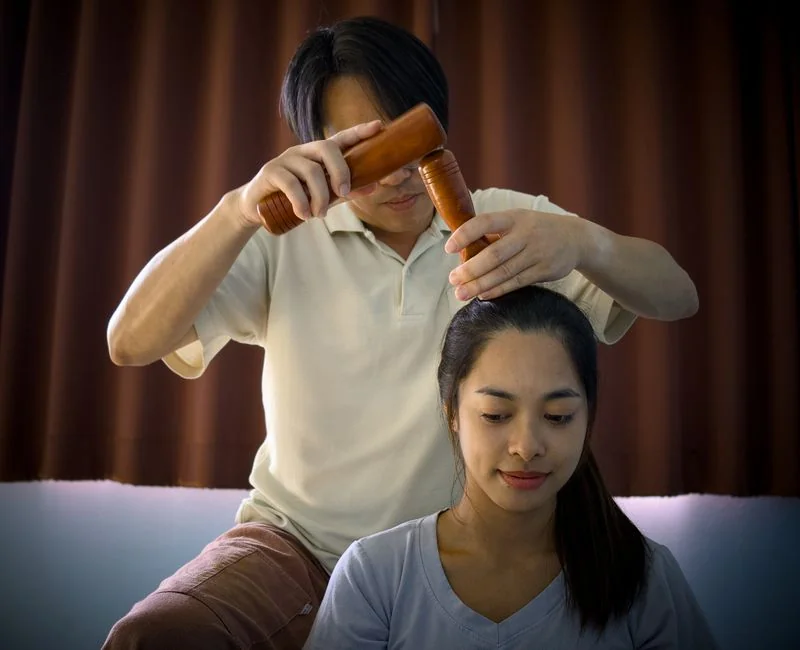
A thorough consultation covers medical history, a review of hormonal and nutritional bloodwork where appropriate, and trichoscopy — dermoscopic scalp examination — to assess the degree of follicular miniaturisation and identify follicles still capable of responding to regenerative stimulation. This step is essential for setting realistic expectations and selecting the most appropriate protocol.
During a Session
A PRP session takes approximately 45 to 60 minutes including preparation time. After blood draw and centrifugation, the plasma is injected with a fine needle across the target area following application of topical numbing cream. Most patients report the procedure as mildly uncomfortable rather than painful. Exosome and growth-factor treatments follow a similar injection approach.
After Treatment
Scalp redness and minor swelling typically resolve within 24 hours. Strenuous exercise, alcohol, and prolonged heat exposure are best avoided for the remainder of the day. A temporary increase in shedding two to four weeks after the first session is not uncommon — a recognised response that usually precedes new growth. Visible improvement in density and hair shaft calibre is typically observed at three to six months into the treatment course.
| Feature | PRP Therapy | Exosome / Growth-Factor Therapy |
|---|---|---|
| Source material | Patient’s own blood (autologous) | Stem cell-derived extracellular vesicles |
| Strength of evidence | Multiple RCTs and meta-analyses | Early-phase; mostly small studies |
| Allergy / immune risk | Extremely low | Very low; no living cells used |
| Typical initial course | 3–4 monthly sessions, then maintenance | 2–4 sessions; protocol varies by product |
| Downtime | Minimal (24–48 h redness) | Minimal (24–48 h redness) |
| PMDA approval for hair loss | No — offered under Japan’s Regenerative Medicine Act | No — investigational; offered as an aesthetic procedure |
| Best suited for | Ludwig grade I–II FAGA with surviving follicles | Ludwig grade I–II; as complement to PRP or monotherapy |
Cost of Regenerative Hair Treatment in Tokyo
All FAGA treatments — including regenerative procedures — are self-pay in Japan. Health insurance does not cover aesthetic hair loss treatment under current national insurance regulations. Costs vary according to the protocol used, the number of sessions in a course, and the treating clinic. Because pricing is subject to change, no specific figures are listed here. Please see the clinic’s official price page or contact the team directly for a current quote tailored to your case. For an accurate quote based on your individual presentation, please book a consultation.
Have a question about this treatment?
Message us on LINE or WhatsApp — our English-speaking team usually replies the same day.
Who Is a Good Candidate?
Patients most likely to benefit from regenerative hair treatments are those who:
- Present with early to moderate FAGA — Ludwig grade I or II — with miniaturised but surviving follicles confirmed on trichoscopy
- Have addressed any significant nutritional deficiencies, particularly low ferritin, before beginning treatment
- Are prepared to commit to a multi-session course and appropriate maintenance
- Are using or willing to combine regenerative treatment with conventional therapy (topical or oral minoxidil) where appropriate
Patients with advanced FAGA showing extensive areas of follicular loss may not achieve the same degree of regrowth and should be counselled honestly about what is realistic. Pregnancy, active scalp infection, certain platelet disorders, and anticoagulant medication may make PRP unsuitable. A detailed medical history review at the initial consultation is essential to confirm eligibility and optimise the treatment plan.
What People Often Get Wrong About FAGA
Misconception 1: FAGA can be treated with the same drugs used for male androgenetic alopecia.
Male and female pattern hair loss share an androgen-driven mechanism but differ substantially in hormonal profile, pattern of loss, and treatment response. High-dose finasteride — a standard male AGA treatment — carries different risk considerations in women, particularly those of reproductive age, and is prescribed in women only in carefully selected cases with specific contraception requirements. Treatments that work well for men should never be self-prescribed by women on the basis of a similar-looking condition.
Misconception 2: Hair loss stabilises or reverses naturally after menopause.
Many women assume that lower oestrogen levels after menopause reduce the hormonal drivers of hair loss. The clinical evidence points in the opposite direction: FAGA frequently accelerates during the peri- and post-menopausal years because the relative balance shifts further toward androgenic influence when oestrogen declines. Waiting for menopause to resolve the problem is not a clinical strategy. Early intervention — before significant irreversible follicular loss has occurred — consistently produces better long-term outcomes.
Where to Get FAGA Treatment in Tokyo
Within our clinic group, both BIOTOPE CLINIC (Shirokanedai, Minato-ku) and Kojimachi Dermatology & Plastic Surgery Clinic (Ichigaya, Chiyoda-ku) offer English-language consultation with Dr. Jun Karibe’s team. Regenerative and aesthetic treatments for FAGA — including PRP and growth-factor scalp therapies — are handled at BIOTOPE CLINIC in Shirokanedai. Dr. Karibe is a board-certified plastic surgeon certified by the Japan Society of Plastic and Reconstructive Surgery and consults personally at BIOTOPE. Bookings and enquiries in English: LINE or WhatsApp.
Frequently Asked Questions
- Q. How many PRP sessions will I need before seeing results?
- Most patients undergo three to four sessions at monthly intervals before meaningful improvement becomes visible. Changes in density and hair shaft calibre are typically observed at three to six months. Maintenance injections every four to six months are usually recommended thereafter, as FAGA is a chronic, progressive condition that requires ongoing management.
- Q. Can regenerative treatments completely reverse FAGA?
- No currently available treatment can fully reverse advanced pattern hair loss or regenerate follicles that have been permanently lost. Regenerative therapies are most effective on miniaturised but still-surviving follicles identified during trichoscopy. The realistic goals are slowing further progression, improving density in responsive areas, and extending the productive lifespan of existing follicles.
- Q. Is PRP for hair loss covered by Japanese health insurance?
- No. All FAGA treatment — including regenerative procedures — is self-pay in Japan. Health insurance applies to conditions classified as medically necessary under national insurance criteria, and aesthetic hair loss treatment does not currently qualify under Japanese regulations.
- Q. I am taking minoxidil — can I add PRP on top of that?
- In many cases, yes. PRP and growth-factor therapy can be used alongside topical or oral minoxidil, and the combination may produce complementary benefits. However, some medications — particularly anticoagulants — may affect eligibility for PRP. Always disclose your full medication list at the initial consultation so the physician can confirm safety and optimise the protocol for your situation.
Have a question about this treatment?
Message us on LINE or WhatsApp — our English-speaking team usually replies the same day.
Summary
FAGA is a common, progressive, and emotionally significant condition — but it is far from untreatable. Regenerative options such as PRP and exosome therapy are providing new avenues for women who have not achieved satisfactory results with conventional medications alone, or who are looking for a biologically grounded approach that works alongside the scalp’s own repair capacity. Multiple clinical studies support PRP’s ability to improve hair density and shaft calibre in women with pattern thinning, and early evidence for exosome-based therapies is encouraging, with larger controlled trials now underway. Early intervention consistently yields better outcomes than waiting.
If you have questions about regenerative treatment for FAGA, both BIOTOPE CLINIC (Shirokanedai, Minato-ku) and Kojimachi Dermatology & Plastic Surgery Clinic (Ichigaya, Chiyoda-ku) offer English-language consultation with Dr. Karibe and his team. Regenerative hair treatments for FAGA are primarily handled at BIOTOPE CLINIC in Shirokanedai. English enquiries: LINE or WhatsApp.
24/7 Consultation & Booking
Book a Consultation or Treatment
Our English-speaking team responds via LINE or WhatsApp — usually the same day.
References
- Yuan J, He Y, Wan H, Gao Y. Effectiveness of platelet-rich plasma in treating female hair loss: A systematic review and meta-analysis of randomized controlled trials. Skin Research and Technology. 2024.
- Giordano S, Romeo M, Lankinen P. Platelet-rich plasma in female androgenic alopecia: A comprehensive systematic review and meta-analysis. Aesthetic Surgery Journal Open Forum. 2021.
- Mashoudy KD, et al. Clinical outcomes of platelet-rich plasma in female pattern hair loss: systematic review of efficacy and safety. Journal of the American Academy of Dermatology. 2025.
- Gentile P, et al. The effect of autologous activated platelet rich plasma (AA-PRP) injection on pattern hair loss: clinical and histomorphometric evaluation. BioMed Research International. 2015.
- Pharmaceuticals and Medical Devices Agency (PMDA), Japan. Regulation for regenerative medicinal products under the Act on Securing Quality, Efficacy and Safety of Products Including Pharmaceuticals and Medical Devices. 2014 (amended).
Related Articles
You may also find these articles useful.
- FAGA Treatment Tokyo: Regenerative Hair Loss Solutions
- Female Hair Thinning Treatment Tokyo: Complete Guide
- Spironolactone for Female Hair Loss in Japan: Guide
- Exosome Hair Therapy in Tokyo vs PRP and Mesotherapy
- AGA vs Finasteride and Minoxidil: Regenerative Tokyo Guide
SUPERVISED BY
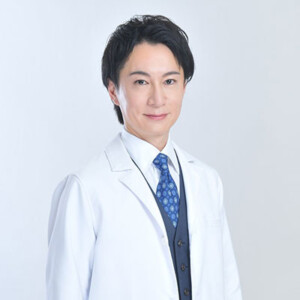
Dr. Jun Karibe
MD
Director
Education & Career
Certifications
Awards
MEDICAL REVIEW