Hair Mesotherapy in Tokyo: Manual Injection vs Hydro-Injector for AGA
Noticing more hair in the shower drain, a gradually widening parting, or a receding hairline can be unsettling — and finding reliable treatment information as an English speaker in Tokyo adds a further challenge. This article explains what hair mesotherapy involves, how its two main delivery methods differ in practice, and what the clinical evidence says about results for androgenetic alopecia (AGA).
What you’ll learn in this article:
- What hair mesotherapy is and how it acts on AGA-affected follicles
- The active ingredients most commonly used in scalp mesotherapy
- How manual (needle) injection and hydro-injector (jet) delivery compare across pain, speed, precision, and outcomes
- What the published research says about efficacy and realistic timelines
- Who is a suitable candidate and how to access English-language treatment in Tokyo
Have a question about this treatment?
Message us on LINE or WhatsApp — our English-speaking team usually replies the same day.
What Is Hair Mesotherapy for AGA?
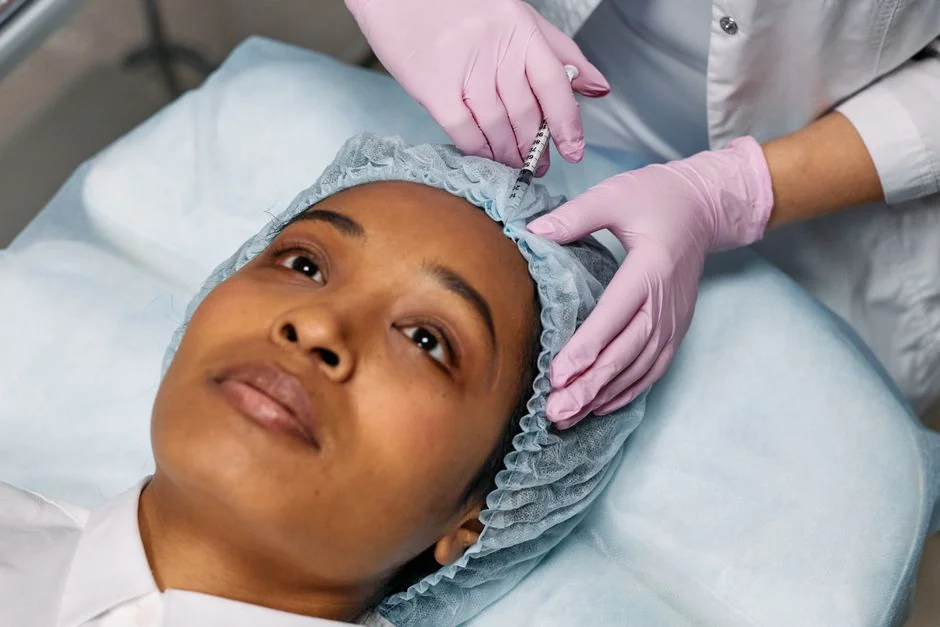
Mesotherapy is a technique in which small volumes of a compounded solution are deposited directly into the dermis using fine needles or a pressurised jet device. Applied to the scalp, the method aims to place active ingredients as close as possible to the hair follicle, bypassing the skin barrier that limits the effectiveness of topical treatments.
Androgenetic alopecia, the most common cause of progressive hair thinning in both men and women, is driven primarily by dihydrotestosterone (DHT) — a hormone that gradually miniaturises genetically susceptible follicles. Standard oral or topical therapies address this systemically, but their penetration to individual follicles can be inconsistent. Scalp mesotherapy offers a targeted, localised approach that may be used as a standalone treatment or in combination with oral medication.
Active Ingredients in Scalp Mesotherapy
Clinics tailor mesotherapy formulations to the patient’s hair loss pattern and severity. The most evidence-supported ingredients include the following.
- Dutasteride and finasteride — 5-alpha reductase inhibitors that suppress DHT at the follicle level. Intradermal delivery reduces systemic absorption compared with oral dosing.
- Minoxidil — a vasodilator that prolongs the anagen (active growth) phase; studies suggest intradermal delivery may outperform the topical form for female AGA.
- Biomimetic peptides — synthetic molecules modelled on growth factors such as IGF-1, bFGF, and VEGF, promoting follicle activity and local blood supply.
- Micronutrients and vitamins — biotin, panthenol, B-complex vitamins, and amino acids support the metabolic demands of dividing follicle cells.
- Hyaluronic acid — hydrates the scalp dermis and may improve the microenvironment for follicle regeneration.
- Stem cell culture supernatant — a growth-factor-rich conditioned medium derived from stem cell cultures, delivering extracellular signals associated with follicle proliferation.
Stem cell culture supernatant mesotherapy is among the AGA treatment options available at BIOTOPE CLINIC in Shirokanedai — the formulations used can be discussed in detail during a consultation with Dr. Karibe.
Manual Injection vs Hydro-Injector: How the Two Methods Compare
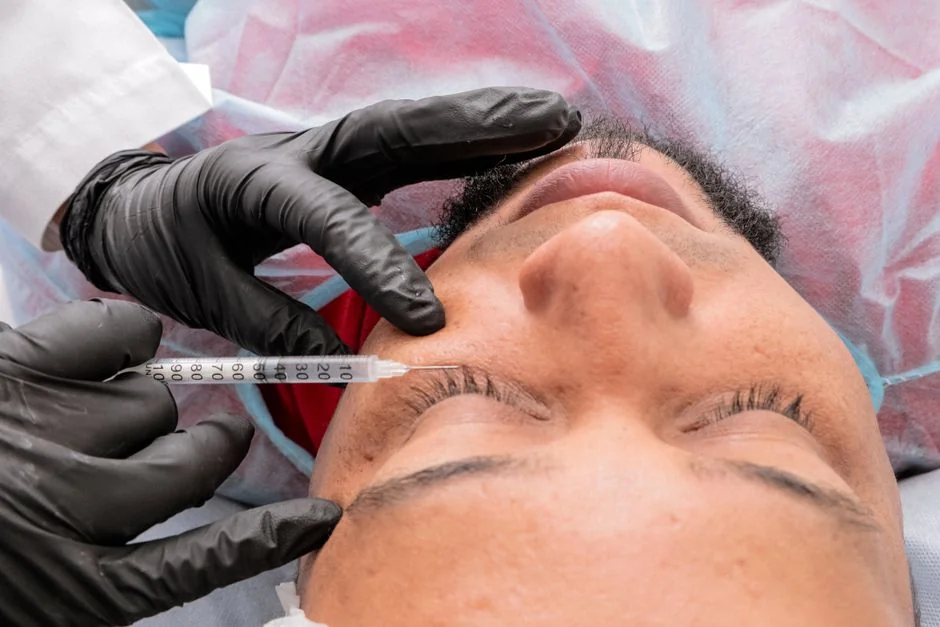
Both delivery methods aim to deposit active ingredients in the dermal layer of the scalp, but the mechanics — and the patient experience — differ in several meaningful ways.
Manual Injection (Needle-Based Mesotherapy)
In traditional mesotherapy, the practitioner uses a fine-gauge needle — typically 30-gauge, approximately 0.31 mm in diameter — attached to a syringe. Injections are placed in a grid pattern across the scalp, spaced roughly 0.5–1 cm apart, at a depth of around 2 mm. Depth, pressure, and angle are adjusted in real time based on scalp texture and the patient’s response, giving an experienced clinician precise control over localised problem zones.
The main drawback is time: treating the full vertex and frontal scalp with individual injections is a relatively slow process, and the tactile sensation of multiple needle entries, while typically mild, is more noticeable than with needle-free alternatives.
Hydro-Injector (Needle-Free or Automated Jet Delivery)
A hydro-injector — also referred to as a mesogun or MesoJet device — delivers the same solution using a high-velocity pressurised jet rather than a physical needle. The handpiece is held a few millimetres above the scalp; the jet generates a transient pressure channel that carries the solution into the dermis without perforating the skin.
A 2025 review by Vranis and Theodorou in Aesthetic Surgery Journal Open Forum noted that the entry aperture of modern jet devices can measure as small as 0.17 mm, compared with 0.31 mm for a 30-gauge needle, contributing to reduced localised trauma. The same review found that botulinum toxin administration to the palms was completed in approximately five minutes with a jet device versus twenty to twenty-five minutes using conventional needles — illustrating the speed advantage for larger areas such as the scalp.
Because no needle enters the skin, bruising risk is essentially eliminated, and patients typically return to normal activities immediately. Drug distribution within dermal tissue may also be more uniform: a 2023 systematic review by Bekkers et al. in Drug Delivery and Translational Research found that jet injectors disperse treatment solutions more evenly across the dermis than conventional needle injection.
Side-by-Side Comparison
| Feature | Manual Injection | Hydro-Injector (Jet Device) |
|---|---|---|
| Needle / entry size | 30G needle, ~0.31 mm | Needle-free jet aperture, ~0.17 mm |
| Skin perforation | Yes — multiple punctures | No — pressure-based entry |
| Pain level | Mild to moderate; varies by patient | Minimal; well-tolerated |
| Speed across scalp | Slower; precise grid placement | Faster; covers large areas efficiently |
| Drug distribution | Focal deposits; depth controllable | More even dermal spread |
| Bruising risk | Low but possible | Negligible |
| Downtime | A few hours of mild redness | Typically none |
| Best suited for | Targeted localised treatment; complex scalp anatomy | Broad-coverage treatment; needle-sensitive patients |
What the Clinical Research Shows
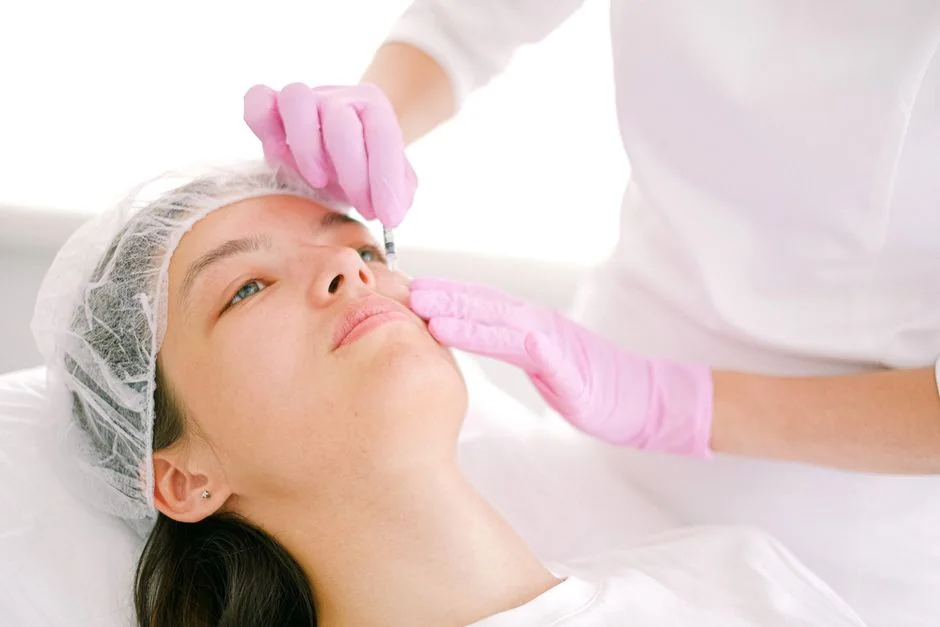
A 2026 retrospective observational study by Köse et al., published in the Journal of Cosmetic Dermatology, followed 50 AGA patients through eight sessions of mesotherapy using biomimetic peptides and micronutrients delivered via an automated mesogun at 2 mm depth. All primary hair-count endpoints reached statistical significance (p < 0.001): hair density improved from 213.7 to 236.6 hairs/cm², terminal hair density rose from 128.7 to 159.2 hairs/cm², and the terminal hair ratio increased from 61% to 68.6%. The treatment was described as well-tolerated, with only mild, transient pain reported.
A separate 2026 study by Behrangi et al. in Health Science Reports examined 63 AGA patients treated with microneedling-assisted scalp mesotherapy over six months. Clinical reports indicate an overall significant improvement rate of 49.2%, with female patients showing higher response rates (48.8%) than male patients (29.7%), and younger patients — under thirty years of age — achieving the best results (47.1%).
For jet-based delivery specifically, the Bekkers 2023 systematic review documented hair regrowth rates of 43–88% across alopecia protocols using jet-delivered corticosteroids, and noted that jet injectors achieve “accurate and reproducible dermal delivery.” The authors cautioned, however, that the overall methodological quality of available studies is low, and larger controlled trials are needed before definitive conclusions can be drawn.
What to Expect: Sessions, Results, and Downtime
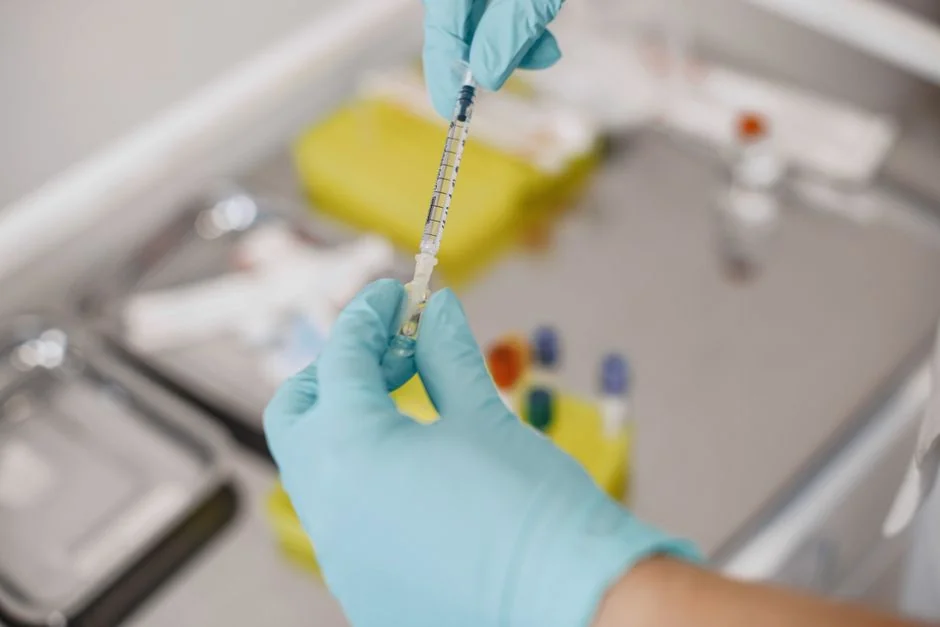
Most mesotherapy protocols for AGA consist of six to eight sessions. Early sessions are typically scheduled weekly or fortnightly; once initial results are established, the frequency transitions to monthly maintenance. A full induction course usually spans three to six months.
Improvements are gradual. Many patients notice reduced shedding within the first four to six weeks, with visible density improvements becoming apparent around the three-month mark. Sustained results generally require either ongoing maintenance sessions or combination with an oral 5-alpha reductase inhibitor or topical minoxidil, particularly in moderate-to-advanced AGA.
Downtime is minimal with both techniques. After needle injection, mild redness or pin-point marks may persist for a few hours. After hydro-injection, the scalp is typically unremarkable immediately post-treatment. Strenuous exercise and excessive heat exposure are usually advised to be avoided for twenty-four hours following either method.
Cost of Hair Mesotherapy in Tokyo
Hair mesotherapy for AGA is a self-pay (jibahi) treatment in Japan; it is not covered by the national health insurance system. The cost per session depends on the delivery method, the complexity of the solution, and the extent of the scalp area being treated.
Based on publicly available pricing on the clinic’s official page (biyou.kojihifu.com) at the time of writing, stem cell culture supernatant scalp mesotherapy is listed at ¥88,000 per session, with a five-session package available at ¥396,000. Pricing for hydro-injector protocols and other formulations may differ. Oral medications such as dutasteride and finasteride are available at separate rates.
Please see the clinic’s official price page or contact us directly for a current, session-specific quote. For an accurate figure tailored to your hair loss pattern and treatment plan, please book a consultation.
Have a question about this treatment?
Message us on LINE or WhatsApp — our English-speaking team usually replies the same day.
Who Is a Good Candidate?
Hair mesotherapy is most appropriate for adults who meet the following criteria.
- Early to moderate AGA — typically Hamilton-Norwood Grades I–IV in men or Ludwig Grades I–II in women — where follicles are still active and responsive
- Patients who want a localised treatment with limited systemic drug exposure
- Those who do not tolerate oral finasteride or dutasteride, or who prefer to avoid systemic medication
- Patients already on oral or topical therapy who want to add a targeted follicle-level component
- Needle-sensitive individuals for whom the hydro-injector route offers a significantly more comfortable experience
Medical evaluation is recommended — and treatment may not be appropriate — in the following situations.
- Women who are pregnant or breastfeeding
- Patients with active scalp infection, open wounds, or inflammatory scalp conditions
- Known hypersensitivity to any component of the proposed formulation
- Advanced diffuse alopecia where follicle density is severely depleted — a transplant evaluation may be the more appropriate first step
Common Misconceptions About Hair Mesotherapy
Misconception: “Mesotherapy and PRP are the same thing.”
These are distinct procedures. Platelet-rich plasma (PRP) uses the patient’s own centrifuged blood plasma to deliver autologous growth factors; mesotherapy uses a pharmacologically compounded solution that may contain synthetic peptides, licensed medications, conditioned media, or vitamins. Some clinics combine both approaches, but the terms are not interchangeable.
Misconception: “Needle-free means the ingredients don’t reach the follicle.”
Research on jet injectors consistently shows that pressurised delivery achieves dermal penetration comparable to needle injection, and may produce more uniform distribution within dermal tissue. The 2023 Bekkers systematic review specifically noted that jet devices achieve “accurate and reproducible dermal delivery,” and the entry aperture produced is often finer than a conventional needle. The absence of a needle does not imply superficial delivery.
Where to Get Hair Mesotherapy in Tokyo
Within our clinic group, both BIOTOPE CLINIC (Shirokanedai, Minato-ku) and Kojimachi Dermatology & Plastic Surgery Clinic (Ichigaya, Chiyoda-ku) offer English-language consultation with Dr. Jun Karibe’s team. Hair mesotherapy for AGA, along with the full men’s health and hair-restoration treatment menu, is handled at BIOTOPE CLINIC in Shirokanedai. Kojimachi Dermatology & Plastic Surgery Clinic is the group’s main office, focusing on insurance-covered dermatology and general plastic surgery. Bookings and enquiries in English are available via LINE or WhatsApp at either location.
Frequently Asked Questions
- Q. How many sessions will I need before seeing results?
- Most patients notice a reduction in shedding after four to six weeks (roughly sessions two to three). Visible improvement in density typically becomes apparent after three months of regular sessions. A full induction course of six to eight sessions is generally recommended before assessing the outcome.
- Q. Is there any difference in effectiveness between manual injection and the hydro-injector?
- Current clinical evidence does not demonstrate a clear superiority of one method over the other for AGA. Both achieve dermal delivery of the active formulation. Manual injection may offer finer positional control in localised thinning zones, while the hydro-injector provides more even coverage across larger areas with less discomfort. The formulation used is generally a stronger determinant of outcome than the delivery device alone.
- Q. Can women with female-pattern hair loss receive mesotherapy?
- Yes. Several published studies have included female AGA patients, and clinical data suggest women may respond comparably to or better than men, particularly at younger ages. A consultation is needed to confirm suitability and select an appropriate formulation, as some ingredients (such as finasteride) carry specific restrictions in women of childbearing age.
- Q. Can I combine mesotherapy with oral finasteride or minoxidil?
- Combination approaches are commonly used and generally considered safe. Oral medications address systemic DHT levels while mesotherapy targets the follicle environment locally. Your treating physician will advise on appropriate combinations based on your hair loss pattern and medical history.
- Q. Is the treatment painful?
- Needle-based mesotherapy produces a mild stinging sensation that most patients find manageable without anaesthesia; a topical anaesthetic cream can be applied beforehand if preferred. Hydro-injector treatment is typically described as well-tolerated with minimal discomfort, as no needle contacts the skin.
Have a question about this treatment?
Message us on LINE or WhatsApp — our English-speaking team usually replies the same day.
Summary
Hair mesotherapy delivers active ingredients — ranging from DHT-blocking medications to biomimetic peptides and stem cell conditioned media — directly to the scalp dermis, offering a targeted complement or alternative to systemic AGA treatment. The two principal delivery methods differ in their approach: manual needle injection provides precise, localised deposition with clinician-controlled depth, while hydro-injector jet delivery covers larger areas rapidly, produces a more uniform drug distribution, and eliminates the discomfort and bruising risk associated with needle punctures.
Published studies suggest both methods can support meaningful improvements in hair density and terminal hair ratio when the appropriate formulation is used across a consistent treatment course, though larger controlled trials remain needed.
If you have questions about hair mesotherapy for AGA, both BIOTOPE CLINIC (Shirokanedai, Minato-ku) and Kojimachi Dermatology & Plastic Surgery Clinic (Ichigaya, Chiyoda-ku) offer English-language consultation with Dr. Karibe and his team. Hair mesotherapy and the broader AGA treatment menu are primarily handled at BIOTOPE CLINIC in Shirokanedai. English enquiries: LINE or WhatsApp.
24/7 Consultation & Booking
Book a Consultation or Treatment
Our English-speaking team responds via LINE or WhatsApp — usually the same day.
References
- Köse O, et al. Efficacy of Hair Mesotherapy With Biomimetic Peptides and Micronutrients in Patients With Androgenetic Alopecia: A Retrospective Observational Study. Journal of Cosmetic Dermatology. 2026.
- Behrangi E, et al. Efficacy and Safety of Microneedling Combined With Mesotherapy for Androgenic Alopecia: A Retrospective Study Comparing Four Treatment Protocols. Health Science Reports. 2026.
- Bekkers VZ, et al. Efficacy and safety of needle-free jet injector-assisted intralesional treatments in dermatology — a systematic review. Drug Delivery and Translational Research. 2023.
- Vranis NM, Theodorou S. Needle-Free Jet Injectors and Their Potential Applications in Plastic Surgery: A Review. Aesthetic Surgery Journal Open Forum. 2025.
- Navarro-Trivino FJ, et al. Outcomes of androgenetic alopecia treated with dutasteride mesotherapy: A case series. JAAD Case Reports. 2024.
Related Articles
You may also find these articles useful.
- Exosome Hair Therapy in Tokyo vs PRP and Mesotherapy
- AGA Treatment After 6 Months: Realistic Results in Tokyo
- AGA vs Finasteride & Minoxidil: Tokyo Regenerative Care
- FAGA Treatment Tokyo: Regenerative Hair Loss Solutions
- Female Hair Thinning Treatment Tokyo: Complete Guide
SUPERVISED BY
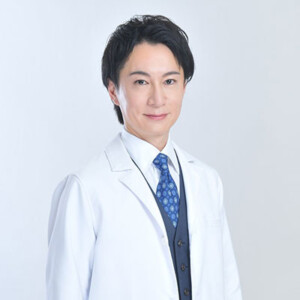
Dr. Jun Karibe
MD
Director
Education & Career
Certifications
Awards
MEDICAL REVIEW