Xeomin/Botox Results Timeline in Tokyo: What to Expect at 2 Weeks, 1 Month, and Beyond

If you are considering Xeomin or Botox injections in Tokyo and wondering how quickly you will see results — or how long those results will last — you are asking exactly the right questions before committing to treatment.
Understanding the realistic timeline of a neuromodulator treatment helps set appropriate expectations and allows you to plan appointments around important events in your calendar.
This article walks through how Xeomin works, what typically happens at each stage from the day of injection through to six months post-treatment, what the treatment costs in Tokyo, and who makes the strongest candidate.
- What Xeomin is and how it differs from other botulinum toxin type A products
- The expected results timeline: onset, peak effect, 2-week, 1-month, and long-term milestones
- Realistic cost ranges at a Tokyo aesthetic clinic
- Recovery, downtime, and post-treatment care
- Who is — and is not — a suitable candidate
Have a question about this treatment?
Message us on LINE or WhatsApp — our English-speaking team usually replies the same day.
What Is Xeomin?
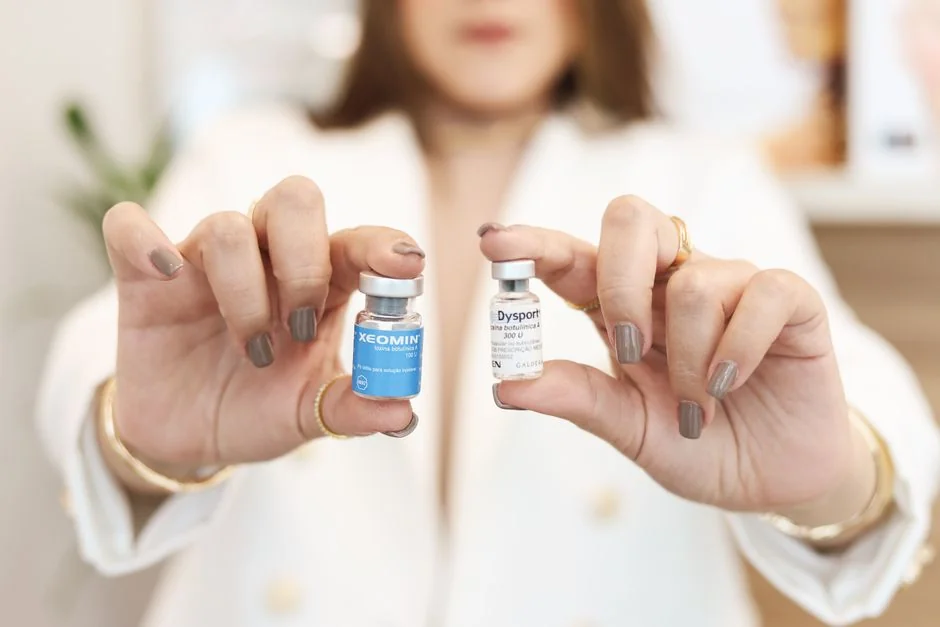
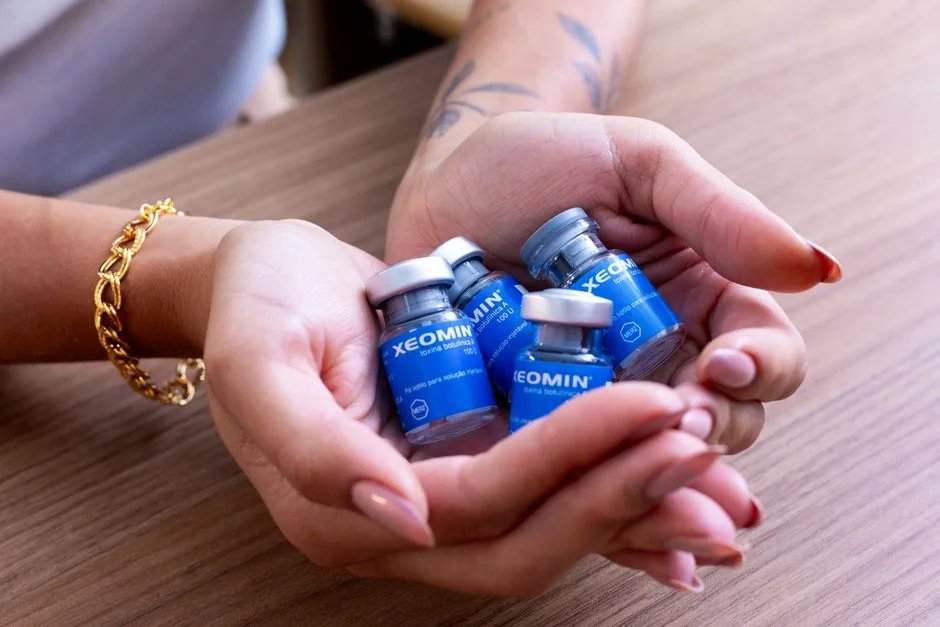
Botox/Xeomin (incobotulinumtoxinA) is a prescription injectable neuromodulator produced by Merz Pharmaceuticals. Like Botox (onabotulinumtoxinA) and Dysport (abobotulinumtoxinA), it is derived from botulinum toxin type A and works by temporarily relaxing overactive facial muscles to soften dynamic wrinkles — lines that form through repeated expressions such as frowning, squinting, or raising the eyebrows.
What distinguishes Xeomin from some competing formulations is its “naked” molecular structure.
It contains only the active neurotoxin component, without the complexing accessory proteins found in certain other formulations. Proponents of this design suggest it may reduce the theoretical risk of developing neutralising antibodies over repeated treatments, though clinical significance varies among individuals.
Regulatory Status in Japan
In Japan, botulinum toxin products approved by the Pharmaceuticals and Medical Devices Agency (PMDA) include both domestic and internationally licensed formulations. Aesthetic use of neuromodulators in Japan is performed by licensed medical practitioners within regulated clinical settings. If you are an expatriate or visitor enquiring about Xeomin specifically, it is always worth confirming current product availability with the clinic directly, as the regulatory landscape for individual products can evolve.
How Xeomin Works
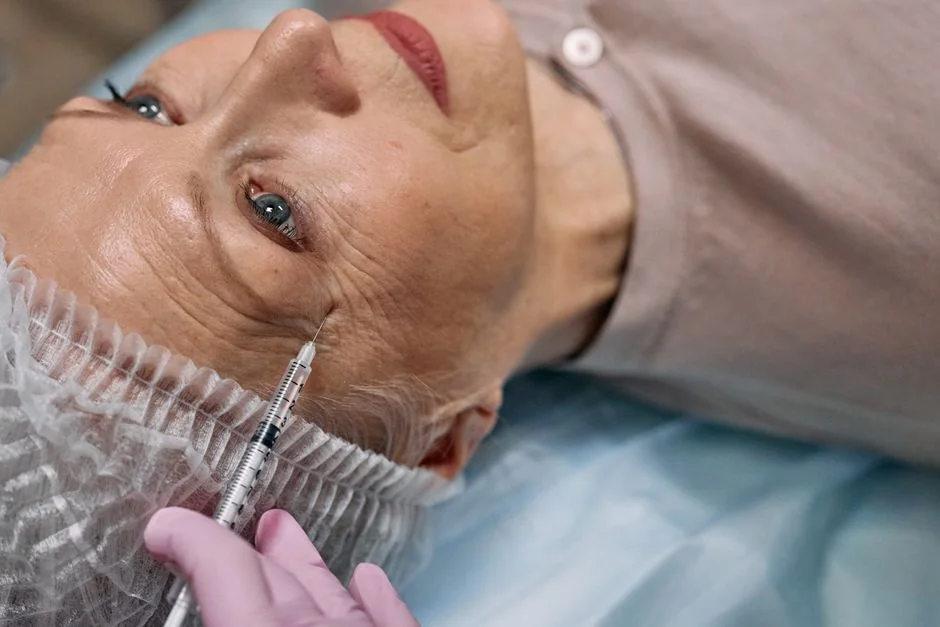
When Xeomin is injected into a target muscle, the botulinum toxin type A component binds to nerve terminals at the neuromuscular junction — the point where a nerve communicates with a muscle fibre. It cleaves a protein called SNAP-25, which is essential for the release of acetylcholine, the chemical messenger that triggers muscle contraction.
Without acetylcholine release, the muscle cannot contract fully. The overlying skin therefore remains smoother because the mechanical force that creates the wrinkle is temporarily reduced. The effect is not permanent: nerve terminals gradually regenerate new docking proteins over a period of months, which is why Xeomin results are finite and repeat treatments are required to maintain the outcome.
Areas Most Commonly Treated
- Glabellar lines (the “11 lines” between the eyebrows) — the primary licensed indication
- Forehead horizontal lines
- Crow’s feet (periorbital lines at the outer corners of the eyes)
- Brow lifting (a subtle elevation effect achieved through precise placement)
- Bunny lines (creases across the nasal bridge)
- Neck bands (platysmal bands) and other off-label applications at a physician’s discretion
Xeomin Results Timeline: What to Expect at Each Stage

One of the most frequent questions patients ask before treatment is: “When will I actually see a difference?” The honest answer is that results unfold gradually rather than appearing overnight. Below is a stage-by-stage guide based on published clinical data and the typical experience reported by patients.
Days 1–3: The Immediate Post-Injection Period
Most patients notice very little cosmetic change in the first 24 to 72 hours. Minor redness, swelling, or small raised areas at the injection sites are common and typically resolve within a few hours. You should avoid rubbing the treated area, applying pressure, or engaging in vigorous exercise during this period, as there is a theoretical risk of product migration if the area is manipulated before the toxin has fully localised.
Some individuals report a mild sensation of tightness or heaviness around the treated muscle as the toxin begins binding, but this is transient. No significant cosmetic improvement is expected at this stage.
Days 4–7: Early Onset of Effect
The first visible signs of muscle relaxation typically emerge between days 3 and 7. Patients often describe noticing that they are “unable to make the movement as strongly” when they attempt to frown or squint. The skin overlying the treated muscle may begin to look softer, though the full effect is not yet present.
Clinical studies suggest that Xeomin’s onset of action for glabellar lines typically begins within 3 to 4 days of injection, with a median onset of approximately 4 days reported in pivotal trials. This is broadly comparable to other botulinum toxin type A formulations, though individual variation is meaningful.
2 Weeks Post-Treatment: The Evaluation Point
By the two-week mark, the vast majority of patients have reached their full cosmetic response. Dynamic wrinkles in the treated area should appear noticeably softer or, in many cases, nearly invisible when the face is at rest. The two-week point is widely regarded by aesthetic practitioners as the appropriate time to assess results and determine whether any minor touch-up is warranted.
If you feel the effect is less pronounced than expected on one side, or a particular area has not responded fully, this is the appropriate moment to contact your treating physician. Minor asymmetries can often be addressed with a small top-up injection.
1 Month Post-Treatment: Peak Aesthetic Result
At the one-month mark, patients are typically experiencing the peak aesthetic effect of their treatment. The treated muscles are relaxed to their maximum extent, and the overlying skin has had time to smooth further as it is no longer being creased by repetitive movement.
In our clinical experience at Kojimachi Dermatology & Plastic Surgery Clinic, patients who follow post-care instructions carefully and present with moderately dynamic wrinkles tend to report the highest satisfaction at this stage. Those with very deep, static wrinkles — lines that are visible even without facial movement — may benefit from combining neuromodulator treatment with a hyaluronic acid filler to address the residual skin fold. This is a treatment available at our Ichigaya clinic; feel free to ask about it during a consultation.
Months 2–4: Sustained Effect
Through months two, three, and into month four, the cosmetic effect is expected to be stable for most patients. The muscles remain relaxed, and the skin continues to benefit from reduced mechanical stress. Some patients find that with repeated treatments over time, the muscles gradually become conditioned to being in a less active state, which may contribute to longer intervals between sessions.
Months 4–6: Gradual Wearing Off
As nerve terminals regenerate their SNAP-25 proteins, the toxin’s effect diminishes progressively. Most patients begin to notice a return of muscle movement between months 3 and 5, with the full pre-treatment muscle function typically returning by months 4 to 6. Clinical reports indicate that the median duration of effect for Xeomin in glabellar lines is approximately 3 to 4 months in controlled trials, though individual results vary considerably based on metabolism, muscle mass, and dosage.
Repeat treatment is generally recommended before the effect has fully worn off — returning for your next session at the 4-month mark, rather than waiting until the wrinkles have fully returned, helps maintain a more consistent aesthetic outcome.
What People Often Get Wrong About Xeomin Results
Two widespread misunderstandings are worth addressing directly, as they lead to either unrealistic expectations or unnecessary concern after treatment.
Misconception 1: “If I don’t see results in 48 hours, the treatment has not worked.” This is incorrect. Xeomin, like all botulinum toxin type A products, requires several days for the toxin to fully bind at the neuromuscular junction. Evaluating results before the 10–14 day mark is premature. Patients who become concerned in the first few days and request repeat injections too early risk overcorrection.
Misconception 2: “Xeomin will permanently erase my wrinkles.” Xeomin addresses dynamic wrinkles — those caused by muscle movement. Static wrinkles, which are visible at rest, reflect collagen loss and skin laxity that neuromodulators alone cannot fully correct. Additionally, the effect is temporary by design; neural recovery is a normal biological process. Patients who understand this from the outset are consistently more satisfied with their outcomes.
Cost of Xeomin and Botulinum Toxin Treatments in Tokyo
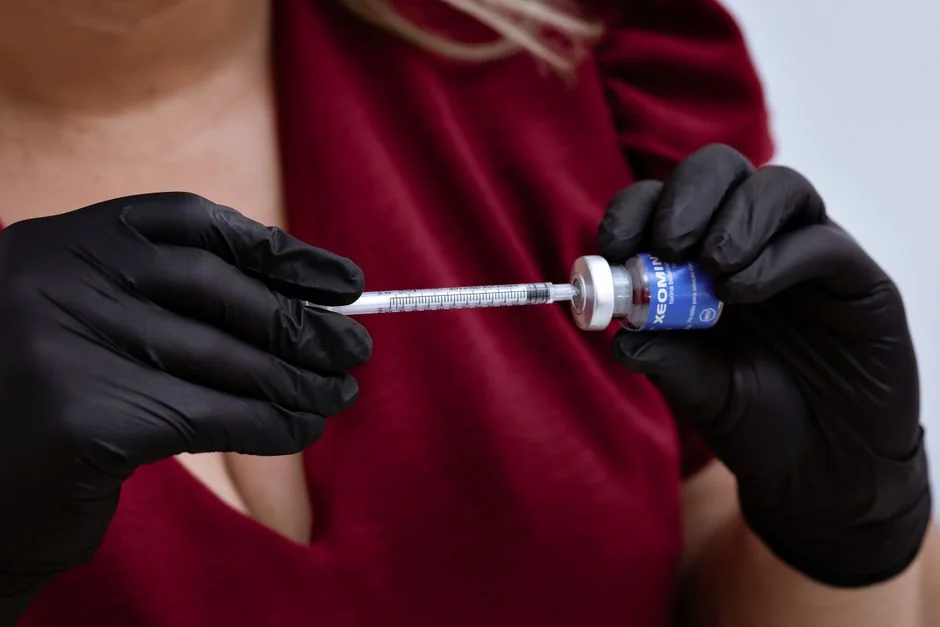
Pricing for botulinum toxin injections in Tokyo varies based on the product used, the number of areas treated, the dosage required, and the experience of the treating physician. At Kojimachi Dermatology & Plastic Surgery Clinic, the following price ranges apply for Botox (Allergan onabotulinumtoxinA) as a reference for neuromodulator pricing:
| Treatment / Product | Price Range (JPY, tax included) | Notes |
|---|---|---|
| Botox Allergan (brand name) | ¥22,000 – ¥148,000 | Varies by number of areas and units required |
| Botox Korean brand | ¥9,900 – ¥45,000 | Budget-conscious option; same toxin class |
| Micro-Botox (intradermal diffuse technique) | ¥22,000 – ¥33,000 | Targets skin texture, pore size, fine lines |
| Hyaluronic acid filler (per syringe) | ¥66,000 – ¥88,000 | Often combined with neuromodulators for static wrinkles |
| Initial consultation | ¥3,300 | Required before first treatment |
| Dr. Karibe surgical/specialist consultation | ¥2,200 | For patients seeking surgical options |
For patients interested in longer-lasting facial rejuvenation beyond neuromodulators, the clinic also offers HIFU (high-intensity focused ultrasound) for skin lifting and tightening, priced between ¥25,000 and ¥110,000 depending on the area and protocol. This is a treatment available at our Ichigaya clinic; feel free to ask about it during a consultation.
For an accurate quote tailored to your specific concerns, we recommend booking a consultation.
Have a question about this treatment?
Message us on LINE or WhatsApp — our English-speaking team usually replies the same day.
Before, During, and After: What to Expect at Each Visit
Before Treatment
A thorough consultation is required before your first treatment.
The physician will review your medical history, assess the degree of muscle activity contributing to your wrinkles, discuss your cosmetic goals, and explain the realistic range of outcomes. Patients taking blood-thinning medications (including aspirin, NSAIDs, or certain supplements such as fish oil and vitamin E) may be advised to pause these before injection to reduce bruising risk.
You should arrive with a clean face, free of make-up. Photographs are typically taken at the consultation and before each treatment session to allow objective comparison of results over time.
During Treatment
The injection procedure itself is brief, usually taking between 10 and 20 minutes depending on the number of areas treated. A very fine needle is used, and most patients describe the sensation as a series of small pinches. Topical numbing cream can be applied beforehand if desired. There is no sedation or anaesthesia required for standard neuromodulator injections.
After Treatment
Patients can return to their normal daily activities immediately following injection. The following general guidance applies during the first 24 hours: avoid lying flat or bending forward for prolonged periods; avoid rubbing or massaging the treated area; refrain from strenuous exercise, saunas, or alcohol. These precautions are designed to minimise the risk of product migration and excessive bruising rather than to manage serious risk.
Who Is a Good Candidate for Xeomin?
Xeomin and similar neuromodulators are well-suited for adults in good general health who have dynamic wrinkles they wish to soften. The ideal candidate is typically someone who:
- Has visible frown lines, forehead lines, or crow’s feet that worsen with facial expression
- Has realistic expectations about temporary, not permanent, improvement
- Is not pregnant or breastfeeding
- Has no known allergy to botulinum toxin or any product ingredient
- Does not have a neuromuscular disorder such as myasthenia gravis or Lambert-Eaton syndrome
In our clinical experience at BIOTOPE CLINIC or Kojimachi Dermatology & Plastic Surgery Clinic, we frequently see patients — including expatriates working in Chiyoda-ku and Minato-ku — who have previously had treatment elsewhere and are looking for a consistent provider they can trust for ongoing maintenance sessions. Continuity of care is particularly important with neuromodulators, as your treating physician builds knowledge of your individual muscle anatomy and response over time.
Who Should Consider an Alternative
Neuromodulators are not appropriate for everyone. Patients whose wrinkles are predominantly static — present at rest and not significantly worsened by movement — may benefit more from hyaluronic acid fillers, collagen-stimulating treatments, or energy-based devices. Those seeking improvement in skin texture, laxity, or pigmentation will require different modalities entirely. A thorough consultation allows the physician to recommend the most appropriate treatment pathway for your specific concerns.
Dr. Karibe’s Note
Many of our international patients are surprised to find that the dose — not just the product — makes a significant difference to both the onset and duration of results. A common question I receive is whether switching botulinum toxin brands will improve longevity.
In practice, optimal dosing for the individual’s muscle mass and activity level is often more influential than the specific product used.
I always advise patients to have a detailed conversation about dosage at their consultation, and to allow at least two treatment cycles before drawing conclusions about what works best for their anatomy.
Frequently Asked Questions
- Q. How soon after Xeomin injections can I return to work?
- Most patients return to work the same day. There may be minor redness or small raised areas at injection sites for a few hours, but these typically resolve quickly. If you have an important meeting or social engagement, scheduling your appointment a few days beforehand is a reasonable precaution.
- Q. Is there a risk of looking “frozen” or unnatural?
- The risk of an overly restricted or “frozen” appearance is primarily related to excessive dosage or imprecise placement, rather than the product itself. An experienced injector will use conservative doses that soften movement without eliminating natural expression. Discussing your preference for a natural result at your consultation is important.
- Q. How long do results typically last with repeated treatments?
- Clinical reports suggest that many patients find their results last slightly longer after several consecutive treatment cycles — potentially extending to 4 to 5 months — possibly due to gradual muscle conditioning. This is not universal, and individual metabolism plays a significant role.
- Q. Can Xeomin be combined with other treatments on the same day?
- In many cases, neuromodulators can be combined with hyaluronic acid fillers or skin treatments such as the Dermapen on the same visit, depending on the areas being treated. Your physician will advise on the safest sequencing. Energy-based treatments such as HIFU are generally scheduled separately.
- Q. Are consultations available in English at your clinic?
- Yes.BIOTOPE CLINIC or Kojimachi Dermatology & Plastic Surgery Clinic offers consultations in English. The clinic is conveniently located near Kojimachi, Hanzomon, and Nagatacho stations, making it accessible for patients travelling from central Tokyo, Minato-ku, and beyond.
Have a question about this treatment?
Message us on LINE or WhatsApp — our English-speaking team usually replies the same day.
Summary
Xeomin is a well-established botulinum toxin type A formulation used to temporarily soften dynamic facial wrinkles. Results are not instantaneous: the onset of muscle relaxation typically begins between days 3 and 7, with the full cosmetic effect generally visible by the two-week mark and peaking at approximately one month post-treatment. The effect then sustains for a further 2 to 3 months before gradually wearing off, with most patients requiring retreatment at 3 to 5 month intervals.
Understanding this timeline helps patients plan their treatments intelligently — avoiding scheduling injections immediately before major events, attending their two-week follow-up if a touch-up may be needed, and returning for maintenance before results have fully reversed. Realistic expectations, appropriate dosing, and continuity of care with an experienced physician are the strongest predictors of consistent satisfaction.
If you have questions about Xeomin results timeline or botulinum toxin treatments in Tokyo, our team at Kojimachi Dermatology & Plastic Surgery Clinic in Ichigaya, Tokyo would be happy to help. We offer consultations in English.
24/7 Consultation & Booking
Book a Consultation or Treatment
Our English-speaking team responds via LINE or WhatsApp — usually the same day.
References
- Rzany B, Dill-Müller D, Grablowitz D, et al. Repeated botulinum toxin A injections for the treatment of lines in the upper face: a retrospective study of 4,103 treatments in 945 patients. Dermatologic Surgery. 2007.
- Sattler G, Callander MJ, Grablowitz D, et al. Noninferiority of incobotulinumtoxinA, free from complexing proteins, compared with another botulinum toxin type A in the treatment of glabellar frown lines. Dermatologic Surgery. 2010.
- Prager W, Bee EK, Havermann I, et al. Onset, longevity, and patient satisfaction with incobotulinumtoxinA for the treatment of glabellar frown lines: a single-arm, prospective clinical study. Clinical Interventions in Aging. 2013.
- Carruthers J, Fournier N, Kerscher M, et al. The convergence of medicine and neurotoxins: a focus on botulinum toxin type A and its application in aesthetic medicine — a global, evidence-based botulinum toxin consensus education initiative. Dermatologic Surgery. 2013.
- Dressler D. Clinical applications of botulinum toxin. Current Opinion in Microbiology. 2012.
Related Articles
You may also find these articles useful.
- XERF: Tokyo Dual-Frequency RF Tightening 2026
- Volnewmer vs Thermage vs HIFU: RF Comparison
- Collagen Booster Treatment Tokyo: Cost & Results
- Skin Tightening Treatment Tokyo: Options and Cost
- HIFU in Tokyo: Non-Surgical Skin Tightening Explained
SUPERVISED BY

Dr. Jun Karibe
MD
Director
Education & Career
Certifications
Awards
MEDICAL REVIEW