Skin Clinic in Tokyo for Foreigners: How to Find One You Can Actually Talk To
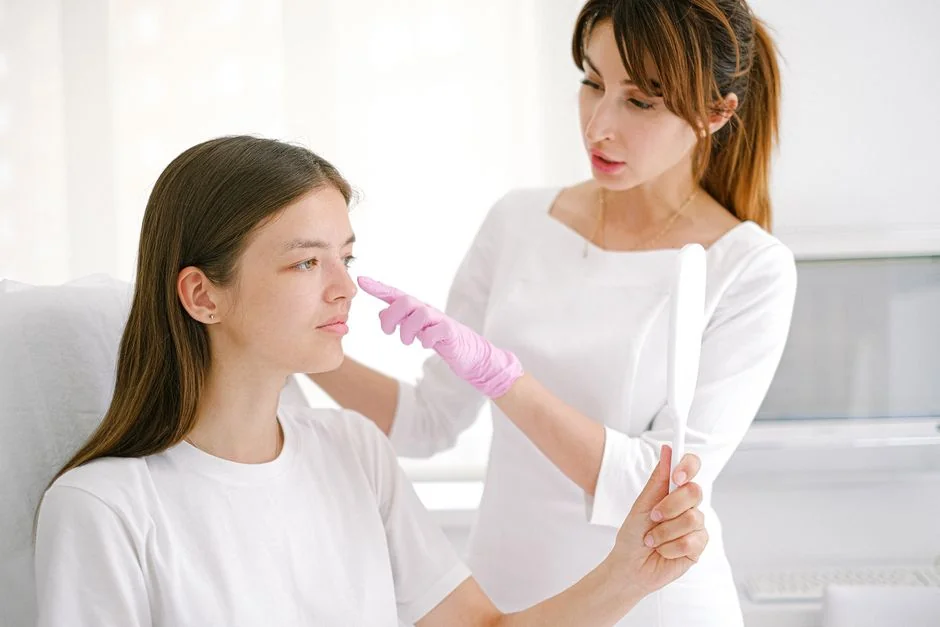
Finding a skin clinic in Tokyo when you do not read Japanese fluently can feel disproportionately stressful — you may not know whether your insurance card applies, whether the doctor speaks English, or whether you are booking a medical dermatology visit or a cosmetic one.
That uncertainty is common and understandable. This article explains how Japan’s two parallel systems of skin care work, the official search tools you can use to locate an English-capable clinic, and what to expect on the day of your visit.
What you’ll learn in this article:
- The difference between insurance-covered dermatology and self-pay cosmetic skin treatment in Japan
- Five practical routes for finding a skin clinic in Tokyo with foreign-language support
- Two widespread misconceptions that cause billing surprises
- Realistic cost expectations, including published consultation fees
- What happens at a first visit, and who is a good candidate for which type of clinic
Have a question about this treatment?
Message us on LINE or WhatsApp — our English-speaking team usually replies the same day.
Why This Is Harder Than It Should Be
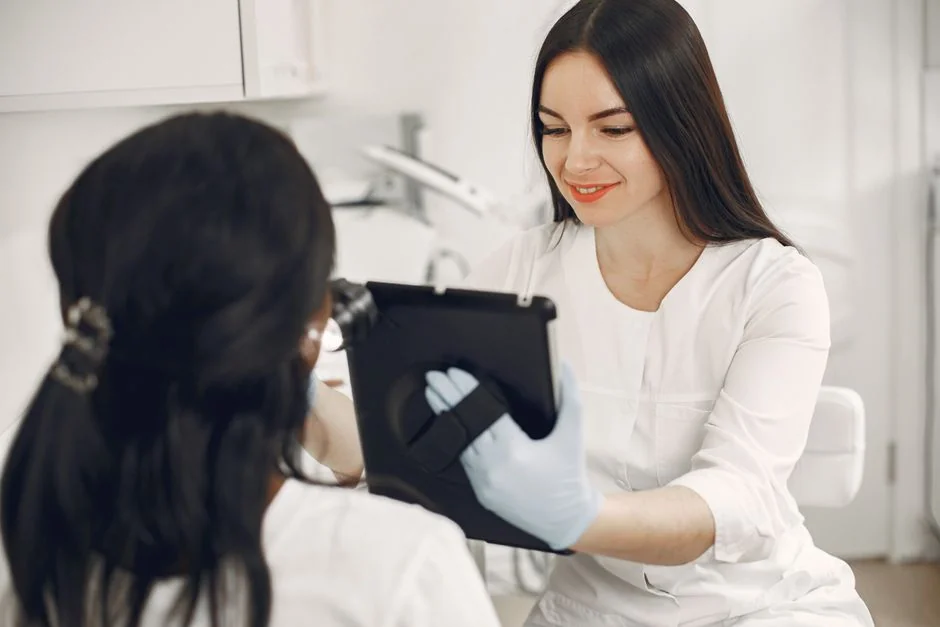
Tokyo has a large and growing international population. According to the Immigration Services Agency of Japan, the number of foreign residents nationwide reached 4,125,395 at the end of 2025 — an increase of 356,418 (9.5%) over the previous year, and the first time the figure has passed four million. Tokyo alone accounted for 801,438 residents, or 19.4% of the national total.
Despite those numbers, language remains a practical obstacle. In a survey of 209 foreign residents in the greater Tokyo area published in Public Health Nursing, more than 90% of participants or their families had visited a medical facility in Japan regardless of Japanese fluency — but those with lower fluency reported statistically significantly greater unease or inconvenience regarding communication.
Clinical reports indicate the gap is measurable in comprehension, too. A 2023 cross-sectional survey published in Cureus (337 valid responses) found that 47.4% of patients in complete language discordance with their provider reported low comprehension of the consultation, compared with 26.1% in the language-concordant group.
Insurance Dermatology vs Self-Pay Cosmetic Care
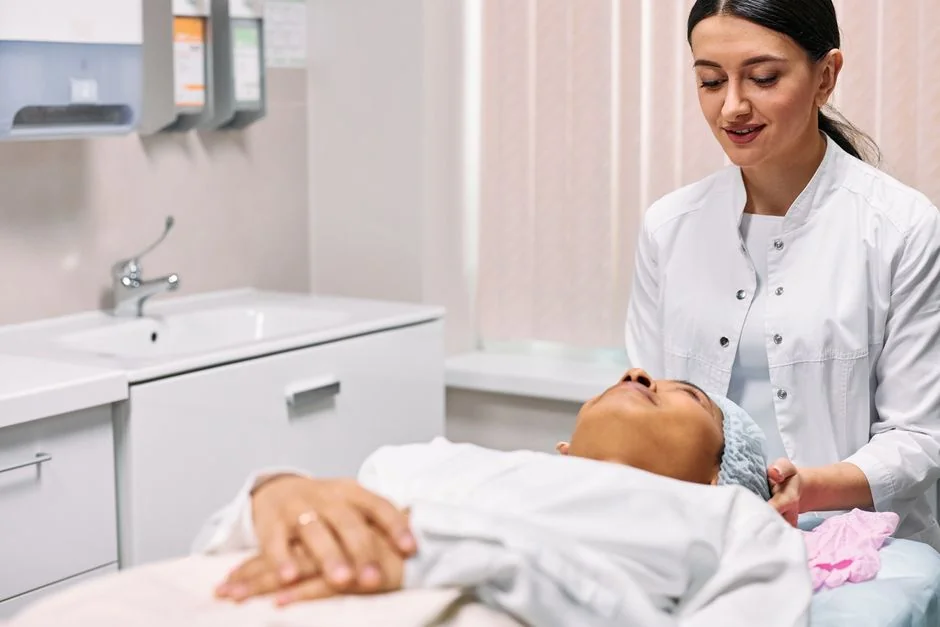
Japan runs skin care through two separate financial systems, and knowing which one you are in prevents most billing surprises.
Insurance-covered dermatology (hoken shinryo)
This covers medical skin disease — eczema, psoriasis, acne, fungal infections, shingles, hives, and similar conditions. Treatments include topical steroids, antihistamines, antivirals, antifungals, antibiotics, immunosuppressants, and narrowband UVB phototherapy (a controlled ultraviolet light treatment used for conditions such as psoriasis and vitiligo).
Foreign nationals registered as residents of a Tokyo ward are generally required to enrol in public health insurance.
Minato City’s official living guide states that residents registered under the Basic Resident Registration Law must subscribe to National Health Insurance, while those whose period of stay is under three months, and those on “Temporary Visitor” status, are not eligible.
With a valid card, the patient’s share is 30% for school-age patients up to age 69, 20% for pre-school children, and 20% or 30% for those aged 70 and over depending on income and date of birth.
Self-pay cosmetic care (jiyu shinryo)
Aesthetic treatment is not a public insurance benefit. The Japan Health Insurance Association explicitly lists “cosmetic surgery for aesthetic purposes,” myopia surgery, experimental advanced medicine, preventive vaccinations, health screenings, comprehensive health check-ups, and normal pregnancy and childbirth among items your insurance card cannot be used for.
That means HIFU (high-intensity focused ultrasound skin tightening), Morpheus8 radiofrequency microneedling, PicoWay laser for pigmentation, CO2 fractional laser for acne scarring, botulinum toxin, and hyaluronic acid filler are paid at 100% by the patient.
How to Find a Skin Clinic in Tokyo: Five Practical Routes
| Route | What it gives you | Best for | Limitations |
|---|---|---|---|
| JNTO “Guide to Japanese Medical Institutions” | Nationwide search filtered by prefecture, language (English, Chinese, Korean, Portuguese, Spanish and others), department including Dermatology, credit card acceptance, and JMIP certification | Visitors and new arrivals starting from zero | Listings reflect declared capability, not a guarantee that a doctor speaks your language on the day |
| Tokyo’s “Himawari” medical information service | Free telephone guidance on 03-5285-8181 in English, Chinese, Korean, Thai and Spanish, daily 09:00–20:00, 365 days a year | Urgent or confusing situations where you want a human to help | Telephone charges are borne by the caller; it signposts clinics rather than booking for you |
| JMIP-accredited institutions | Facilities assessed by the Japan Medical Education Foundation under a scheme developed from a Ministry of Health, Labour and Welfare support project begun in fiscal year 2011 | Complex or inpatient care | Predominantly larger hospitals; few small dermatology or cosmetic clinics are accredited |
| Ward office and embassy lists | Locally maintained lists of nearby facilities with foreign-language support | Residents who have just registered an address | Update frequency varies by ward |
| Contacting a clinic directly in English | Confirmation before booking of who you will actually speak to, and whether interpretation is by staff or by phone | Anyone who wants certainty about the consultation itself | Requires the clinic to operate an English enquiry channel |
In practice, most people combine two: an official database to shortlist, then a direct message to confirm the language arrangement before committing to an appointment.
What People Often Get Wrong
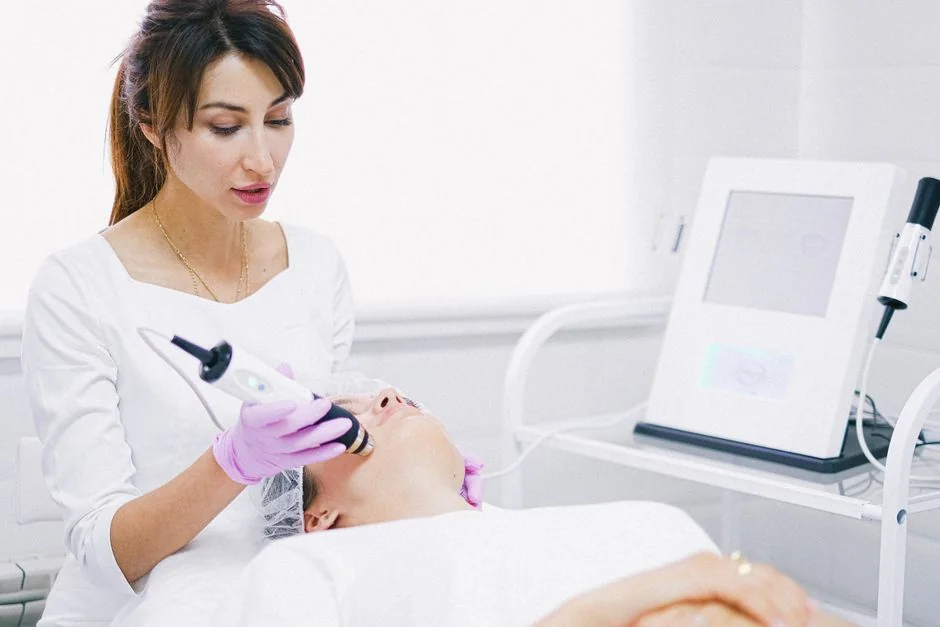
Misconception 1: “My insurance card will cover part of a cosmetic visit”
It generally will not, and the reason is structural rather than clinic policy. Under Japan’s hoken-gai heiyo ryoyohi framework, the Ministry of Health, Labour and Welfare permits insured and uninsured care to be combined only within defined categories — evaluated advanced treatment, patient-requested treatment, and selected treatment such as private rooms. Aesthetic procedures fall outside these, so a cosmetic treatment is billed at full price even if you hold a valid insurance card.
A practical consequence: if you have both a medical skin complaint and an aesthetic concern, these may need to be handled as separate consultations. At BIOTOPE CLINIC in Shirokanedai, we frequently see patients who arrive expecting one appointment to cover both, and appreciate having the distinction explained before any treatment begins.
Misconception 2: “English support listed means an English-speaking doctor”
Language support in official directories can mean a bilingual receptionist, a translation device, or a telephone interpreting line — not necessarily a physician who consults in English. The distinction matters: the same Cureus survey found that patients in partial language discordance had 4.16 times higher odds of wanting a professional interpreter (95% CI 1.55–11.16), and those in complete discordance 4.73 times higher odds (95% CI 1.70–13.18), compared with language-concordant patients.
Dermatology is also a smaller share of interpreted encounters than you might assume. A separate 2023 Cureus report on human-mediated translation in a Japanese medical setting recorded 124 foreign patients over roughly four years, of whom 9 (7%) were seen in dermatology, against 107 (86%) in internal medicine. Asking directly is worthwhile.
Cost of Skin Treatment in Tokyo
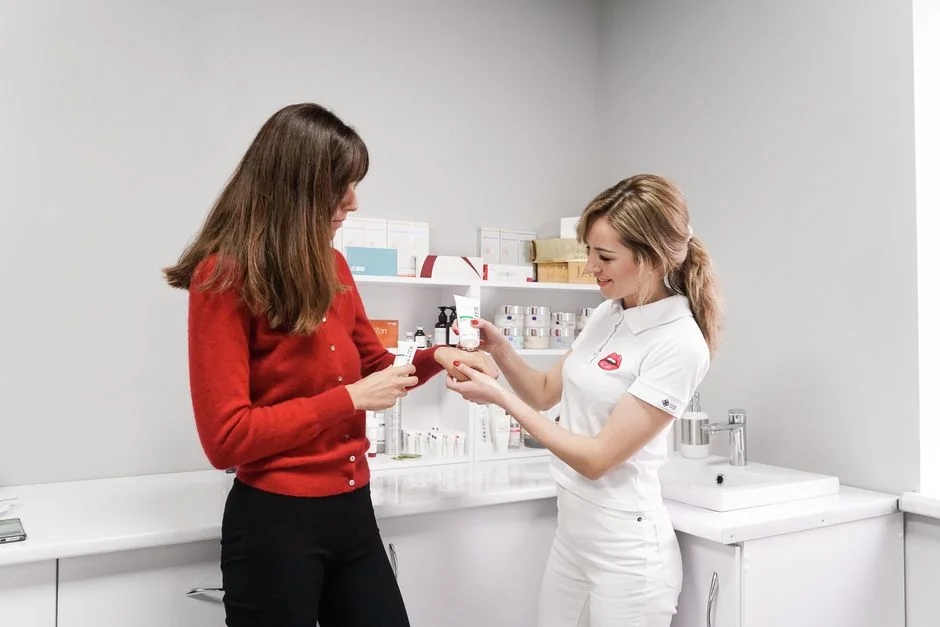
For insurance-covered dermatology, your out-of-pocket cost is the co-payment ratio above applied to the nationally fixed fee schedule — the same tariff applies at every clinic in Japan, so shopping around on price is not meaningful for insured care.
For self-pay treatment, prices are set by each clinic and vary considerably across Tokyo. Consultation fees are usually charged separately from the procedure itself. Our group’s published price list (effective 1 October 2023, tax included) lists an initial or follow-up consultation fee of ¥3,300, and a cosmetic surgery counselling appointment with Dr. Karibe at ¥2,200.
Procedure pricing depends on the device, the treatment area, and the number of sessions planned, and is revised periodically. Please see the clinic’s official price page or contact us for a current quote. For an accurate quote, please book a consultation.
Have a question about this treatment?
Message us on LINE or WhatsApp — our English-speaking team usually replies the same day.
Your First Visit, and Where to Get English-Speaking Skin Care in Tokyo
Before
Bring your residence card, your insurance card if you have one, and a list of any medications, including topical products. Photographing your skin concern at its worst is genuinely useful, since conditions such as hives or flares often subside before an appointment.
During
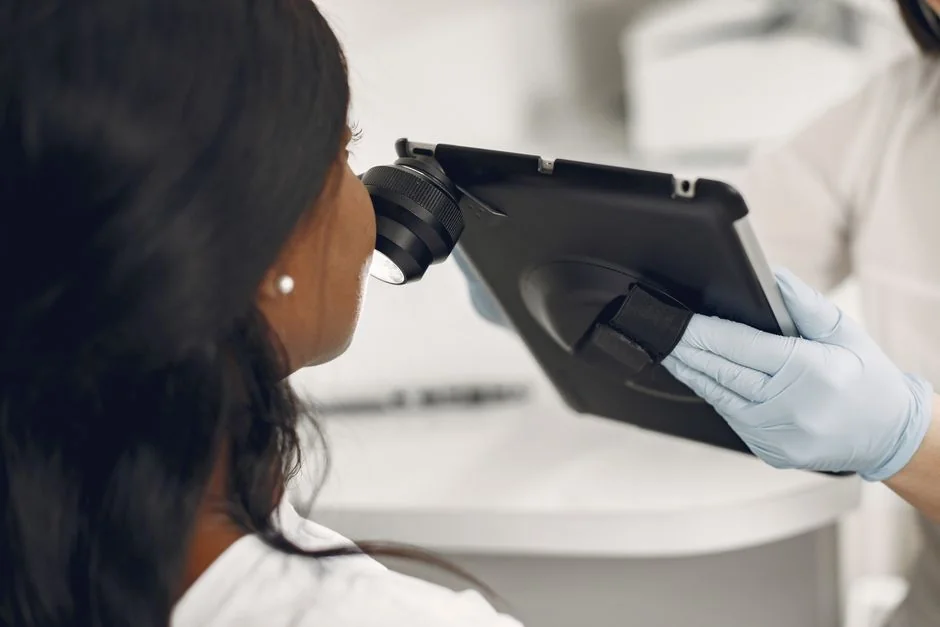
Expect a history, a visual examination, and sometimes dermoscopy (magnified inspection of a lesion). For aesthetic consultations, the discussion should cover realistic expectations, downtime, and alternatives — no reputable clinic can promise a specific outcome, and results vary between individuals.
After
Most non-invasive treatments involve limited downtime, typically redness or mild swelling for one to several days, though this depends on the device and settings used. Sun protection and gentle skincare are standard advice after any laser or energy-based procedure.
Who is a good candidate — and who should wait
Insurance dermatology suits anyone with an active skin disease. Self-pay treatment suits people with stable skin seeking pigmentation, texture, or laxity improvement. People who are pregnant or breastfeeding, have an active infection or inflammation in the treatment area, a history of keloid scarring, photosensitivity, or recent isotretinoin use should raise this at consultation — several device treatments are contraindicated or need to be deferred.
PicoWay laser for pigmentation and HIFU for skin tightening are treatments available at BIOTOPE CLINIC in Shirokanedai — feel free to ask about them during a consultation with Dr. Karibe.
Within our clinic group, English-speaking consultations are handled at BIOTOPE CLINIC in Shirokanedai (Minato-ku, Tokyo) by Dr. Jun Karibe. Our sister clinic Kojimachi Dermatology & Plastic Surgery Clinic in Ichigaya handles Japanese-language insurance dermatology. Bookings and enquiries in English: LINE or WhatsApp.
Frequently Asked Questions
- Q. I am a tourist without Japanese insurance. Can I still see a dermatologist?
- Yes. You would pay the full fee as a self-paying patient, since Temporary Visitor status is not eligible for National Health Insurance. Confirm payment methods in advance, as not every clinic accepts every card brand.
- Q. How do I know whether my skin problem is medical or cosmetic?
- As a rough guide, anything itching, painful, spreading, or changing is medical; anything you notice only in the mirror is usually cosmetic. If you are unsure, describe the symptom when you enquire and the clinic can direct you appropriately.
- Q. Is there a free service that can help me find a clinic in my area?
- Yes. Tokyo’s Himawari medical information service (03-5285-8181) provides free guidance in English, Chinese, Korean, Thai and Spanish, daily from 09:00 to 20:00. The Japan National Tourism Organization also operates a searchable guide to medical institutions filtered by language and department.
- Q. Should I bring an interpreter to my appointment?
- If the clinic does not consult in your language, professional interpretation is preferable to relying on a friend or family member, particularly where consent and side effects are being discussed. Ask the clinic in advance what arrangement it uses.
Have a question about this treatment?
Message us on LINE or WhatsApp — our English-speaking team usually replies the same day.
Summary
Finding a skin clinic in Tokyo as a foreign resident or visitor comes down to three decisions: whether your concern is medical or aesthetic, whether your insurance status applies, and whether the clinic can genuinely consult in your language.
Official tools — the JNTO medical institution guide, Tokyo’s Himawari telephone service, and JMIP accreditation — narrow the field efficiently. Confirming the language arrangement directly with the clinic before booking closes the remaining gap.
If you have questions about finding a skin clinic in Tokyo as a foreigner, English-speaking consultations are handled at BIOTOPE CLINIC in Shirokanedai (Minato-ku, Tokyo) by Dr. Karibe. Our sister clinic Kojimachi Dermatology & Plastic Surgery Clinic in Ichigaya (Chiyoda-ku) handles Japanese-language insurance dermatology. English enquiries: LINE or WhatsApp.
24/7 Consultation & Booking
Book a Consultation or Treatment
Our English-speaking team responds via LINE or WhatsApp — usually the same day.
References
- Immigration Services Agency of Japan. Number of Foreign Residents in Japan as of the End of 2025 (Reiwa 7). Ministry of Justice. 2026.
- Okamoto M, Matsuda Y, Foronda CL. Healthcare needs and experiences of foreign residents in Japan by language fluency. Public Health Nursing. 2022;39(1):103–115.
- Oonishi A, Ikeda A, Niyonsaba F, Ono N. Relationship Between Patient-Provider Language Discordance and the Need for Professional Medical Interpretation for International Patients in Japan. Cureus. 2023;15(10):e47001.
- Kaneda Y, Takita M, Kosaka M, Hamaki T, Hosoda K, Kusumi E, Kami M, Tanimoto T. Bridging the Language Gap: The Role of Human-Mediated Translation in Japanese Medical Settings. Cureus. 2023;15(12):e50493.
- Ministry of Health, Labour and Welfare. Concerning the System of Combined Insured and Uninsured Medical Care (Hoken-gai Heiyo Ryoyohi Seido). Government of Japan.
- Japan Health Insurance Association (Kyokai Kenpo). Medical Treatment Benefits (Ryoyo no Kyufu): Services Not Covered by Health Insurance.
Related Articles
You may also find these articles useful.
- Skin Clinic Tokyo for Foreigners: Finding English Support
- English Speaking Dermatologist Tokyo: Complete Guide
- English Speaking Dermatologist Tokyo: First Visit Guide
- English Speaking Dermatologist Tokyo: Insurance Coverage
- Beauty Clinic Tokyo: English Consultation Guide
SUPERVISED BY
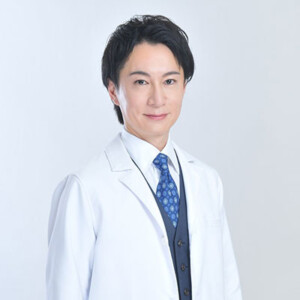
Dr. Jun Karibe
MD
Director
Education & Career
Certifications
Awards
MEDICAL REVIEW