What Is Mole Removal?
Finding a mole that bothers you, whether for looks, because it catches on clothing, or because it has changed, can be unsettling, especially in a country where you may not know how the system works. This guide explains how mole removal is done in Tokyo, what it costs at our clinic group, and how to choose between the main methods.
A mole (medically, a melanocytic nevus) is a benign cluster of pigment-producing cells in the skin. Most are harmless and acquired over time. Removal is a routine minor procedure, but the method you choose affects scarring, the chance of regrowth, and whether the tissue can be examined under a microscope.
What you’ll learn in this article:
- The main ways moles are removed in Japan: CO2 laser and surgical excision
- What studies suggest about recurrence and cosmetic results for each method
- Current published prices at our clinic group, and how insurance and self-pay differ
- Downtime, who is a good candidate, and which clinic to book
Have a question about this treatment?
Message us on LINE or WhatsApp — our English-speaking team usually replies the same day.
How Mole Removal Works
CO2 laser
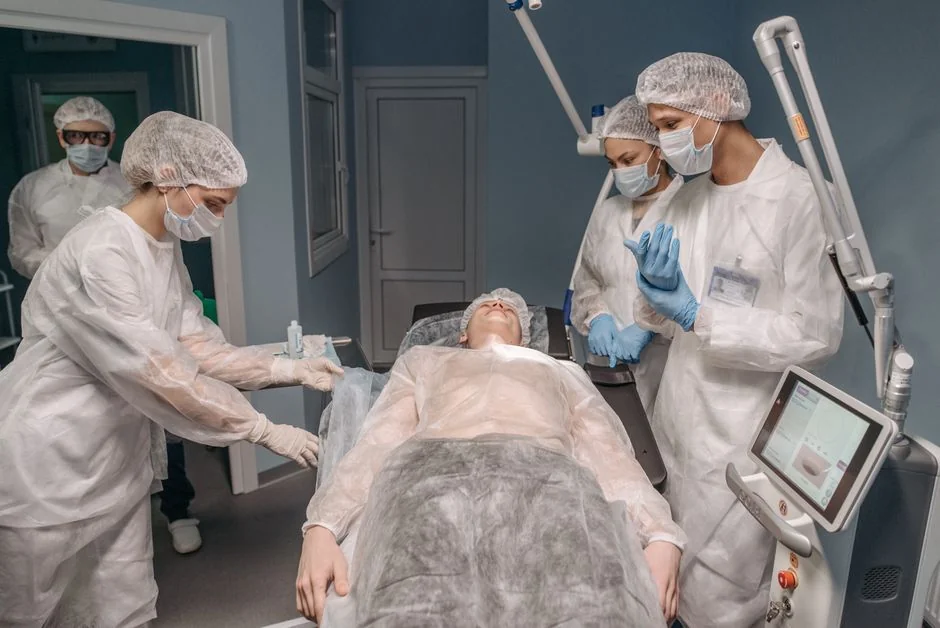
A carbon dioxide (CO2) laser vaporises the mole tissue layer by layer under local anaesthesia. It is a self-pay cosmetic option at both clinics in our group. Because the tissue is vaporised, there is usually nothing to send for pathology.
Surgical excision
The mole is cut out and the wound is closed with stitches. At Kojimachi Dermatology & Plastic Surgery Clinic, the incision follows the natural skin wrinkle lines, and deeper layers are closed with absorbable thread that dissolves under the skin. The removed tissue can be examined under a microscope, which the meta-analysis discussed below identifies as a distinct advantage of excision.
Expected Results: What the Research Suggests
A 2026 systematic review and meta-analysis in Frontiers in Medicine (Guo and Wang) pooled 32 studies covering 4,201 lesions. The authors report that surgical excision had the highest clearance rate (96.4%) and the lowest recurrence rate (2.1%). CO2 laser showed a recurrence rate of 12.9%.
Cosmetic satisfaction ran the other way. The same review reports scores of 8.4 out of 10 for CO2 laser and 6.2 for surgical excision. It also found that intradermal nevi (moles that sit deeper in the skin) recurred significantly more often after laser treatment than junctional nevi (relative risk 1.82).
| Method | Clearance rate | Recurrence rate | Cosmetic satisfaction (0-10) |
|---|---|---|---|
| Surgical excision | 96.4% | 2.1% | 6.2 |
| Shave excision | 85.7% | 10.7% | 7.6 |
| CO2 laser | 82.9% | 12.9% | 8.4 |
| Electrosurgery | 78.2% | 16.1% | 6.0 |
These are pooled figures from published studies, not predictions for any individual. Results vary with mole depth, size, and body site. Recurrence can occur with any method, and a recurrent mole should be re-examined by a physician.
Common Misconceptions
“Laser and excision give the same result”
The pooled data above suggest a trade-off. Laser tends to score higher on appearance, while excision has a lower recurrence rate and provides tissue for pathology. The right choice depends on the mole.
“Moles in Japan are mostly a cosmetic issue, so checking them isn’t needed”
Most moles are benign, but melanoma does occur. A 2025 study of 7,442 Japanese melanoma patients (Fujisawa et al., International Journal of Clinical Oncology) found that acral lentiginous melanoma, which arises on the palms, soles, and nails, was the most common subtype at 40.8%. This differs from Western populations, and it is why a changing or unusual mole, especially on the hands or feet, should be assessed by a physician before any cosmetic treatment.
Mole Removal Cost in Tokyo
Insurance-covered treatment
Kojimachi Dermatology & Plastic Surgery Clinic states that insurance applies in certain cases. Its public page gives a guide of about 10,000 to 16,000 yen for patients with a 30% co-payment, including surgery, prescription, and examination fees. Whether your mole qualifies is a medical decision made at the consultation.
Self-pay CO2 laser
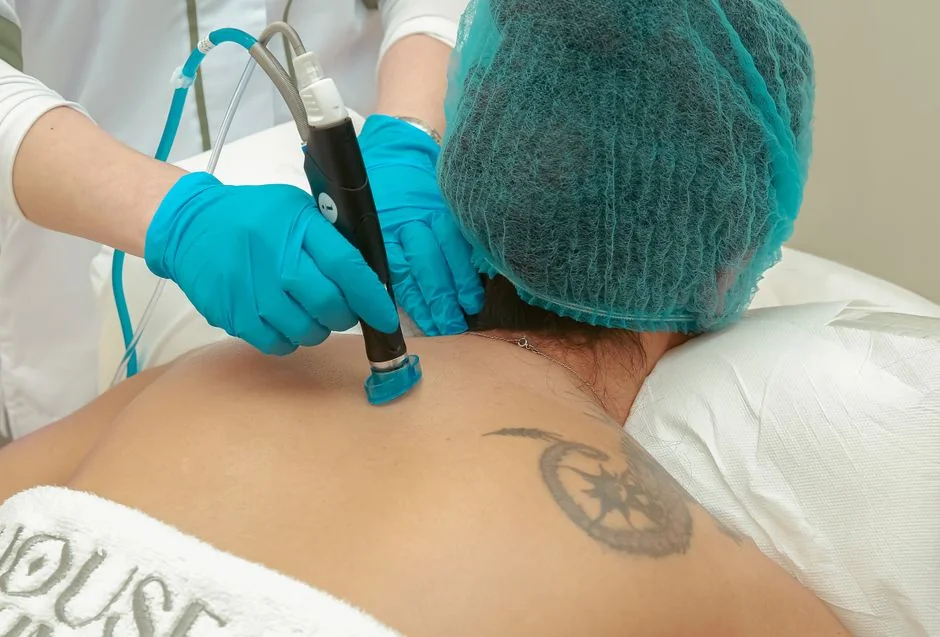
The clinic group’s public price table (effective from 1 October 2023, tax included) lists the following per lesion:
- 1-3 mm: 22,000 yen
- 3-5 mm: 26,500 yen
- 5-10 mm: 33,000 yen
- Over 10 mm: an additional 2,200 yen per millimetre
Prices may have changed since that table was published, so please confirm with the clinic. For an accurate quote, please book a consultation.
Have a question about this treatment?
Message us on LINE or WhatsApp — our English-speaking team usually replies the same day.
What to Expect: Before, During and After
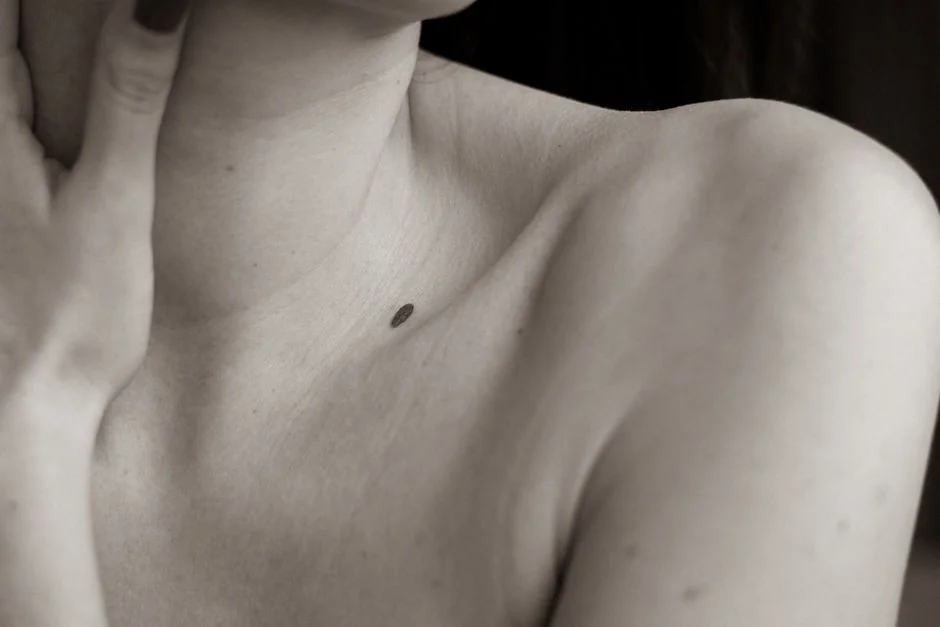
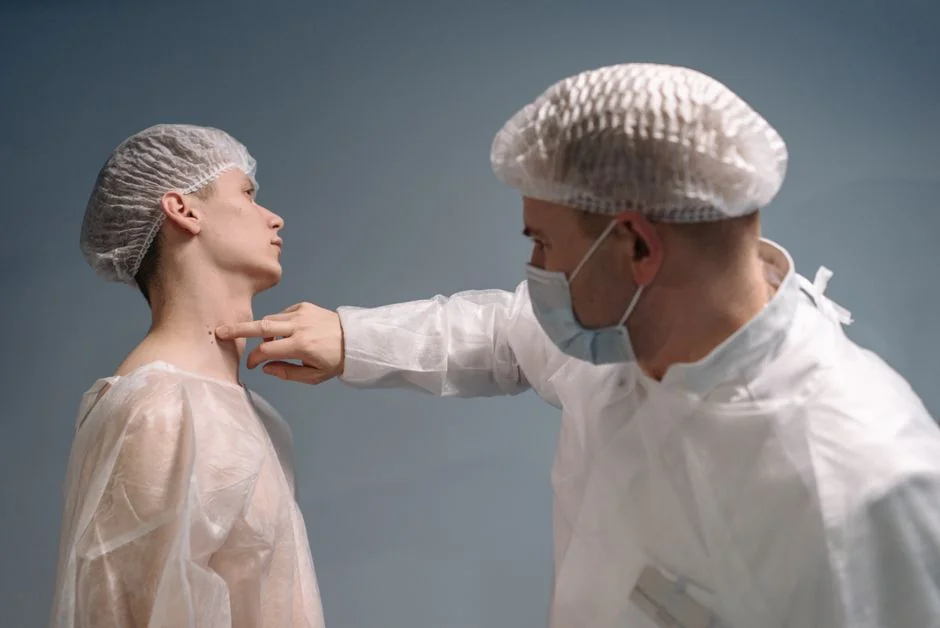
At the consultation, the physician examines the mole, often with a dermoscope (a handheld magnifier that shows pigment patterns), and recommends a method. Local anaesthesia is used for the procedure itself.
According to the clinic’s information, downtime is roughly 1 to 2 weeks after laser treatment and about 1 month after excision. Makeup is permitted right away over the protective tape. Scarring can be minimal but cannot be ruled out, and recurrence is uncommon but possible.
Who Is a Good Candidate?
Good candidates are adults with a stable, benign-appearing mole who want it removed for appearance or comfort. People who prefer a lower chance of regrowth, or whose mole needs pathology, may be steered toward excision.
You should have a physician assess the mole first if it has changed in size, colour, or shape, bleeds, or sits on the palm, sole, or under a nail. People prone to raised scarring should raise this at the consultation.
Where to Get Mole Removal in Tokyo
Within our clinic group, both BIOTOPE CLINIC (Shirokanedai, Minato-ku) and Kojimachi Dermatology & Plastic Surgery Clinic (Ichigaya, Chiyoda-ku) offer English-language consultation with Dr. Jun Karibe’s team. Insurance-covered mole excision is handled at Kojimachi, while self-pay cosmetic CO2 laser mole removal is available at both, and is primarily handled at BIOTOPE CLINIC. Bookings and enquiries in English: LINE or WhatsApp.
Scar revision and cyst excision are also available. These are treatments available at BIOTOPE CLINIC in Shirokanedai. Feel free to ask about them during a consultation with Dr. Karibe.
Frequently Asked Questions
- Q. Is mole removal covered by Japanese health insurance?
- In certain cases, yes. Kojimachi Dermatology & Plastic Surgery Clinic states that insurance applies to some moles, while purely cosmetic removal is self-pay. A physician decides at the consultation.
- Q. Will the mole come back?
- It can. In the pooled data, recurrence was 2.1% after excision and 12.9% after CO2 laser. Deeper intradermal moles recurred more often after laser.
- Q. Can I have my mole tested for cancer?
- Excision allows the removed tissue to be examined under a microscope, whereas laser vaporisation generally does not. If your mole looks suspicious, tell the physician so the right method is chosen.
Have a question about this treatment?
Message us on LINE or WhatsApp — our English-speaking team usually replies the same day.
Summary
Mole removal in Tokyo usually means either CO2 laser, which studies suggest gives better cosmetic scores but higher recurrence, or surgical excision, which shows lower recurrence and allows pathology. Published prices for self-pay laser removal start at 11,000 yen per lesion for 1-3 mm, and insurance may apply in some cases.
If you have questions about mole removal, both BIOTOPE CLINIC (Shirokanedai, Minato-ku) and Kojimachi Dermatology & Plastic Surgery Clinic (Ichigaya, Chiyoda-ku) offer English-language consultation with Dr. Karibe and his team. Mole removal is primarily handled at Kojimachi for insurance-covered cases and at BIOTOPE for cosmetic self-pay treatment. English enquiries: LINE or WhatsApp.
24/7 Consultation & Booking
Book a Consultation or Treatment
Our English-speaking team responds via LINE or WhatsApp — usually the same day.
References
- Guo Z, Wang C. Aesthetic techniques for melanocytic nevus management: clinical outcomes, cosmetic satisfaction, and safety, a systematic review and meta-analysis. Frontiers in Medicine. 2026.
- Fujisawa Y, Yoshikawa S, Takenouchi T, et al. Melanoma skin cancer statistics derived from 7442 Japanese patients: Japanese melanoma study. International Journal of Clinical Oncology. 2025.
- Kojimachi Dermatology & Plastic Surgery Clinic. Moles and warts (insurance-covered treatment), clinic website. Accessed September 2026.
- BIOTOPE CLINIC / Kojimachi Dermatology & Plastic Surgery Clinic. Price table, effective 1 October 2023, clinic website. Accessed September 2026.
Related Articles
You may also find these articles useful.
- Mole Removal Tokyo: Cost & Procedure Guide
- Mole Removal Tokyo: Cost and Procedure Guide
- Cyst Removal Tokyo: What to Expect at a Dermatologist
- Scar Revision Surgery in Tokyo: Options and Cost Guide
- Dark Spot Removal Tokyo: Laser Treatment Options
SUPERVISED BY
Dr. Jun Karibe
MD
Director
Education & Career
Certifications
Awards
MEDICAL REVIEW