Skincare Routine for Tokyo Weather: Humidity, Pollution, and What Your Skin Actually Needs

If you have recently moved to Tokyo — or returned after time abroad — you may have noticed that your skin is behaving differently than expected.
The city’s dramatic seasonal shifts, high summer humidity, and urban air pollution create a genuinely challenging environment for skin health, and a routine that worked perfectly elsewhere may suddenly feel inadequate.
This guide explains the science behind Tokyo’s climate-driven skin concerns, offers a practical, evidence-informed routine for each season, and clarifies some common misconceptions that can make things worse rather than better.
What you’ll learn in this article:
- How Tokyo’s humidity, pollution, and seasonal changes affect the skin barrier
- A step-by-step skincare routine tailored to Tokyo’s climate
- Which ingredients help — and which common habits cause damage
- When a skincare routine is not enough and a clinical consultation adds value
- Where to access English-speaking dermatology and skin consultations in Tokyo
Have a question about this treatment?
Message us on LINE or WhatsApp — our English-speaking team usually replies the same day.
How Tokyo’s Climate Affects the Skin
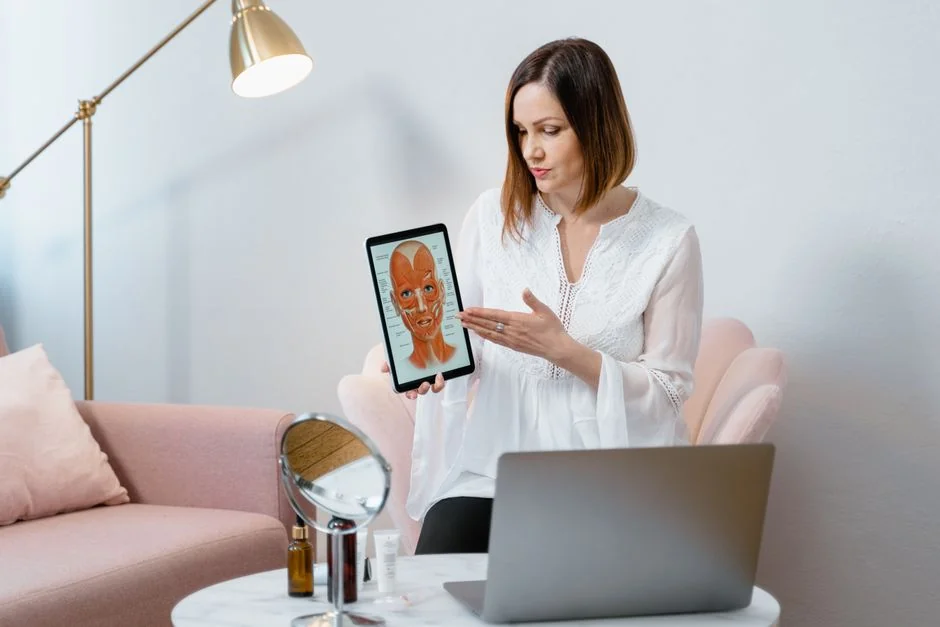
Tokyo sits in a humid subtropical zone, meaning residents experience four genuinely distinct seasons.
Summers (June–September) bring intense heat and humidity regularly exceeding 80%, while winters are cold and surprisingly dry, with indoor heating further stripping moisture from the air.
This oscillation between extremes forces the skin barrier — the outermost layer of skin that retains moisture and excludes irritants — to adapt repeatedly throughout the year. Studies suggest that repeated disruption to the stratum corneum (the skin’s protective outermost layer) impairs its ability to regulate hydration, increasing sensitivity, redness, and susceptibility to environmental damage.
Pollution adds a second layer of stress. Tokyo’s urban air contains particulate matter (PM2.5), nitrogen dioxide from traffic, and ground-level ozone.
Clinical research indicates that chronic exposure to PM2.5 is associated with increased skin oxidative stress, accelerated breakdown of collagen, and worsened inflammatory conditions such as acne and eczema. A 2021 review published in the Journal of Investigative Dermatology reported that urban pollution exposure was correlated with a measurable increase in skin pigmentation irregularities in Asian populations.
Building a Tokyo-Appropriate Skincare Routine

Morning Routine
In summer, a gentle, water-based or gel cleanser is sufficient in the morning — overnight sweat and humidity mean the skin is not as clean as it feels, but a heavy foaming wash can strip protective oils. In winter, a cream or milk cleanser helps preserve barrier function during the cold, dry months.
An antioxidant serum applied after cleansing is one of the most evidence-backed steps for an urban environment. Vitamin C (ascorbic acid at concentrations of 10–20%) has been shown in multiple clinical studies to neutralise free radicals generated by pollution, reduce post-inflammatory hyperpigmentation, and support collagen synthesis. Apply while the skin is slightly damp to improve absorption.
Hydration follows. Hyaluronic acid serums work well in Tokyo’s humid summers because hyaluronic acid draws moisture from the atmosphere into the skin. In winter, layer a ceramide-containing moisturiser on top to seal that hydration in — ceramides are the lipids (fats) that hold the skin’s barrier structure together.
Sunscreen is non-negotiable year-round. UV index in Tokyo peaks between April and September, but UVA radiation — the type most responsible for premature ageing and pigmentation — is present at meaningful levels on overcast days. SPF 30–50 PA+++ or PA++++ is the standard recommendation; Korean and Japanese formulations are widely regarded as cosmetically elegant and are easy to source locally.
Evening Routine
Double cleansing is a genuinely useful approach in Tokyo: an oil-based cleanser first to dissolve sunscreen, pollutant particles, and sebum; followed by a water-based cleanser to remove residue. This two-step process is more thorough than a single cleanse without being unnecessarily harsh.
Evening is the appropriate time to introduce actives such as retinoids (vitamin A derivatives that promote cell turnover and collagen production) or exfoliating acids such as glycolic or lactic acid. These ingredients increase UV sensitivity, making morning application inadvisable. Start with low concentrations — 0.025–0.05% retinol or 5% glycolic acid — two to three nights per week, and increase gradually as tolerance builds.
Seal the evening routine with a richer moisturiser or occlusive (such as a product containing petrolatum, squalane, or shea butter) in winter months. In summer, a lighter gel-moisturiser prevents the congestion that heavy creams can cause in humidity.
Dr. Karibe’s Note
Many of our international patients at BIOTOPE CLINIC arrive having used the same routine for years with good results in their home country, only to find that Tokyo’s climate — particularly the switch from the humid summer to the dry, heated-air winter — disrupts their skin barrier in ways they did not anticipate.
A very common presentation is a sudden increase in sensitivity and redness that patients assume is an allergy, when in fact the barrier has simply been compromised by seasonal transition. Adjusting the routine seasonally, rather than trying to treat new symptoms reactively, makes a significant difference.
Seasonal Adaptation at a Glance

| Season | Key Skin Challenge | Routine Adjustment |
|---|---|---|
| Spring (Mar–May) | Rising UV, pollen irritation, transition dryness | Introduce antioxidant serum; keep barrier support; upgrade SPF |
| Summer (Jun–Sep) | High humidity, sebum overproduction, pollution peaks | Lightweight hydration; gel moisturiser; thorough double cleanse; SPF reapplication |
| Autumn (Oct–Nov) | Declining humidity, early dryness, fading tan + pigmentation | Introduce retinoid or brightening actives; begin heavier moisturiser |
| Winter (Dec–Feb) | Cold air, dry indoor heating, barrier impairment | Cream/milk cleanser; ceramide + occlusive layering; reduce active frequency |
What People Often Get Wrong: Common Misconceptions
Misconception 1: High humidity means you do not need to moisturise
Tokyo’s summer humidity can feel oppressive, leading many people to skip moisturiser entirely. However, humid air moistens the surface of the skin while indoor air-conditioning aggressively dehumidifies the environment — many Tokyo offices and apartments run air conditioning at temperatures that produce very dry indoor air. Without a moisturiser to seal surface hydration, skin can become simultaneously sweaty and dehydrated.
The goal in summer is not to skip moisturiser but to select a lighter, non-comedogenic (pore-clogging) formula — a gel or water-gel texture is well suited to the season.
Misconception 2: Washing the face more frequently controls oiliness and pollution exposure
A well-intentioned but counterproductive habit seen frequently among city dwellers is cleansing three, four, or more times a day in an attempt to remove pollution or control shine. Over-cleansing disrupts the skin’s acid mantle — its natural slightly acidic surface that inhibits bacterial growth and retains moisture — and triggers a rebound increase in oil production. Twice daily cleansing (morning and evening) with a double cleanse in the evening is sufficient for most skin types.
When a Skincare Routine Is Not Enough
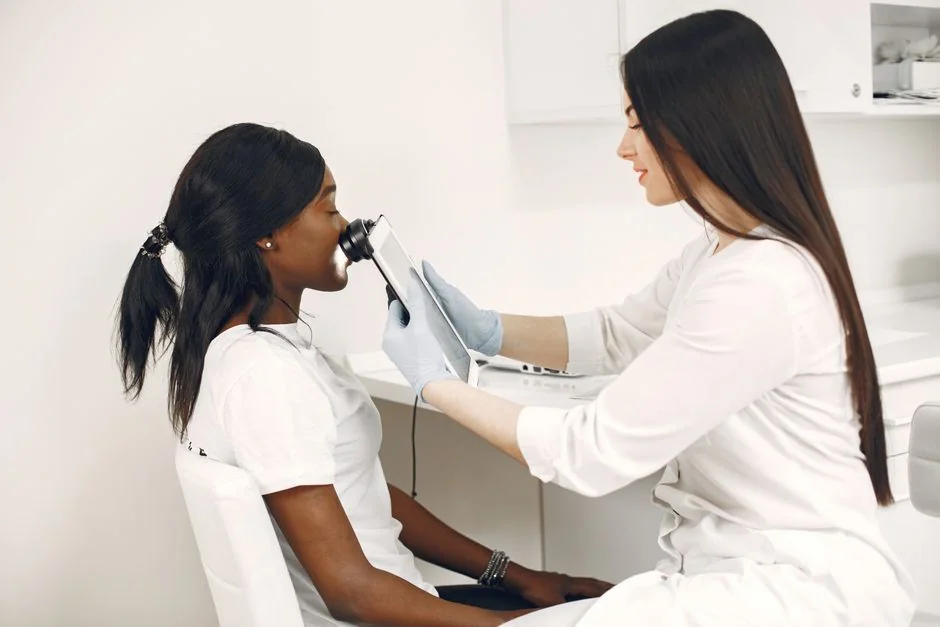
A well-constructed routine addresses the majority of climate and pollution-related skin concerns. However, persistent pigmentation, inflammatory acne, rosacea, or eczema often require a clinical assessment to identify the underlying cause and appropriate treatment.
For patients with ongoing skin concerns, professional treatments such as chemical peels or laser toning can address pigmentation and uneven texture that topical products alone cannot fully resolve. Laser toning at BIOTOPE CLINIC in Shirokanedai is available from ¥15,000–¥135,000 depending on the area and number of sessions. This is a treatment available at BIOTOPE CLINIC — feel free to ask about it during a consultation with Dr. Karibe.
Similarly, patients concerned about skin ageing accelerated by Tokyo’s pollution load — collagen loss, fine lines, loss of firmness — may find that medical-grade skincare used in combination with Zo Skin Health protocols or device-based treatments such as HIFU (High-Intensity Focused Ultrasound, a non-surgical lifting treatment) provides more measurable results than over-the-counter products alone. HIFU is available at BIOTOPE CLINIC, starting from ¥25,000. This is a treatment available at BIOTOPE CLINIC — feel free to discuss whether it is appropriate for you during a consultation with Dr. Karibe.
In Dr. Karibe’s clinical experience at BIOTOPE CLINIC, patients who combine a well-structured home routine with periodic professional skin health assessments tend to maintain more consistent results than those who rely on either approach in isolation.
Have a question about this treatment?
Message us on LINE or WhatsApp — our English-speaking team usually replies the same day.
Where to Get an English-Speaking Skin Consultation in Tokyo
Within our clinic group, English-speaking consultations are handled at BIOTOPE CLINIC in Shirokanedai (Minato-ku, Tokyo) by Dr. Jun Karibe. Our sister clinic, Kojimachi Dermatology and Plastic Surgery Clinic in Ichigaya (Chiyoda-ku), handles Japanese-language insurance-covered dermatology as the group’s main office. Bookings and enquiries in English: LINE or WhatsApp.
BIOTOPE CLINIC offers both cosmetic and medical skin consultations, and the clinic’s preventive medicine programme — including Zo Skin Health prescription-grade skincare — is available to international patients seeking a structured, physician-guided approach to skin health in Tokyo.
Frequently Asked Questions
- Q. My skin was fine before I moved to Tokyo. Why is it suddenly breaking out or becoming sensitive?
- Relocating to a new climate zone — particularly one with Tokyo’s humidity extremes and pollution load — is a common trigger for skin barrier disruption and new-onset sensitivity or acne. Products that were effective in a drier climate may be too heavy for Tokyo summers, leading to congestion. A seasonal routine adjustment and, where necessary, a clinical consultation can help identify whether the issue is environmental or requires treatment.
- Q. Is Japanese sunscreen really better than Western formulations?
- Japanese and Korean sunscreens are widely cited by dermatologists for their elegant textures and reliable SPF and PA ratings. The PA++ to PA++++ rating system (indicating UVA protection level) used in Japan is considered a practical standard for everyday use. That said, the most effective sunscreen is the one a person will actually apply — and reapply — consistently throughout the day.
- Q. Can pollution cause long-term skin damage, or is it just a short-term irritation issue?
- Research suggests that chronic urban pollution exposure contributes to long-term oxidative stress in skin cells, which accelerates collagen degradation and contributes to uneven pigmentation. Studies indicate that PM2.5 particles, which are small enough to penetrate the outer layers of skin, can trigger inflammatory pathways associated with premature ageing. A consistent antioxidant routine and thorough evening cleansing are among the most evidence-supported protective strategies.
- Q. How often should I change my skincare routine in Tokyo?
- A meaningful seasonal adjustment — at minimum twice a year, transitioning from a lighter summer routine to a richer, more occlusive winter routine — is advisable for most people living in Tokyo. Those with sensitive or reactive skin may benefit from a more gradual transition, introducing heavier products one at a time to monitor tolerance.
- Q. Do I need a prescription product, or are over-the-counter products sufficient?
- For general climate-related concerns — hydration, pollution protection, mild pigmentation — a well-chosen over-the-counter routine is typically sufficient. Persistent acne, rosacea, eczema, or significant pigmentation often respond better to prescription-grade actives or professional treatments, which require a consultation with a qualified dermatologist or plastic surgeon.
Have a question about this treatment?
Message us on LINE or WhatsApp — our English-speaking team usually replies the same day.
Summary
Tokyo’s climate demands a more seasonally adaptive skincare approach than many cities. The combination of high summer humidity, urban pollution, and dry winter air creates a cycle of barrier stress that makes consistent, well-matched product choices genuinely important — not merely cosmetic preference.
The core principles are: cleanse thoroughly but not excessively; protect against UV and pollution daily with antioxidants and a broad-spectrum sunscreen; support the barrier with ceramides and appropriate moisturisation; and adjust texture and intensity as the seasons change. When topical routines are not addressing persistent concerns, a clinical assessment adds clarity and, where appropriate, access to professional-grade treatments.
If you have questions about skincare in Tokyo or would like a professional skin assessment, English-speaking consultations are handled at BIOTOPE CLINIC in Shirokanedai (Minato-ku, Tokyo) by Dr. Jun Karibe. Our sister clinic Kojimachi Dermatology and Plastic Surgery Clinic in Ichigaya (Chiyoda-ku) handles Japanese-language insurance dermatology. English enquiries: LINE or WhatsApp.
24/7 Consultation & Booking
Book a Consultation or Treatment
Our English-speaking team responds via LINE or WhatsApp — usually the same day.
References
- Krutmann J, Liu W, Li L, et al. Pollution and skin: from epidemiological and mechanistic studies to clinical implications. Journal of Dermatological Science. 2014.
- Lefebvre MA, Pham DM, Boussouira B, et al. Evaluation of the impact of urban pollution on the quality of skin: a multicentre study in Mexico. International Journal of Cosmetic Science. 2015.
- Vierkotter A, Schikowski T, Ranft U, et al. Airborne particle exposure and extrinsic skin aging. Journal of Investigative Dermatology. 2010.
- Elias PM. Skin barrier function. Current Allergy and Asthma Reports. 2008.
- Bickers DR, Athar M. Oxidative stress in the pathogenesis of skin disease. Journal of Investigative Dermatology. 2006.
Related Articles
You may also find these articles useful.
- Skincare Routine for Tokyo Weather: Humidity & Pollution
- Japanese Sunscreen Guide: SPF and PA Ratings Explained
- Sensitive Skin Care Tokyo: English-Speaking Dermatologist
- Melasma Treatment Tokyo: Causes and Solutions
- Acne Treatment at Tokyo Dermatologist: What to Expect
SUPERVISED BY
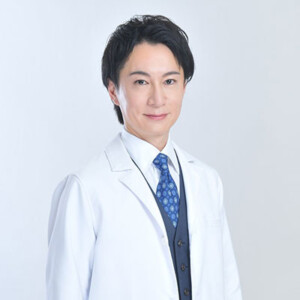
Dr. Jun Karibe
MD
Director
Education & Career
Certifications
Awards
MEDICAL REVIEW