Non-Surgical Facelift in Tokyo: Is Embrace RF Right for You in Your 40s and 50s?
If you have noticed that your face looks a little less defined than it once did — softer along the jawline, looser around the jowls, or heavier under the chin — you are not imagining things.
These are among the most common concerns that bring patients in their 40s and 50s to aesthetic clinics, and they are entirely understandable. The good news is that surgical intervention is not the only path forward.
This article explains Embrace RF, a radiofrequency-based skin-tightening system that is generating considerable interest among those seeking meaningful facial rejuvenation without going under the knife.
You will learn how it works, what realistic results look like, what it costs in Tokyo, and whether you are a suitable candidate.
What you will learn in this article:
- What Embrace RF is and how it differs from other non-surgical lifting treatments
- The science behind radiofrequency and why it matters for patients in their 40s and 50s
- Realistic results, downtime, and what the treatment experience involves
- Costs at a Tokyo clinic and how to budget for a full treatment course
- Who is a strong candidate — and who may be better served by an alternative approach
Have a question about this treatment?
Message us on LINE or WhatsApp — our English-speaking team usually replies the same day.
What Is Embrace RF?
Embrace RF is a minimally invasive radiofrequency (RF) body and facial contouring system developed by Syneron-Candela. It combines two technologies — fractional radiofrequency microneedling and subdermal RF heating — delivered through a bipolar handpiece that targets tissue at multiple depths simultaneously.
The “minimally invasive” designation is important to understand accurately. Unlike fully non-invasive treatments such as HIFU or topical RF, Embrace RF uses very fine microneedles that penetrate the skin to deliver RF energy directly into the dermis and subdermis.
This places it in a clinical category sometimes called “micro-invasive” — more targeted than surface-only devices, but considerably less involved than a surgical facelift.
How Does It Differ from HIFU and Surface RF?
High-intensity focused ultrasound (HIFU) works by delivering focused ultrasound energy deep into the SMAS layer (the fibromuscular layer beneath the fat) without breaking the skin surface. Surface radiofrequency devices heat the outer dermis.
Embrace RF sits between these two in terms of depth and invasiveness: the microneedles bypass the epidermis, directing heat energy precisely into the mid-to-deep dermis and superficial fat layer where much of the structural laxity originates.
The practical consequence is that Embrace RF can produce more controlled, reproducible heating at depth than surface-only devices, often with a single treatment session rather than a course.
For patients in their 40s and 50s who have moderate-to-significant laxity — beyond what a purely surface treatment can address — this distinction often matters clinically.
How Embrace RF Works: The Science Explained
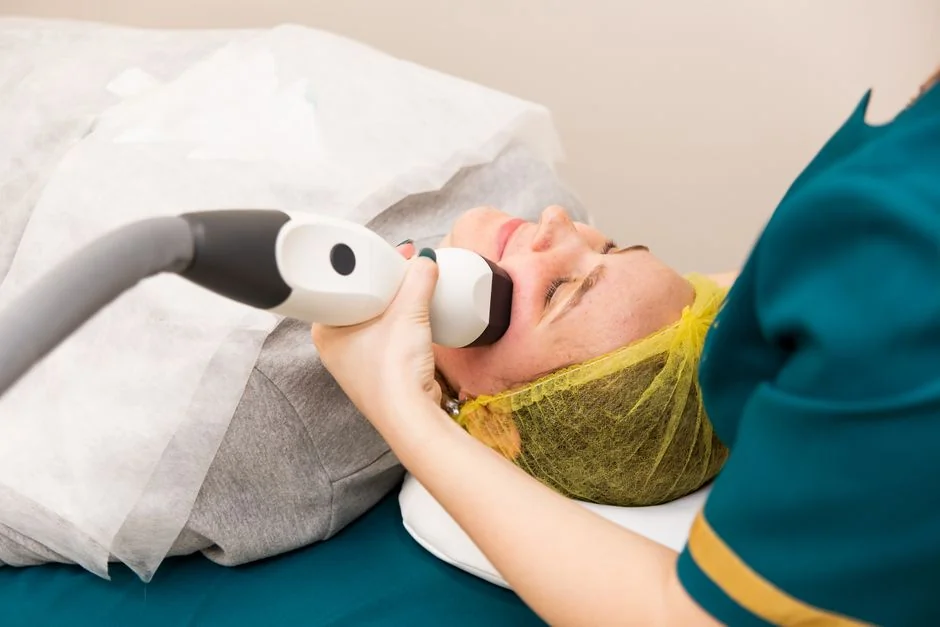
Radiofrequency energy causes the water molecules in tissue to vibrate, generating heat. When this heat reaches a specific threshold — typically between 65°C and 70°C — it triggers two important biological processes: immediate collagen contraction and long-term neocollagenesis (the production of new collagen fibres).
The immediate contraction produces a modest tightening effect that can be visible soon after treatment. The more significant and durable outcome, however, comes from the body’s wound-healing response to controlled thermal injury. Over the following weeks and months, fibroblasts — the cells responsible for producing collagen and elastin — are stimulated to lay down fresh structural proteins. This remodelling process is gradual, which is why full results typically develop over three to six months.
Why Age 40s and 50s Is a Relevant Window
Collagen production begins to decline meaningfully from the mid-30s onward, accelerating after menopause in women and continuing to decline with age in men. By the 40s and 50s, the cumulative loss of collagen and elastin — combined with gravitational descent of facial fat compartments — results in the jowling, submental (under-chin) heaviness, and general loss of facial definition that are the hallmark signs of mid-life facial ageing.
Crucially, patients in their 40s and 50s typically still have sufficient tissue quality for RF energy to stimulate a meaningful neocollagenesis response. Studies suggest that the biological capacity for collagen remodelling remains significant into the fifth and sixth decades of life, making this age group among the most appropriate candidates for energy-based rejuvenation.
Patients in their late 60s or beyond may have more advanced tissue laxity that exceeds what any non-surgical approach can adequately address.
Dr. Karibe’s Note
Many of our international patients arrive expecting the same outcome from a single energy-based session that surgery would produce, and they are understandably surprised when we explain the difference.
What I find most useful to communicate is this: Embrace RF is not a substitute for a surgical facelift, but it is a genuinely effective tool for patients who have real, visible laxity and want a meaningful improvement without the recovery period that surgery requires.
In my experience, patients who see the most satisfying results are those who approach it with accurate expectations — improvement, not transformation — and who are committed to a good skincare regimen alongside the procedure.
Expected Results: What Improvement Can Look Like
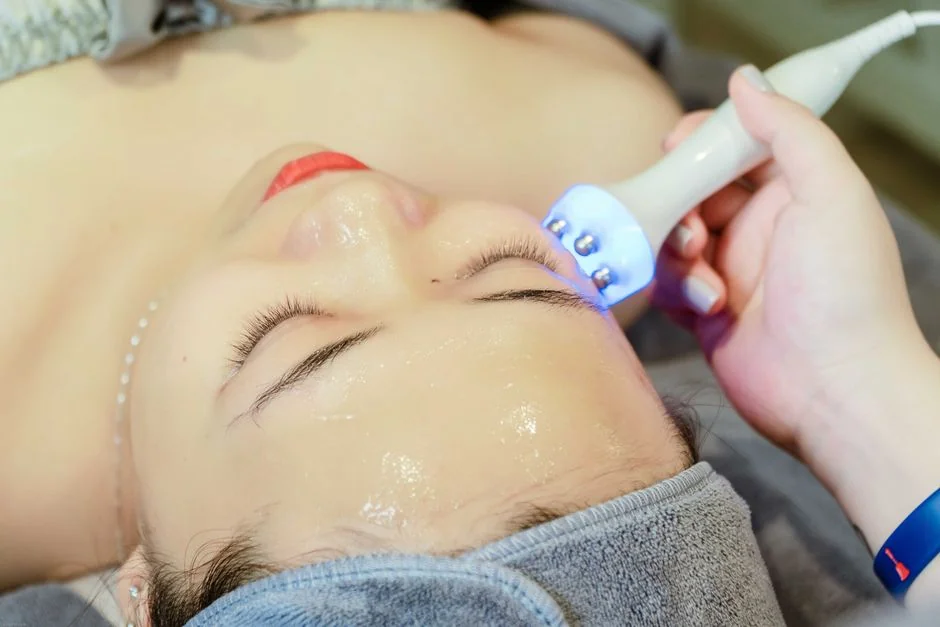
Clinical reports indicate that a single Embrace RF treatment to the face and neck can produce visible improvements in jawline definition, submental laxity, and skin texture. In a published study on submental contouring with Embrace RF, investigators reported that blinded assessors rated meaningful improvement in the majority of subjects at three-month follow-up, with patient satisfaction scores remaining positive at six months.
A separate review of fractional RF microneedling technologies noted that clinically observable skin tightening was reported in the range of 50–70% of patients across multiple studies, with the caveat that outcomes vary based on baseline skin laxity, patient age, and the number of treatment sessions performed. These figures should be understood as population averages rather than individual guarantees.
Timeline of Results
- Immediately post-treatment: Mild redness and swelling; some patients notice very slight initial contraction
- Weeks 2–4: Redness resolves; early collagen remodelling begins; skin may feel firmer to the touch
- Months 2–3: Visible improvement in jawline definition and skin tightness becomes more apparent
- Months 4–6: Peak results as neocollagenesis reaches full effect; the skin surface refines further
Many patients choose to undergo a second treatment session at six to twelve months to maintain or build upon their results. Collagen continues to be lost naturally over time, so periodic maintenance is a reasonable part of any long-term plan.
What It Cannot Do
It is important to be clear: Embrace RF cannot replicate the structural repositioning achieved through a surgical facelift.
It does not remove excess skin, reposition descended fat pads, or address the SMAS layer as directly as surgery does. Patients with very advanced ptosis (drooping) of facial tissues, excess skin folds, or significant volume displacement may find that the results of a non-surgical approach are insufficient for their goals.
Embrace RF vs. Other Non-Surgical Lifting Options in Tokyo
Patients researching non-surgical facial rejuvenation in Tokyo typically encounter several overlapping technologies. The table below provides a factual comparison to help readers understand where Embrace RF fits within the broader treatment landscape.
| Treatment | Mechanism | Depth of Action | Invasiveness | Typical Sessions | Best Suited For |
|---|---|---|---|---|---|
| Embrace RF | Fractional RF microneedling + subdermal RF | Dermis and superficial fat | Micro-invasive (fine needles) | 1–2 per year | Moderate-to-significant laxity, jowls, submental heaviness |
| HIFU | Focused ultrasound | Deep dermis and SMAS | Non-invasive | 1–2 per year | Early-to-moderate laxity, brow lifting, neck tightening |
| Morpheus8 (RF Microneedling) | Fractional RF microneedling | Dermis to superficial fat | Micro-invasive (needles) | 2–3 sessions | Skin texture, mild-to-moderate laxity, neck, lower face |
| Thread Lift (Tesslift) | Mechanical tissue repositioning with PDO threads | Subcutaneous layer | Minimally invasive (cannula) | 1 session; repeatable | Visible lifting of jowls or midface; results last ~1–2 years |
| Hyaluronic Acid Filler | Volume replacement and structural support | Various dermal layers | Minimally invasive (injection) | 1 session; repeatable | Volume loss, hollowing, structural support of the midface |
In clinical practice, these treatments are frequently combined. A patient with both skin laxity and volume loss, for example, may benefit from Embrace RF for tissue tightening alongside hyaluronic acid filler for structural support. At our clinic in Tokyo, we frequently see patients who have already tried one approach and are seeking to understand which combination will move them closer to their specific goal — a conversation that is best had during a thorough consultation.
What to Expect: Before, During, and After Treatment
Before Treatment
A full consultation is essential before any RF microneedling procedure. The treating physician will assess your skin condition, discuss your goals, review your medical history, and confirm that you are a suitable candidate.
Photographs are typically taken for comparison purposes. Patients are usually advised to avoid blood-thinning supplements (such as high-dose vitamin E, fish oil, or aspirin where medically permissible) in the days before the procedure, and to attend with clean, product-free skin on the day.
During Treatment
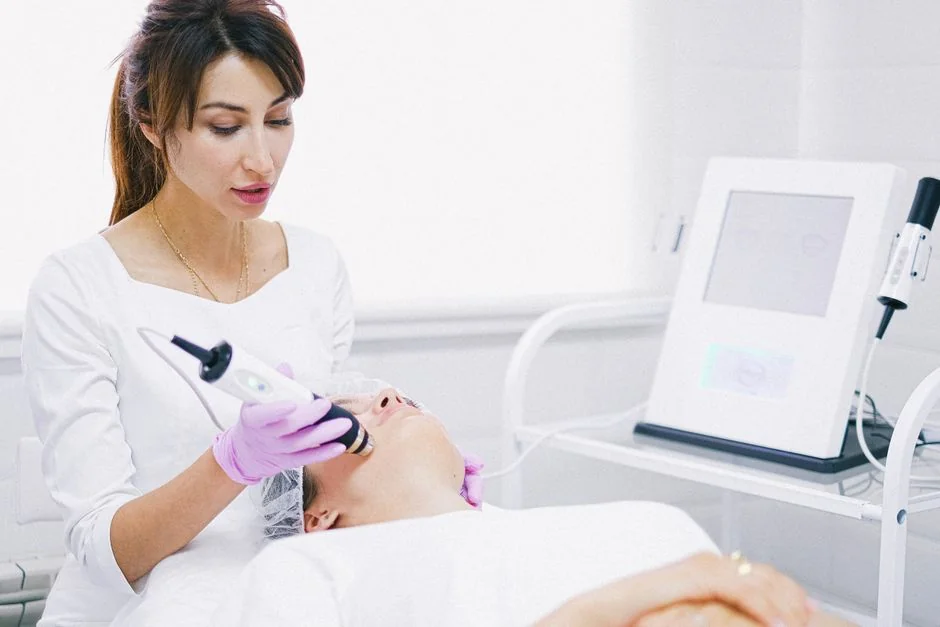
A topical anaesthetic cream is applied to the treatment area approximately 30 to 45 minutes before the procedure begins.
Once the skin is numbed, the handpiece is passed over the treatment zone; the fine needles penetrate to the programmed depth, and RF energy is delivered in fractional pulses. Most patients describe the sensation as a feeling of pressure and warmth. A full-face and neck treatment session typically takes between 30 and 60 minutes.
After Treatment and Downtime
Redness, mild swelling, and pin-point marks at the needle entry sites are expected in the first 24 to 72 hours. The majority of patients can return to work within two to four days, though this varies by individual response and the energy settings used. Makeup should generally be avoided for 24 to 48 hours. Sun protection with a broad-spectrum SPF 30 or higher is strongly recommended throughout the recovery period and beyond.
This is a treatment available at our clinic — feel free to ask about the specific protocols and aftercare guidance during a consultation with Dr. Karibe or a member of our clinical team.
Cost of Embrace RF in Tokyo
Pricing for Embrace RF in Tokyo varies depending on the treatment area, the number of passes performed, and the clinical setting. As a reference point for patients considering treatment at Kojimachi Dermatology and Plastic Surgery Clinic, the following gives a realistic sense of the investment involved. For our clinic’s current pricing on energy-based and RF treatments, please refer to our official price list or request a quote during consultation.
For context, HIFU treatments at our clinic are priced between ¥25,000 and ¥110,000 depending on the area and number of shots, and Morpheus8 RF microneedling (a comparable fractional RF technology also available at the clinic) begins in a similar range.
Patients considering a combined approach — for example, RF tightening alongside hyaluronic acid filler (¥66,000–¥88,000 per syringe) or Botox (from ¥22,000 for Allergan-brand) — should budget accordingly, as combination treatments are frequently more effective than any single modality alone.
An initial consultation at the clinic is priced at ¥3,300, and a surgical consultation with Dr. Karibe directly is ¥2,200. For an accurate quote, we recommend booking a consultation.
Have a question about this treatment?
Message us on LINE or WhatsApp — our English-speaking team usually replies the same day.
Who Is a Good Candidate for Embrace RF?
The following profile describes patients who tend to respond most favourably to Embrace RF facial treatment:
- Adults in their 40s or 50s (and occasionally early 60s) with mild-to-moderate facial skin laxity
- Patients with visible jowling, submental laxity (looseness under the chin), or loss of jawline definition
- Those who prefer to avoid surgical intervention due to lifestyle, recovery time, or personal preference
- Patients with realistic expectations — seeking meaningful improvement rather than a surgical-level transformation
- Individuals in general good health without active skin infections, inflammatory skin conditions, or certain systemic diseases
- Non-smokers, or those willing to reduce smoking, as smoking impairs collagen synthesis and wound healing
Who Should Consider an Alternative Approach
- Patients with severe or advanced skin laxity and significant excess skin who are likely to be better served by surgical intervention such as a facelift
- Individuals with active acne, rosacea, or eczema over the planned treatment area
- Those with implanted electronic devices (pacemakers, cochlear implants) for whom RF-based treatments are contraindicated
- Patients who are pregnant or breastfeeding
- Individuals with a history of poor wound healing, keloid scarring, or on medications that significantly suppress the immune response
- Those taking isotretinoin (Accutane/Roaccutane) — a pause of at least six months is generally advised before any ablative or semi-ablative procedure
In our clinical experience at BIOTOPE CLINIC or Kojimachi Dermatology and Plastic Surgery Clinic, the consultation process is the most important step in determining which approach — or combination of approaches — is genuinely aligned with a patient’s anatomy and goals. There is no single “right” treatment for every 40- or 50-year-old patient; individual assessment always takes precedence.
Common Misconceptions About Embrace RF and Non-Surgical Facelifts
Misconception 1: “One session is enough for permanent results.” Radiofrequency treatments stimulate collagen production, but they do not halt the natural ageing process.
The improvements achieved are real and can last one to two years, but the skin continues to age and periodic maintenance treatments are a practical part of managing long-term outcomes. Expecting a single session to produce permanent results sets up unrealistic expectations and frequently leads to disappointment.
Misconception 2: “Embrace RF and HIFU are essentially the same thing.” Both are energy-based skin-tightening technologies, but their mechanisms, depths of action, and clinical profiles differ meaningfully.
HIFU delivers ultrasound energy to the deep SMAS layer without penetrating the skin surface, making it fully non-invasive. Embrace RF uses microneedles to deposit radiofrequency energy within the dermis and superficial fat, producing a different pattern of tissue remodelling. Neither is universally superior — the choice depends on the patient’s anatomy, laxity severity, and treatment goals. A qualified clinician can explain which is more appropriate in any given case.
Frequently Asked Questions
- Q. Is Embrace RF painful?
- Most patients describe the sensation during treatment as pressure and warmth rather than sharp pain, thanks to the topical anaesthetic applied beforehand. Sensitivity varies between individuals, and the clinical team can adjust energy settings for patient comfort. Post-procedure tenderness in the treated area is common for 24 to 48 hours.
- Q. How many sessions of Embrace RF will I need?
- Many patients achieve their desired outcome from a single treatment session, particularly when the target area is the lower face and submental region. Those with more significant laxity or who wish to address multiple areas may benefit from a second session, typically scheduled six to twelve months later. Your physician will recommend a plan based on your individual assessment.
- Q. Can Embrace RF be combined with other treatments on the same day?
- Combination same-day treatments are sometimes appropriate and can enhance overall outcomes — for example, pairing RF tightening with Botox or hyaluronic acid filler to address both laxity and volume loss simultaneously. Whether this is advisable depends on the specific treatments involved and the patient’s skin condition. This is a question best discussed in detail during the consultation.
- Q. How soon can I return to work after Embrace RF?
- The majority of patients are comfortable returning to desk-based work within two to four days, once the initial redness and swelling have subsided. Those in patient-facing roles who prefer to avoid visible redness may choose to allow a slightly longer recovery window. Physical exertion and prolonged sun exposure should be avoided for at least one week.
- Q. Is Embrace RF suitable for Asian skin tones?
- Radiofrequency-based treatments are generally considered safe across all skin phototypes, including Fitzpatrick types IV and V, which are common among patients of East and South Asian descent. Unlike some laser-based technologies, RF does not directly target melanin and therefore carries a lower risk of post-inflammatory hyperpigmentation (temporary darkening). However, individual skin assessment is always required, and patients should discuss any history of hyperpigmentation with their treating clinician.
- Q. Is consultation available in English at the clinic?
- Yes. BIOTOPE CLINIC or Kojimachi Dermatology and Plastic Surgery Clinic in Tokyo offers consultations in English for international patients. The clinic has experience working with expatriates and medical visitors and can communicate treatment information, aftercare instructions, and follow-up guidance in English.
Have a question about this treatment?
Message us on LINE or WhatsApp — our English-speaking team usually replies the same day.
Summary
Embrace RF represents a meaningful option for patients in their 40s and 50s who are experiencing visible facial laxity and wish to pursue improvement without surgical intervention.
By combining fractional radiofrequency microneedling with subdermal RF heating, it stimulates genuine collagen remodelling at the depth where age-related tissue changes are most pronounced.
Clinical evidence suggests that well-selected patients can see noticeable improvements in jawline definition, submental tightness, and overall skin quality, with results continuing to develop over three to six months post-treatment.
It is not a replacement for surgery in cases of advanced laxity, but for the right patient it offers a clinically substantive, lower-downtime pathway to facial rejuvenation.
Selecting the appropriate treatment — whether Embrace RF alone, combined with complementary injectables, or in conjunction with HIFU or another energy-based technology — requires a proper clinical assessment. Treatment plans should be individualised, not generalised.
If you have questions about non-surgical facelift options in Tokyo, including Embrace RF, our team at BIOTOPE CLINIC or Kojimachi Dermatology and Plastic Surgery Clinic in Tokyo would be happy to help. We offer consultations in English.
24/7 Consultation & Booking
Book a Consultation or Treatment
Our English-speaking team responds via LINE or WhatsApp — usually the same day.
References
- Alexiades-Armenakas M, Rosenberg D, Renton B, Dover J, Arndt K. Blinded, randomized, quantitative grading comparison of minimally invasive, fractional radiofrequency and surgical face-lift to treat skin laxity. Archives of Dermatology. 2010.
- Taub AF, Tucker RD, Palermo M. Fractional radiofrequency treatment with a novel bipolar electrode array for the treatment of facial laxity. Journal of Clinical and Aesthetic Dermatology. 2012.
- Dayan E, Burns AJ, Rohrich RJ, Theodorou S. The use of radiofrequency in aesthetic surgery. Plastic and Reconstructive Surgery Global Open. 2020.
- Zelickson BD, Kist D, Bernstein E, et al. Histological and ultrastructural evaluation of the effects of a radiofrequency-based nonablative dermal remodeling device: a pilot study. Archives of Dermatology. 2004.
- Hantash BM, Renton B, Berkowitz RL, Stridde BC, Newman J. Pilot clinical study of a novel minimally invasive bipolar microneedle radiofrequency device. Lasers in Surgery and Medicine. 2009.
Related Articles
You may also find these articles useful.
- Facial Sagging Treatment: HIFU vs RF Microneedling
- Volnewmer vs Thermage vs HIFU: RF Comparison
- Volnewmer Tokyo: Monopolar RF Skin Tightening 2026
- FaceTite vs Surgical Facelift Tokyo: Minimally Invasive Alternative
- Skin Tightening Treatment Tokyo: Options and Cost
SUPERVISED BY
Dr. Jun Karibe
MD
Director
Education & Career
Certifications
Awards
MEDICAL REVIEW