Embrace RF vs HIFU vs Deep Plane Facelift: Which Facial Rejuvenation Option Is Right for You in Tokyo?
Deciding between a non-invasive device treatment, a minimally invasive radiofrequency procedure, and a surgical facelift is one of the most common — and genuinely difficult — questions facing anyone considering facial rejuvenation in Tokyo.
The three approaches work on entirely different principles, carry different levels of downtime and risk, and are suited to different stages of facial ageing.
This guide explains how Embrace RF(FACETITE), HIFU, and the deep plane facelift each work, what results are realistic, what they cost in Tokyo, and — most importantly — how to decide which is appropriate for your individual anatomy and lifestyle.
What you’ll learn in this article:
- How Embrace RF,Facetite, HIFU, and the deep plane facelift differ in mechanism and depth of action
- What results to realistically expect from each approach
- Indicative costs in Tokyo for each option
- Recovery and downtime compared side by side
- Clear candidate-selection criteria to help you choose the most suitable treatment
Have a question about this treatment?
Message us on LINE or WhatsApp — our English-speaking team usually replies the same day.
Understanding the Three Approaches: A Brief Overview
These three treatments are sometimes presented as if they sit on a simple spectrum from “mild” to “strong.”
In reality, they address different anatomical layers and solve different problems. Grouping them together only makes sense once you understand what each one actually does beneath the skin.
What Is HIFU (High-Intensity Focused Ultrasound)?
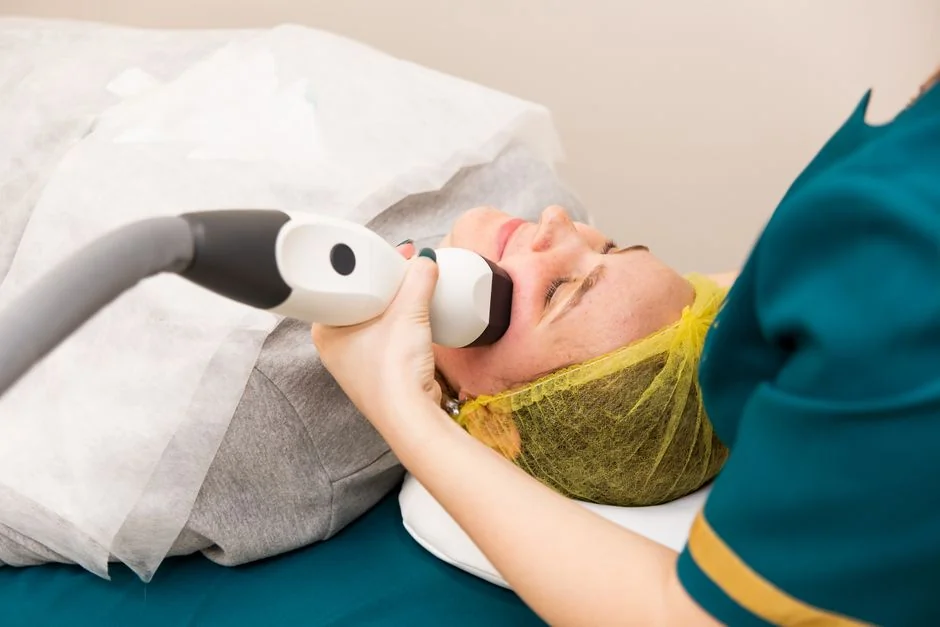
HIFU delivers focused ultrasound energy to precise depths in the skin — typically the superficial musculoaponeurotic system (SMAS), a fibromuscular layer that sits beneath the fat and dermis of the face.
The energy creates micro-thermal coagulation points at targeted depths (commonly 1.5 mm, 3.0 mm, and 4.5 mm), triggering a wound-healing response that stimulates new collagen and elastin production.
The treatment is entirely non-invasive: no needles, no incisions. Sessions typically last 30 to 90 minutes depending on the area treated. Results develop gradually over two to six months as collagen remodelling progresses, and a maintenance session is generally recommended every 12 to 18 months.
HIFU is available at BIOTOPE CLINIC in Shirokanedai, priced from ¥25,000 to ¥110,000 depending on the area and number of shots delivered. Feel free to ask about treatment planning during a consultation with Dr. Karibe.
What Is Embrace RF?
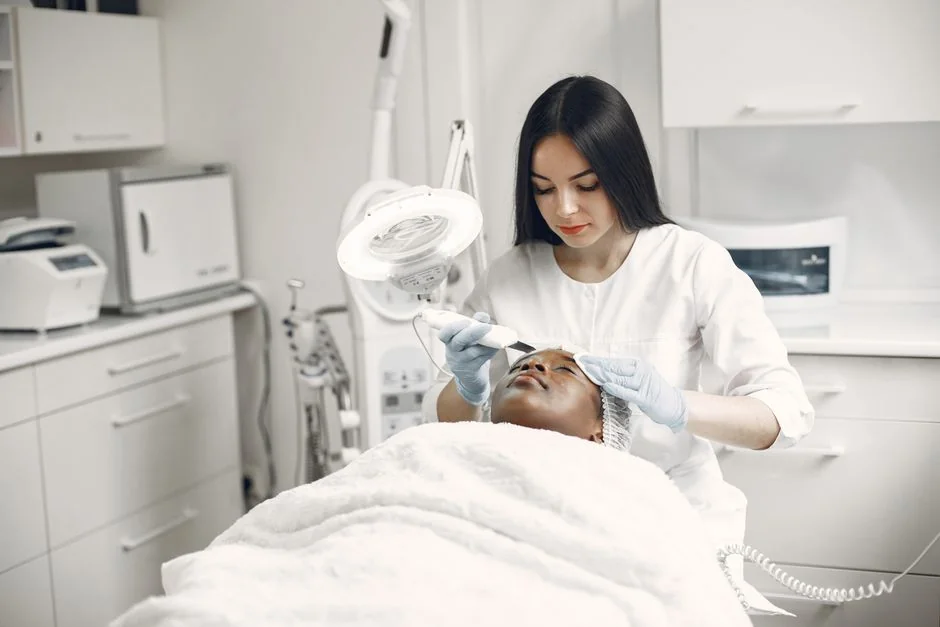
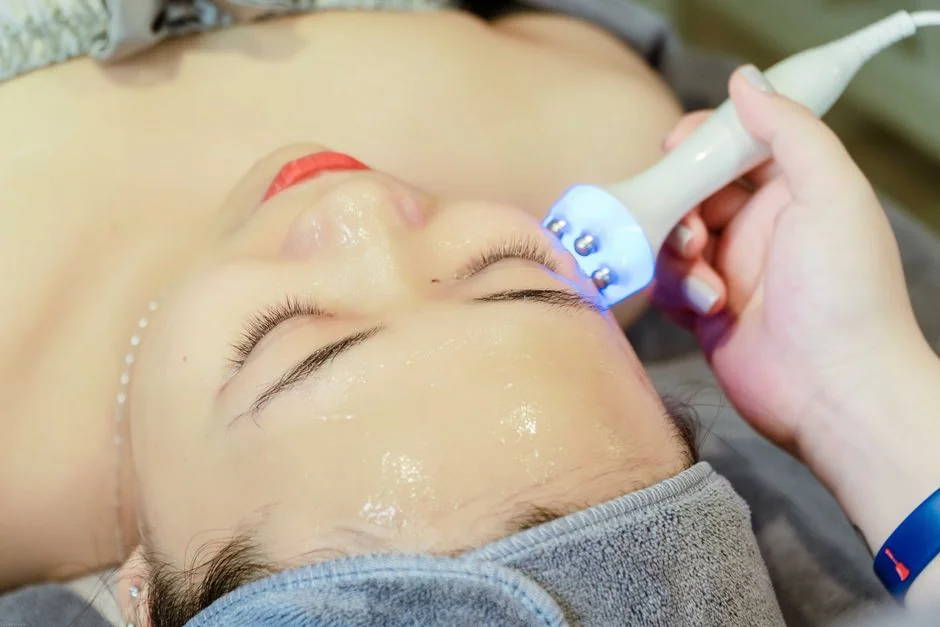
Embrace RF is a minimally invasive device that combines two technologies: radiofrequency (RF) energy delivered through fine internal electrodes placed just beneath the skin surface, and BodyTite/FaceTite-style external skin tightening applied simultaneously. The internal electrode heats subcutaneous fat and deeper tissues directly, while the external handpiece monitors skin surface temperature in real time to minimise thermal injury.
Because the RF energy is delivered internally, Embrace RF achieves deeper and more uniform tissue heating than surface-based devices.
This allows for meaningful tissue contraction and remodelling at the level of the subdermis and superficial fat — a depth that non-invasive HIFU cannot consistently reach. The procedure requires local anaesthesia and involves small needle-entry points (not incisions), so it sits in the “minimally invasive” category.
Clinical reports indicate that Embrace RF and comparable internal RF devices can achieve measurable soft-tissue contraction in the range of 17 to 35 percent in treated areas, though individual results vary considerably based on skin laxity, tissue composition, and technique.
What Is a Deep Plane Facelift?
A deep plane facelift is a surgical procedure performed under general or deep sedation anaesthesia.
Unlike a traditional SMAS facelift — which simply tightens the SMAS layer through plication or imbrication — a deep plane facelift releases and repositions the SMAS and the ligaments that anchor the mid-face, allowing the underlying structural tissues to be lifted as a composite unit.
This addresses not only skin laxity but also volume descent in the mid-face, the nasolabial folds, and the jawline — areas that non-surgical approaches cannot fully correct. Results from a well-performed deep plane facelift are typically long-lasting, with clinical studies suggesting an average longevity of seven to ten or more years depending on patient age, genetics, and sun-exposure history.
It is worth noting that deep plane facelifts are performed by qualified plastic surgeons and require detailed pre-operative planning.
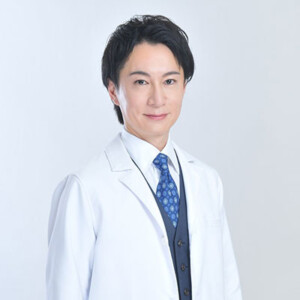
BIOTOPE CLINIC, led by Dr. Jun Karibe — a board-certified plastic surgeon certified by the Japan Society of Plastic and Reconstructive Surgery — is the appropriate starting point for a surgical facelift consultation within this clinic group.
How Each Treatment Works: Mechanism and Depth of Action
The most clinically relevant difference between these three treatments is the anatomical layer each one targets. Understanding this explains why no single approach is universally superior.
HIFU targets the SMAS layer non-invasively through the overlying skin, using thermal coagulation points spaced across a grid. The dermis is also treated at shallower depths, offering some skin texture improvement.
However, the energy is attenuated as it passes through surface layers, and not every patient’s anatomy allows adequate energy delivery to depth.
Embrace RF bypasses the skin surface entirely by placing the energy source subcutaneously.
This means the fat compartments and fibrous septa beneath the skin receive direct, controlled heating without requiring energy to penetrate through the dermis first. The simultaneous external RF creates a “sandwich” effect, contracting tissue from both directions.
A deep plane facelift operates through direct surgical visualisation and manipulation. The surgeon physically releases retaining ligaments — including the zygomatic and masseteric ligaments — and repositions the composite tissue flap. No thermal energy is involved; the correction is immediate and mechanical.
Dr. Karibe’s Note
Many of our international patients at BIOTOPE CLINIC arrive having already tried a HIFU device at a spa or discount clinic and are disappointed with the results. In most of these cases, the issue is not that HIFU failed as a technology — it is that the degree of facial laxity they had was simply beyond what any non-invasive device can adequately address.
A proper consultation should always start with an honest assessment of tissue laxity, skin quality, and anatomical structure before any device or surgical option is recommended.
Expected Results: What Is Realistic for Each Treatment?
HIFU Results
HIFU produces a subtle but genuine improvement in skin firmness and mild jowl definition when performed correctly and on appropriate candidates. A published meta-analysis in the Journal of the European Academy of Dermatology and Venereology (2019) found statistically significant improvements in physician-assessed skin laxity scores following HIFU treatment, with patient satisfaction rates ranging from 60 to 80 percent across included studies — though the authors noted wide variability in protocols and outcome measures.
Patients with mild to moderate skin laxity and good baseline skin quality tend to respond most noticeably. Those with significantly descended facial fat, deep nasolabial folds, or substantial jowling are unlikely to achieve a clinically satisfying result from HIFU alone.
Embrace RF Results
Embrace RF delivers a more pronounced degree of tightening than HIFU, particularly in the lower face, jawline, and neck, because of its direct tissue heating. Clinical reports on internal RF technology indicate that the treatment can produce a visible improvement in jawline definition and submental (under-chin) contraction that is apparent within one to three months and continues to improve over six months as collagen remodels.
Results are typically described as natural-looking — the face appears firmer and more defined rather than surgically altered. The improvement is meaningful but generally less dramatic than a facelift, particularly in patients with significant ligamentous descent or significant skin excess.
Deep Plane Facelift Results
A deep plane facelift produces the most comprehensive structural correction of the three options.
Surgical repositioning of the SMAS-platysma composite restores mid-face volume position, redefines the jawline, and addresses neck laxity in a way that is immediately visible and durable.
Studies suggest that deep plane techniques produce longer-lasting outcomes and require fewer revisions than more superficial facelift approaches, with one comparative study published in Plastic and Reconstructive Surgery (Rohrich et al., 2021) reporting lower rates of recurrent laxity at five years for deep plane versus SMAS-plication techniques.
As with all surgical outcomes, individual results depend on surgeon experience, patient healing, and post-operative care.However,we are veteran plastic and cosmetic surgery specialist, so fell free to ask any questions for us!!
Comparison at a Glance
| Feature | HIFU | Embrace RF | Deep Plane Facelift |
|---|---|---|---|
| Invasiveness | Non-invasive | Minimally invasive (local anaesthesia) | Surgical (general or deep sedation) |
| Anatomical target | SMAS, dermis (via skin surface) | Subcutaneous fat, subdermis | SMAS, retaining ligaments, mid-face |
| Downtime | Minimal (0–3 days redness/swelling) | 5–10 days (swelling, bruising) | 2–4 weeks (significant swelling, sutures) |
| Onset of results | 2–6 months (gradual) | 1–3 months (gradual) | Immediate (with continued improvement 3–6 months) |
| Longevity of results | 12–18 months (maintenance needed) | 2–4 years (varies) | 7–10+ years |
| Best suited for | Mild laxity, skin maintenance | Mild-moderate laxity, jawline definition | Moderate-severe laxity, structural descent |
| Approximate Tokyo price range | ¥25,000–¥110,000 | Clinic-dependent (consultation required) | ¥800,000–¥2,000,000+ (clinic-dependent) |
| Anaesthesia required | None (topical cream optional) | Local anaesthesia | General or deep sedation |
| Risk profile | Low (temporary discomfort, rare burns) | Low-moderate (bruising, swelling, rare thermal injury) | Moderate (bleeding, scarring, nerve risk, prolonged healing) |
Cost in Tokyo: What to Budget
Pricing in Tokyo for these treatments varies considerably depending on the clinic, the area treated, and the degree of complexity involved. The figures below reflect typical ranges in the Tokyo cosmetic medicine market.
HIFU at BIOTOPE CLINIC: HIFU is available from ¥25,000 to ¥110,000 depending on the treatment area and number of shots. A full-face and neck session will generally fall in the upper portion of this range. An initial consultation is ¥3,300 (or ¥2,200 for a Dr. Karibe surgical consultation).
Embrace RF: As a minimally invasive procedure requiring local anaesthesia and physician time, Embrace RF is priced on a per-area and per-session basis. A consultation with Dr. Karibe at BIOTOPE CLINIC is required to obtain an accurate quote, as cost depends significantly on which anatomical zones are treated and whether it is combined with complementary procedures such as a thread lift (Tesslift threads are available from ¥48,000 per thread) or injectable treatments.
Deep plane facelift in Tokyo: Surgical facelift pricing in Tokyo typically ranges from approximately ¥800,000 to ¥2,000,000 or more at reputable plastic surgery clinics, depending on the technique used, whether a neck lift is included, anaesthesia fees, and hospitalisation costs. Pre-operative blood work (¥11,000) and anaesthesia (¥2,200–¥77,000) are additional considerations at BIOTOPE CLINIC for any surgical procedure.
For an accurate quote, we recommend booking a consultation.
Have a question about this treatment?
Message us on LINE or WhatsApp — our English-speaking team usually replies the same day.
Who Is a Good Candidate for Each Treatment?
Ideal Candidates for HIFU
HIFU is most appropriate for individuals in their late twenties to mid-forties who have mild skin laxity, good skin quality, and are looking to maintain or modestly improve their current facial contour. It is also a reasonable maintenance treatment for patients who have already undergone a surgical or minimally invasive procedure and wish to preserve results over time.
HIFU is not recommended as a primary treatment for individuals with significant sagging of the jowls, deep nasolabial folds, or platysmal banding in the neck. In these cases, the energy simply cannot provide enough structural correction, and patients are likely to be disappointed.
Ideal Candidates for Embrace RF
Embrace RF suits patients in their late thirties to mid-fifties who have early-to-moderate jawline and lower-face laxity, are not yet ready for surgery, and want a more meaningful result than HIFU can provide. It is particularly effective for patients concerned with jowl softening, submental fullness, and early platysmal laxity.
Patients who are pregnant, have active skin infections in the treatment area, have implanted electronic devices (pacemakers), or have unrealistic expectations of a surgical-level result are not suitable candidates. A thorough consultation is essential.
Ideal Candidates for a Deep Plane Facelift
A deep plane facelift is most appropriate for patients with moderate to significant facial ptosis (descended facial tissues), established jowling, deep nasolabial folds, and neck laxity that is unlikely to respond adequately to non-surgical approaches. Candidates are typically in their late forties and above, though chronological age is less important than the degree of tissue laxity and overall health.
Good candidates are non-smokers (or willing to cease smoking well before surgery), are in good general health without significant cardiovascular conditions, have realistic expectations, and are able to take adequate time off for recovery. Patients on blood-thinning medications require careful pre-operative management. A thorough medical assessment is mandatory before any surgical procedure.
In Dr. Karibe‘s clinical experience at BIOTOPE CLINIC, patients who invest time in a detailed consultation — rather than arriving with a fixed treatment in mind — tend to achieve the most satisfying outcomes, because the appropriate treatment is selected based on actual anatomy rather than perceived preference.
What People Often Get Wrong About These Treatments
Misconception 1: “HIFU is a non-surgical facelift.”
This is one of the most pervasive misconceptions in cosmetic medicine marketing. HIFU stimulates collagen production and provides modest tightening — it does not reposition descended facial structures. A facelift, surgical or deep plane, involves the physical repositioning of the SMAS and overlying tissue composite. Using the phrase “non-surgical facelift” to describe HIFU overstates what the technology can deliver and frequently leads to patient disappointment.
Misconception 2: “More energy or more shots always means better results.”
With both HIFU and RF-based devices, excessive energy delivery does not improve outcomes and may cause thermal injury, prolonged oedema (swelling), or paradoxical tissue changes. Appropriate energy settings are determined by device calibration, patient skin thickness, and clinical judgement — not by maximising shot counts. At BIOTOPE CLINIC, treatment parameters are set based on individual assessment rather than standardised packages.
Where to Get These Treatments in Tokyo
Within our clinic group, English-speaking consultations are handled at BIOTOPE CLINIC in Shirokanedai (Minato-ku, Tokyo) by Dr. Jun Karibe — a board-certified plastic surgeon certified by the Japan Society of Plastic and Reconstructive Surgery. BIOTOPE CLINIC is the appropriate contact point for all treatments discussed in this article, including HIFU, Embrace RF, thread lifts, injectables, and surgical facelift consultations.
Our sister clinic, Kojimachi Dermatology and Plastic Surgery Clinic (麹町皮ふ科・形成外科クリニック) in Ichigaya, Chiyoda-ku, is the main office of the same medical group and specialises in insurance-covered dermatology conducted in Japanese. All English enquiries should be directed to BIOTOPE CLINIC.
Bookings and enquiries in English: LINE or WhatsApp.
Frequently Asked Questions
- Q. Can HIFU and Embrace RF be combined with a facelift?
- HIFU is sometimes used as a maintenance treatment after surgical facelift to prolong results, typically beginning six months or more post-operatively once healing is complete. Embrace RF is generally not combined with a concurrent facelift, as both involve tissue heating and manipulation — combining them in the same session would create unpredictable thermal load. Your surgeon will advise on appropriate sequencing during a consultation.
- Q. How many HIFU sessions are needed to see results?
- Most patients undergo a single full-face session and then assess results over the following three to six months. A maintenance session every 12 to 18 months is typical for patients seeking to sustain improvements. Some protocols use two sessions spaced several months apart for patients with moderate laxity, but more is not always better — over-treatment carries real risks.
- Q. Is a deep plane facelift safe, and how do I minimise surgical risk in Tokyo?
- Any surgical procedure carries inherent risks including bleeding, infection, nerve injury, scarring, and anaesthesia complications. Choosing a board-certified plastic surgeon with demonstrated experience in deep plane techniques, undergoing thorough pre-operative assessment, and following all post-operative instructions significantly reduces — but does not eliminate — these risks. Dr. Karibe at BIOTOPE CLINIC holds board certification from the Japan Society of Plastic and Reconstructive Surgery and can provide a detailed risk discussion during a surgical consultation.
- Q. I am visiting Tokyo from overseas. Can I undergo a facelift or Embrace RF as a medical tourist?
- Non-invasive treatments such as HIFU are well-suited to medical tourists, as downtime is minimal and recovery can be managed without extended stay. Embrace RF requires approximately one to two weeks of local recovery due to swelling and bruising. Surgical facelift as a medical tourist requires careful planning: a minimum of two to four weeks in Tokyo is advisable, along with pre-operative consultations that may be conducted partly via video call and partly in person. Dr. Karibe’s team at BIOTOPE CLINIC is experienced in coordinating care for international patients.
- Q. Will I look “done” or unnatural after a deep plane facelift?
- An unnatural or “operated-on” appearance is typically the result of excessive skin tension, inappropriate vector of lift, or overly aggressive tissue removal — not an inherent consequence of the deep plane technique itself. When performed by an experienced surgeon, a deep plane facelift is designed to restore a natural, rested appearance by repositioning tissue rather than simply pulling skin. Reviewing before-and-after examples and discussing your aesthetic goals in detail during a consultation will help set appropriate expectations.
Have a question about this treatment?
Message us on LINE or WhatsApp — our English-speaking team usually replies the same day.
Summary: Choosing Between Embrace RF, HIFU, and a Deep Plane Facelift
There is no universally correct answer to which treatment is best — the right choice depends on the degree of facial laxity, the patient’s lifestyle, their tolerance for downtime, and their long-term aesthetic goals.
As a general framework: HIFU suits patients with mild laxity seeking a low-downtime maintenance or preventive treatment; Embrace RF suits those with mild-to-moderate laxity who want a more meaningful result without full surgery; and a deep plane facelift remains the gold standard for structural facial rejuvenation in patients with established tissue descent.
Attempting to use a non-invasive device to address a problem that requires surgical correction will result in disappointment. Equally, recommending surgery to a patient whose concerns can be adequately addressed with a well-placed energy device is unnecessary. An honest, anatomy-based consultation is the essential first step.
At BIOTOPE CLINIC in Shirokanedai, Dr. Karibe frequently sees international patients who have already undergone treatments elsewhere without the benefit of a thorough pre-treatment assessment. The goal of a consultation is always to find the treatment that genuinely matches the patient’s anatomy and expectations — not to sell a particular procedure.
If you have questions about Embrace RF, HIFU, or a deep plane facelift, English-speaking consultations are handled at BIOTOPE CLINIC in Shirokanedai (Minato-ku, Tokyo) by Dr. Karibe. Our sister clinic Kojimachi Dermatology and Plastic Surgery Clinic in Ichigaya (Chiyoda-ku) handles Japanese-language insurance dermatology. English enquiries: LINE or WhatsApp.
24/7 Consultation & Booking
Book a Consultation or Treatment
Our English-speaking team responds via LINE or WhatsApp — usually the same day.
References
- Suh DH, Oh YJ, Lee SJ, Ryu HJ, Song KY, Kim NI, Shin MK. A intense-focused ultrasound tightening for the treatment of infraorbital laxity. Journal of Cosmetic and Laser Therapy. 2015.
- Alster TS, Tanzi EL. Noninvasive lifting of arm, thigh, and knee skin with transcutaneous intense focused ultrasound. Dermatologic Surgery. 2012.
- Rohrich RJ, Gutowski KA, Pazmiño P, Sinno HH, Amirlak B, Kenkel JM. The deep plane facelift: long-term outcomes and patient satisfaction in a prospective series. Plastic and Reconstructive Surgery. 2021.
- Dayan E, Chia C, Burns AJ, Theodorou S. Adjustable depth fractional radiofrequency combined with bipolar radiofrequency: a minimally invasive combination treatment for skin laxity. Aesthetic Surgery Journal. 2019.
- Winkler E, Compognoni B, Guber I. Systematic review of clinical outcomes following high-intensity focused ultrasound treatment for facial rejuvenation. Journal of the European Academy of Dermatology and Venereology. 2019.
Related Articles
You may also find these articles useful.
- English Speaking Plastic Surgeon Tokyo: Complete Guide
- Non-Surgical Facelift Tokyo: Embrace RF for 40s & 50s
- FAGA Treatment Tokyo: Regenerative Hair Loss Solutions
- FaceTite Tokyo: RF-Assisted Lipolysis Facial Contouring
- HIFU vs RF Microneedling for Facial Sagging
SUPERVISED BY
Dr. Jun Karibe
MD
Director
Education & Career
Certifications
Awards
MEDICAL REVIEW