What Is Double Eyelid Revision Surgery?
If you had double eyelid surgery abroad and the fold looks uneven, too high, too low, or has already started to loosen, you are not alone in feeling unsure about what to do next.
Many patients who travelled overseas for eyelid surgery find it hard to get a proper in-person follow-up once they are back in Japan.
This article explains what double eyelid revision surgery involves, what results are realistic, and how the process works at our clinic in Tokyo.
What you’ll learn in this article:
- Why results from double eyelid surgery performed overseas sometimes need correction
- How revision surgery differs from a first-time (primary) double eyelid procedure
- What recovery and timing look like, including why most surgeons ask patients to wait before revising
- A realistic view of cost in Tokyo and who is a good candidate
- Common misconceptions that lead patients to make the wrong decision after a disappointing result
Have a question about this treatment?
Message us on LINE or WhatsApp — our English-speaking team usually replies the same day.
Why Results From Overseas Double Eyelid Surgery Often Need Correction
Double eyelid surgery is a highly technique-sensitive procedure. Small differences in incision height, how much skin is removed, and how the crease is anchored can all affect the final shape, and these differences become more noticeable once swelling resolves several months later. When a patient cannot easily return to the original surgeon for a review appointment or a minor touch-up, small issues are more likely to be left uncorrected.
Asymmetry is consistently the leading reason patients seek a second opinion or revision after double eyelid surgery.
A 2025 analysis of complaints following Asian blepharoplasty procedures found that asymmetry accounted for 41.7% of complaints after primary surgery and 48.0% of complaints after a first revision, with uneven crease shape being significantly more common in revision cases than in primary surgery (16.0% vs. 5.0%)1.
Other frequent concerns include a crease that appears too high or “surprised” in expression, multiple or parallel folds, a fold that has partially or fully loosened, and hollowing of the upper eyelid from over-removal of fat or skin.
At BIOTOPE CLINIC in Shirokanedai, we frequently see patients who are unhappy with an uneven crease height or shape after having their original surgery performed overseas, which is consistent with the pattern described in the published literature above.
Separately, broader reports on cosmetic surgery performed abroad describe practical barriers that make these situations harder to resolve: a 2026 UK study of patients treated for complications following cosmetic procedures performed overseas found that nearly half of hospital presentations were repeat visits for recurring issues, with wound infection, seroma, and wound dehiscence among the most common problems2.
That study covered a broad range of cosmetic procedures rather than eyelid surgery specifically, but it illustrates a pattern relevant to any overseas cosmetic procedure: follow-up care can be difficult to access once the patient has returned home.
How Revision Double Eyelid Surgery Works
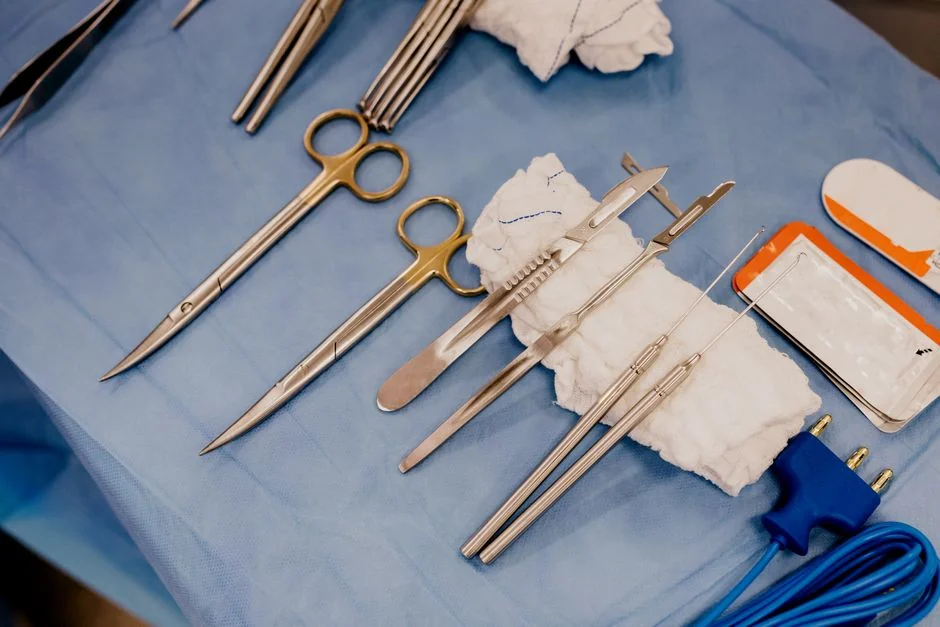
Revision surgery is generally more technically demanding than a first-time procedure because the surgeon has to work around existing scar tissue, altered anatomy, and, in some cases, less spare eyelid skin. Technique selection depends heavily on what was done originally and what tissue remains to work with.
Suture Method vs. Incisional Method
If the original fold was created with the non-incisional (buried suture) method and has simply loosened or become uneven, it can sometimes be corrected with a further suture-based procedure. However, if there is scarring, excess or insufficient skin, or a structural issue such as unmasked ptosis (a drooping eyelid), an incisional approach is usually required so the surgeon can directly address the scar tissue and reset the eyelid layers.
Why Timing Matters
Surgeons generally advise waiting before pursuing a revision, since swelling needs to resolve and scar tissue needs time to soften and stabilise before the true result can be judged accurately.
A commonly cited guideline among oculoplastic and aesthetic surgeons is a minimum of around six to twelve months after the original surgery, with more complex cases sometimes requiring longer. Revising too early risks operating on tissue that is still healing, which can make the outcome less predictable and can use up eyelid skin that cannot be replaced later.
Expected Results
The goal of revision surgery is a more even, natural-looking crease that suits the patient’s eyelid anatomy — not necessarily a dramatically different look from what was originally intended. Because revision surgery works with less “spare” tissue than a first-time procedure, the range of achievable changes may be more limited than it was the first time around.
Clinical reports suggest that outcomes for revision double eyelid surgery are generally favourable, though patient-requested further revisions remain more likely in this group than after a first surgery, which is why realistic expectations and a careful preoperative assessment matter.
Cost of Double Eyelid Revision Surgery in Tokyo
Revision surgery typically costs more than a first-time double eyelid procedure because it usually takes longer and may involve additional steps such as scar release, skin grafting or ptosis correction. The exact fee depends on the technique required (suture vs. incisional), whether ptosis correction is needed, and the complexity of the scar tissue from the original surgery.
Please see the clinic’s official price page or contact us for a current quote. For an accurate quote, please book a consultation.
Have a question about this treatment?
Message us on LINE or WhatsApp — our English-speaking team usually replies the same day.
What to Expect: Before, During and After
Consultation and Planning
The first step is an in-person assessment of the eyelid skin, remaining fat pad, scar tissue, and eyelid function (including checking for any ptosis that may have been present but unaddressed originally). Photographs of the desired outcome and an honest discussion of what is realistically achievable are an important part of this stage.
The Day of Surgery
Revision procedures are usually performed under local anaesthesia, sometimes with light sedation, on an outpatient basis. Depending on complexity, surgery time is generally longer than for a first-time procedure because of the need to carefully separate scar tissue from healthy tissue.
Recovery and Downtime
Swelling and bruising after revision surgery can take longer to settle than after a first procedure, since the tissue has already been operated on once. Most patients need one to two weeks before feeling comfortable in public, and it can take several months for the final crease shape and eyelid contour to fully settle — which is also why follow-up appointments are important.
Who Is a Good Candidate for Revision Surgery?
Good candidates are patients who are at least six to twelve months out from their original surgery, are in good general health, do not smoke (or are willing to stop, since smoking impairs healing), and have realistic expectations about what revision can achieve. Patients whose main concern is a functional problem, such as a fold affecting vision or persistent irritation, should be evaluated sooner rather than waiting the full recovery window.
Revision surgery may not be advisable for patients who are still within the healing window of their original surgery, who have very limited remaining eyelid skin, or who have unresolved medical conditions that affect wound healing. A thorough in-person consultation is the only reliable way to determine candidacy.
| Consideration | Suture (Non-Incisional) Revision | Incisional Revision |
|---|---|---|
| Best suited for | Loosened fold with minimal scarring and adequate remaining tissue | Scar tissue, asymmetric crease shape, excess/insufficient skin, or unmasked ptosis |
| Typical downtime | Shorter — often around one week | Longer — often two weeks or more |
| Durability | Can loosen again over time, similar to primary suture surgery | Generally considered more durable once healed |
| Scar visibility | Minimal to none | A fine incision line, usually well concealed within the new crease once healed |
Common Misconceptions About Double Eyelid Revision Surgery
Misconception 1: “Revision surgery can be done any time, as soon as I’m unhappy with the result.” In reality, results at one to three months after surgery are often not the final result — swelling and scar tissue continue to change for many months. Published clinical guidance consistently points to a waiting period of at least six to twelve months before a stable, accurate revision can be planned.
Misconception 2: “Asymmetry after double eyelid surgery is rare, so something must have gone badly wrong.” Asymmetry is actually the single most common complaint after both primary and revision double eyelid surgery, reported in close to half of all revision-related complaints in a large multi-year clinical analysis1. This does not mean the original surgery was performed negligently — eyelid anatomy is rarely perfectly symmetrical to begin with, and minor asymmetry can also emerge during normal healing.
Frequently Asked Questions
- Q. How soon after my original surgery can I have revision surgery?
- Most surgeons recommend waiting a minimum of six to twelve months so swelling can fully resolve and scar tissue can mature. Exceptions are made for functional problems, such as a fold that is affecting vision or causing persistent irritation, which may need earlier evaluation.
- Q. Will revision surgery leave a visible scar?
- When an incisional approach is needed, the incision is planned within the new eyelid crease line, so it is generally well concealed once healing is complete. Individual healing varies, and this should be discussed during your consultation.
- Q. Can a crease that has completely disappeared be recreated?
- In many cases, yes, though the approach depends on how much skin and supporting tissue remain after the original surgery. An in-person assessment is needed to determine whether a suture-based or incisional technique is more appropriate.
- Q. Is revision surgery more painful or risky than the first surgery?
- Revision surgery is more technically demanding because of scar tissue, but it is not inherently more painful. Because the surgeon is working with tissue that has already healed once, careful technique is required to reduce the risk of further irregularity.
Have a question about this treatment?
Message us on LINE or WhatsApp — our English-speaking team usually replies the same day.
Summary
Double eyelid revision surgery exists specifically to help patients whose first procedure — whether performed in Japan or overseas — did not settle into the result they expected. Asymmetry, an unnatural crease shape, or a loosened fold are the most common reasons patients seek a second opinion, and these are addressable with a careful, individualised approach once healing from the original surgery is complete.
Waiting the recommended six to twelve months, choosing a technique suited to your remaining eyelid tissue, and having a thorough in-person consultation all contribute to a more predictable outcome.
If you have questions about double eyelid revision surgery, both BIOTOPE CLINIC (Shirokanedai, Minato-ku) and Kojimachi Dermatology & Plastic Surgery Clinic (Ichigaya, Chiyoda-ku) offer English-language consultation with Dr. Karibe and his team. Double eyelid revision surgery is primarily handled at BIOTOPE CLINIC. English enquiries: LINE or WhatsApp.
24/7 Consultation & Booking
Book a Consultation or Treatment
Our English-speaking team responds via LINE or WhatsApp — usually the same day.
References
- Su X, Chen D, Zhuang J, Hu J, Cai N, Ou Y, Jiang H, Ding B. A 7-year analysis of complaints related to Asian blepharoplasty. Journal of Cosmetic Dermatology. 2025.
- Mafi P, Patel K, Hoque-Uddin S, Warner R. Recurrent Clinical Burden and Cost of Cosmetic Surgery Tourism Complications: A Five-Year Retrospective Study From a UK Tertiary Centre. Cureus. 2026.
- Shanshan L, Qinqin Z. Selection of Optimal Double-Lid Blepharoplasty Based on Asian Upper Eyelid Tissue Structure. Aesthetic Plastic Surgery. 2024.
Related Articles
You may also find these articles useful.
- Double Eyelid Surgery Tokyo: English-Speaking Clinic Guide
- How Long Should You Stay in Tokyo for Double Eyelid Surgery? Downtime, Pain & Flying Guide
- Ptosis Correction Surgery Tokyo: Droopy Eyelid Treatment
- Scar Revision Surgery in Tokyo: Options and Cost Guide
- Under Eye Bags Surgery Tokyo: Transconjunctival Guide
SUPERVISED BY
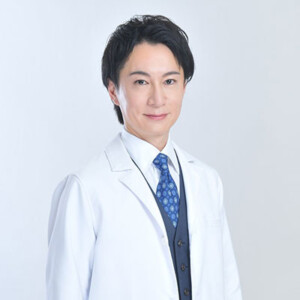
Dr. Jun Karibe
MD
Director
Education & Career
Certifications
Awards
MEDICAL REVIEW