What Is Double Eyelid Surgery? (Asian Blepharoplasty Explained)
If you have been comparing clinics in two different countries, reading conflicting reviews, and trying to work out whether a crease that looks natural on someone else’s eyes will look natural on yours, that uncertainty is completely normal.
This is a highly personal, highly visible procedure, and where you have it done matters as much as how it is done.
In this article, we look at how Tokyo and Seoul compare as destinations for Asian eyelid surgery, why a growing number of Chinese-American patients are weighing Tokyo more seriously, and what to actually expect from consultation through to final results.
What you’ll learn in this article:
- What double eyelid surgery (Asian blepharoplasty) involves and the main surgical techniques
- How Tokyo and Seoul differ in regulation, scale, and surgical philosophy
- Realistic cost factors and what drives price differences between clinics
- What recovery actually looks like, day by day
- Who is, and is not, a good candidate for this surgery
Have a question about this treatment?
Message us on LINE or WhatsApp — our English-speaking team usually replies the same day.
Double eyelid surgery, medically referred to as Asian or East Asian blepharoplasty, creates a defined upper eyelid crease (a supratarsal fold) in patients who are born with a single, uncreased eyelid or a partial, uneven fold. It is one of the most frequently requested cosmetic procedures among East Asian and East Asian diaspora patients worldwide.
The two broad surgical approaches are the non-incisional (suture) method, which uses small stitches to form the crease without cutting the skin, and the incisional method, which removes excess skin and fat through a fine incision along the intended crease line. The right choice depends on eyelid skin thickness, existing fat volume, skin laxity, and the patient’s desired outcome.
Tokyo vs. Seoul: Comparing Asian Eye Surgery Destinations
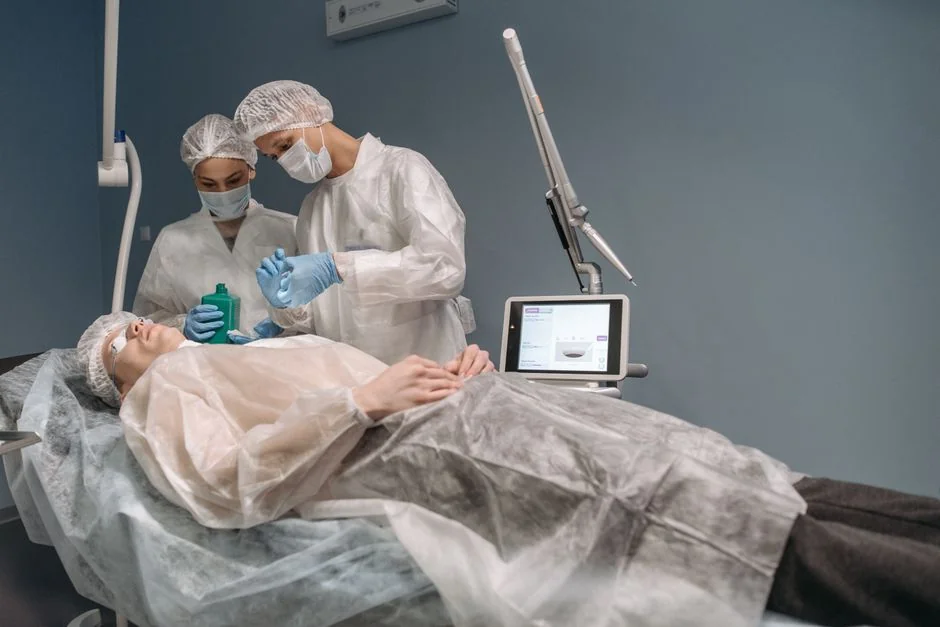
Seoul remains the largest single hub for cosmetic surgery tourism in Asia by volume. According to South Korea’s Ministry of Health and Welfare, the country welcomed a record 2.01 million foreign patients in 2025, a roughly 72 percent increase from 2024. The United States was the fourth-largest source country, sending an estimated 173,000 patients, up 70.4 percent year on year.
What surprises many prospective patients is what those visitors are actually there for.
Dermatology treatments, not surgery, accounted for 62.9 percent of foreign patients in 2025, while plastic surgery made up just 11.2 percent (around 233,000 patients). Seoul’s medical tourism engine is now driven far more by injectables, lasers, and skincare procedures than by the operating table.
Tokyo’s cosmetic surgery sector is smaller in raw patient numbers but built around a different regulatory backbone.
Surgeons who hold board certification through the Japan Society of Plastic and Reconstructive Surgery (JSPRS) complete a minimum of six years of clinical practice after receiving their medical license, including at least four years of dedicated training at JSPRS-certified facilities, followed by written and oral examinations.
As of the latest published figures, roughly 3,200 of JSPRS’s approximately 5,900 members hold this certified-specialist status, and certification must be renewed every five years.
Why Chinese-American Patients Often Consider Tokyo
For Chinese-American patients researching options from the United States, several practical factors tend to come up repeatedly in consultations at BIOTOPE CLINIC.
English-language consultation removes the need for a translator during a sensitive discussion about facial appearance.
A single, board-certified, named surgeon performing the entire procedure offers a clear line of accountability that some patients find easier to verify in advance than at very high-volume clinics. And Japanese aesthetic training has historically emphasized a subtler, closer-to-natural crease width, which appeals to patients who want a result that reads as their own eyes rather than a visibly “done” look.
It is worth being direct about the other side of this comparison too: Seoul is home to highly experienced, well-regarded surgeons, and the vast majority of procedures performed there go well. The decision between the two cities usually comes down to a patient’s priorities — surgical volume and price competition in Seoul versus the smaller-scale, single-surgeon accountability model more common in Tokyo’s established clinics.
| Factor | Tokyo | Seoul |
|---|---|---|
| Scale of medical tourism (2025) | Smaller, surgery-focused clinic sector | 2.01 million foreign patients; record high |
| Dominant treatment type | Individual surgical consultations | 62.9% dermatology; 11.2% plastic surgery |
| Surgeon credentialing system | JSPRS board certification (6+4 year pathway, 5-year renewal) | Board certification exists; market also includes high-volume franchise-style clinics |
| Aesthetic tendency | Subtler, narrower crease often favored | Wider range of styles, including more dramatic westernizing looks |
| English-language consultation | Available at BIOTOPE CLINIC and Kojimachi Dermatology & Plastic Surgery Clinic | Widely available at international patient centers |
How Double Eyelid Surgery Works
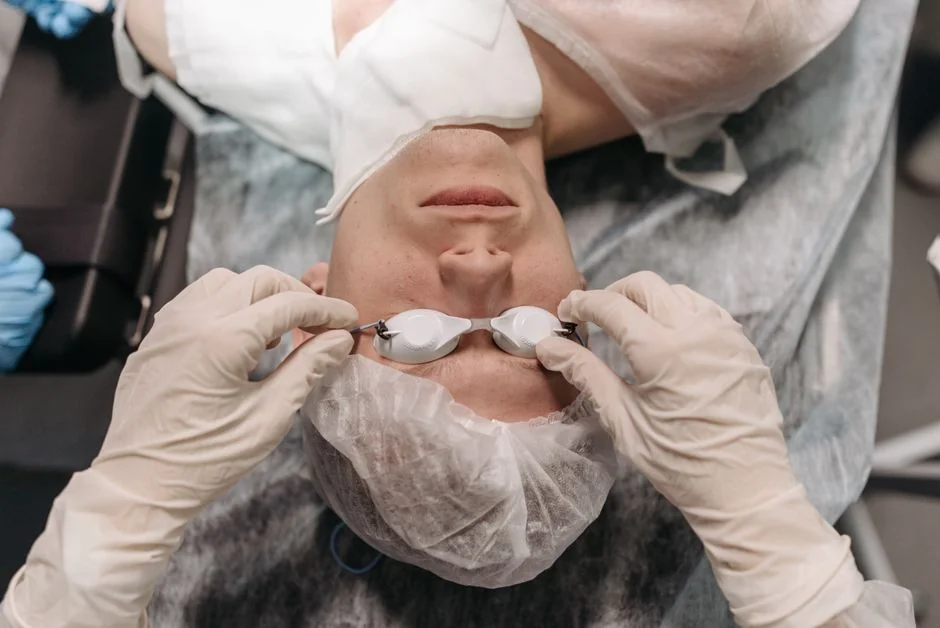
Non-Incisional (Suture) Method
This approach places a small number of buried stitches to tack the skin to the underlying tissue, forming a crease without an open incision. It suits patients with thin eyelid skin, minimal excess fat, and mild sagging.
Downtime is generally shorter than with the incisional method, though the crease can soften over time in some patients, particularly if there is more fat or looser skin than the technique was designed to hold.
Incisional Method
An incisional approach removes a measured strip of skin and, where needed, excess fat along the intended crease line before closing it with fine sutures. It tends to produce a longer-lasting result and can address heavier eyelid fat pads or looser skin that a suture-only technique cannot manage.
A 2023 systematic review published in Aesthetic Plastic Surgery, which pooled data from 13 studies and 4,177 patients, found that outcomes and complication patterns varied meaningfully depending on the number of incisions and the specific fixation technique used, underscoring that “double eyelid surgery” is not a single standardized operation but a family of related techniques.
Patients who are not ready for surgery sometimes ask about non-surgical options for periorbital skin laxity. HIFU (high-intensity focused ultrasound) is available at BIOTOPE CLINIC for general skin tightening, and clinical reports suggest it can offer a subtle improvement in periorbital skin quality — though it cannot recreate a surgical crease and is not a substitute for blepharoplasty. This is worth raising directly with Dr. Karibe’s team during a consultation to see whether it is relevant to your goals.
Cost in Tokyo
Please see the clinic’s official price page or contact us for a current quote.
In general, pricing for double eyelid surgery depends on the technique used (suture versus incisional), whether the case is a first-time procedure or a revision of previous surgery, the anesthesia approach, and whether fat repositioning is required alongside crease formation. Revision surgery on eyelids that have already been operated on elsewhere is typically more complex, and therefore priced differently, than a first-time procedure. For an accurate quote, please book a consultation.
Have a question about this treatment?
Message us on LINE or WhatsApp — our English-speaking team usually replies the same day.
What to Expect: Before, During and After
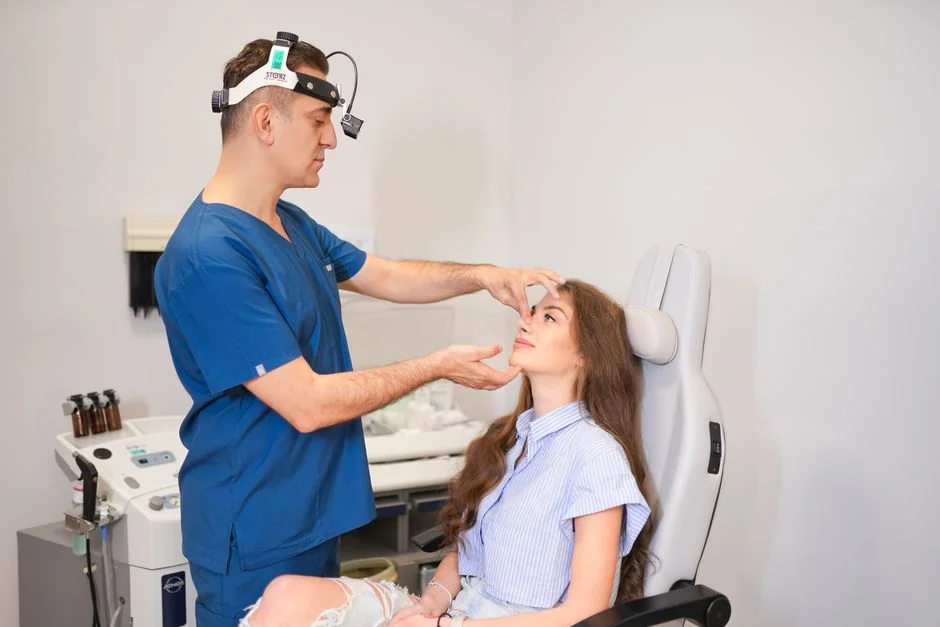
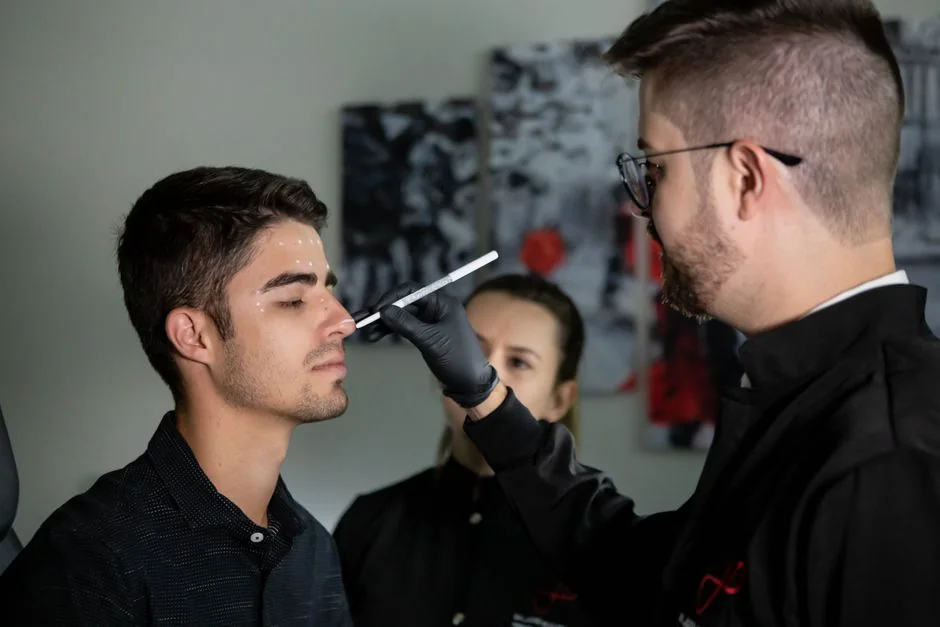
A pre-operative consultation at BIOTOPE CLINIC typically includes a physical assessment of eyelid skin thickness, fat volume, brow position, and eye shape, along with a discussion of the crease height and width you are hoping for. Photographs and, in some cases, simulation are used so that expectations are aligned before any decision is made.
The procedure itself is usually performed under local anesthesia, often with light sedation, and takes roughly 30 to 90 minutes depending on the technique and whether both eyelids are being treated. Most patients go home the same day.
Swelling and bruising are most pronounced in the first three to five days and usually improve substantially within one to two weeks, though the timeline varies by individual and by technique. Sutures, where used, are typically removed within about a week.
The crease continues to settle over the following one to three months, and final results are generally assessed at the three- to six-month mark. A 2024 study in Aesthetic Plastic Surgery following 149 double-eyelid blepharoplasty patients over a mean of 23.23 months reported an overall satisfaction rate of 89.43 percent, with bilateral asymmetry and visible scarring identified as the factors most likely to reduce satisfaction — a reminder that surgeon skill and careful post-operative healing both matter to the final outcome.
Who Is a Good Candidate?
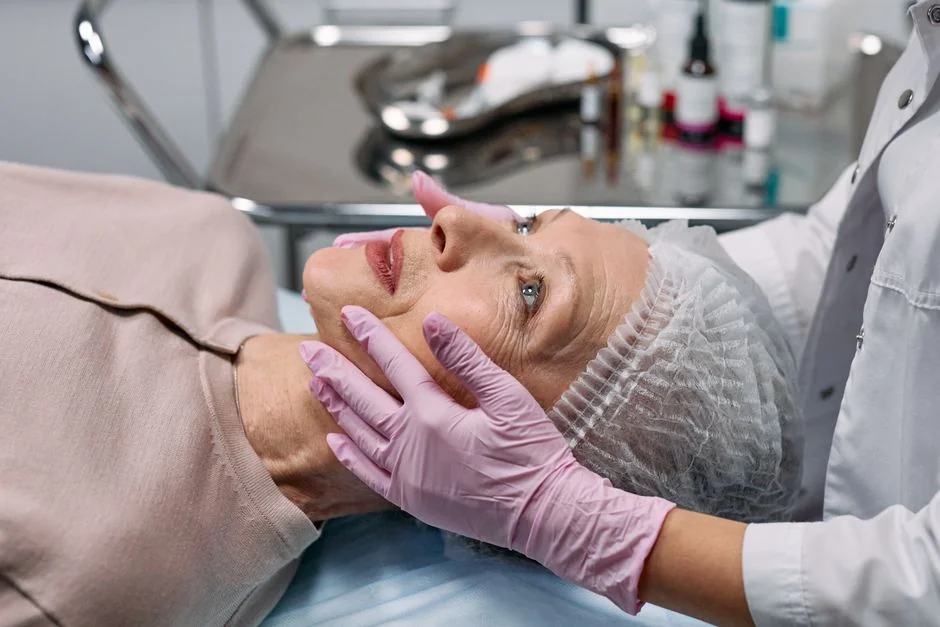
Good candidates are generally in good general health, have realistic expectations about crease width and symmetry, and are not currently dealing with active eyelid infections, uncontrolled dry eye disease, or significant unaddressed ptosis (eyelid drooping affecting vision) that would need to be corrected separately. Patients who have had previous eyelid surgery elsewhere should disclose this in detail, since revision cases require different planning than first-time procedures.
Patients who should hold off include those with unmanaged bleeding disorders, active eye infections, or those who are not able to avoid strenuous activity and eye rubbing during the initial healing window. Anyone uncertain about their candidacy should raise it directly during consultation rather than assuming either way.
Common Misconceptions About Asian Eyelid Surgery Tourism
Misconception: “A clinic in Tokyo is automatically safer than one in Seoul.”
Japan’s own National Consumer Affairs Center recorded 6,279 consumer complaints related to aesthetic medical services in fiscal year 2023, a 1.65-fold increase from the previous year, with double eyelid surgery listed among the procedures most frequently associated with complaints. Most of these cases involved high-pressure, same-day sales tactics at discount-focused clinics rather than surgical technique itself. The real safety differentiator is not the country — it is whether the individual surgeon is board-certified and whether the clinic uses pressured sales practices.
Misconception: “Most foreign patients visiting Korea are there for plastic surgery.”
As the 2025 Korean government figures above show, dermatology accounted for well over half of all foreign patient visits, while plastic surgery made up just over one in ten. The popular image of Seoul’s medical tourism industry as primarily surgical no longer matches current patient volumes.
Frequently Asked Questions
- Q. Is double eyelid surgery permanent?
- The incisional method is generally considered long-lasting, while the non-incisional suture method can soften or loosen over time in some patients, particularly those with more eyelid fat or looser skin. Your surgeon should discuss which technique better suits long-term stability for your anatomy.
- Q. How do I verify a surgeon’s credentials in Japan before booking?
- You can ask the clinic directly whether the operating surgeon holds board certification from the Japan Society of Plastic and Reconstructive Surgery (JSPRS), and confirm who will actually perform your surgery. A reputable clinic will answer this clearly.
- Q. Can I combine double eyelid surgery with other procedures?
- Some patients combine it with ptosis correction or transconjunctival blepharoplasty if there is also lower eyelid fat prominence, but this depends on individual anatomy and should be assessed during an in-person or video consultation rather than assumed in advance.
- Q. How soon can I fly home after surgery?
- Many patients travel internationally around one to two weeks after surgery once swelling has subsided and any sutures are removed, though this should be confirmed with your surgeon based on your specific healing progress and the length of your flight.
Have a question about this treatment?
Message us on LINE or WhatsApp — our English-speaking team usually replies the same day.
Summary
Seoul offers scale, price competition, and a wide range of aesthetic styles, but recent government data shows its medical tourism industry is now driven mainly by dermatology rather than surgery. Tokyo offers a smaller, more tightly credentialed surgical sector built around JSPRS and JSAPS(Japan Society of Aesthetic Plastic Surgery) board certification and a generally subtler aesthetic approach, which is part of why some Chinese-American patients weighing both cities lean toward Tokyo — alongside English-language consultation and a clear, named-surgeon accountability model. Neither city is risk-free, and the deciding factor should always be the individual surgeon’s credentials and your own priorities, not the country alone.
Within our clinic group, both BIOTOPE CLINIC (Shirokanedai, Minato-ku) and Kojimachi Dermatology & Plastic Surgery Clinic (Ichigaya, Chiyoda-ku) offer English-language consultation with Dr. Jun Karibe’s team. Double eyelid surgery and other cosmetic eyelid procedures are handled at BIOTOPE CLINIC. Bookings and enquiries in English: LINE or WhatsApp.
If you have questions about double eyelid surgery, both BIOTOPE CLINIC (Shirokanedai, Minato-ku) and Kojimachi Dermatology & Plastic Surgery Clinic (Ichigaya, Chiyoda-ku) offer English-language consultation with Dr. Karibe and his team. Double eyelid surgery is primarily handled at BIOTOPE CLINIC. English enquiries: LINE or WhatsApp.
24/7 Consultation & Booking
Book a Consultation or Treatment
Our English-speaking team responds via LINE or WhatsApp — usually the same day.
References
- Liu X, Han Y, Shen Q, Xu Y, Yang S, Zhang J, Cui L, Han Y. Factors Affecting Patient Satisfaction with Double-Eyelid Blepharoplasty. Aesthetic Plastic Surgery. 2024;48(20):4099-4113.
- Yu P, Chen S, Gu T, et al. Small-Incisional Techniques for Double-Eyelid Blepharoplasty: A Systematic Review. Aesthetic Plastic Surgery. 2023;47(3):1067-1075.
- Japan Society of Plastic and Reconstructive Surgery. Board Certification and Specialist System Overview. https://jsprs.or.jp/
- National Consumer Affairs Center of Japan (Kokusen). Report on Increasing Consumer Complaints Related to Aesthetic Medical Services. 2023. https://www.kokusen.go.jp/
- Ministry of Health and Welfare, Republic of Korea. 2025 International Patient Statistics Announcement. 2026. https://www.mohw.go.kr/
Related Articles
You may also find these articles useful.
- Double Eyelid Surgery Tokyo: English-Speaking Clinic Guide
- Ptosis Correction Surgery Tokyo: Droopy Eyelid Treatment
- How Long Should You Stay in Tokyo for Double Eyelid Surgery? Downtime, Pain & Flying Guide
- Under Eye Bags Surgery Tokyo: Transconjunctival Guide
- Under Eye Dark Circles Treatment Tokyo: Injections vs Surgery
SUPERVISED BY
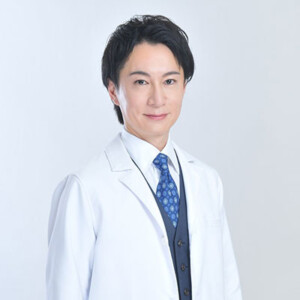
Dr. Jun Karibe
MD
Director
Education & Career
Certifications
Awards
MEDICAL REVIEW